Loading...
Done
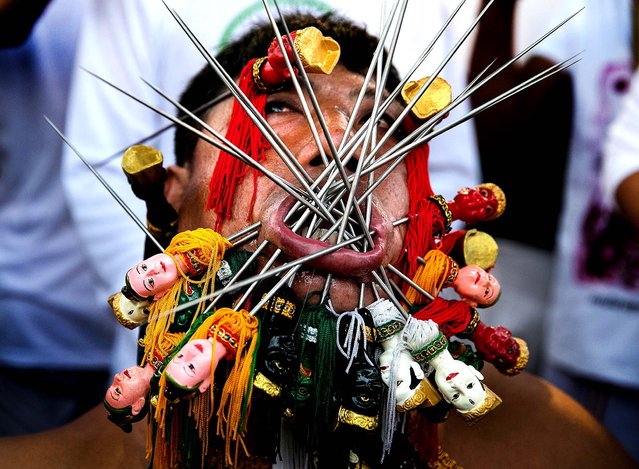
A devotee gest pierced at the Bang Neow shrine in Phuket. (Photo by Paula Bronstein/Getty Images)

“The Nine Emperor Gods Festival is a nine-day Taoist celebration beginning on the eve of 9th lunar month of the Chinese calendar, which is observed primarily in Southeast Asian countries like Myanmar, Singapore, Malaysia, Thailand and also the Riau Islands. In Thailand, this festival is called Tesagan Gin Je, the Vegetarian Festival. It is celebrated throughout the entire country, but the festivities are at their height in Phuket, where about 35% of the population is Chinese. It attracts crowds of spectators because of many of the unusual religious rituals that are performed”. – Wikipedia. Photo: A devotee gest pierced at the Bang Neow shrine in Phuket. (Photo by Paula Bronstein)
Details
11 Oct 2013 07:49:00
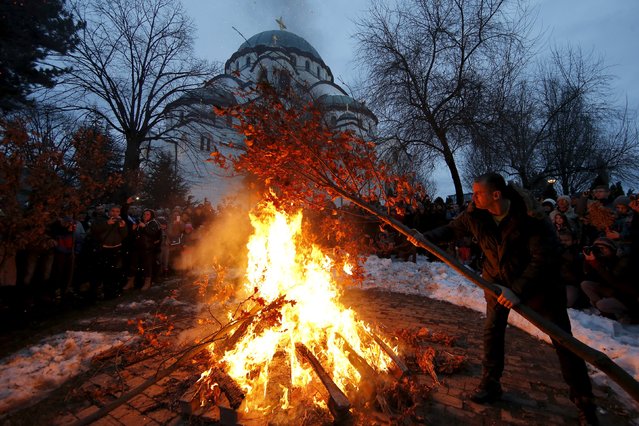
Believers burn dried oak branches, which symbolizes the Yule log, on Orthodox Christmas Eve in front of the St. Sava temple in Belgrade, Serbia, January 6, 2016. (Photo by Marko Djurica/Reuters)

Believers burn dried oak branches, which symbolizes the Yule log, on Orthodox Christmas Eve in front of the St. Sava temple in Belgrade, Serbia, January 6, 2016. Serbian Orthodox believers celebrate Christmas on January 7, according to the Julian calendar. (Photo by Marko Djurica/Reuters)
Details
08 Jan 2016 08:00:00
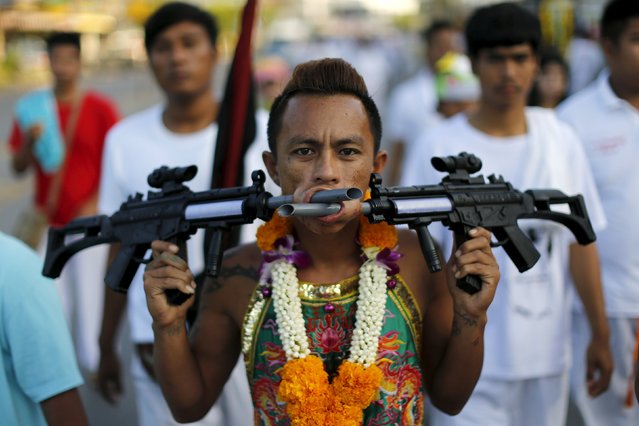
A devotee of the Chinese Ban Tha Rue shrine walks with guns pierced through his cheeks during a procession celebrating the annual vegetarian festival in Phuket, Thailand, October 17, 2015.

A devotee of the Chinese Ban Tha Rue shrine walks with guns pierced through his cheeks during a procession celebrating the annual vegetarian festival in Phuket, Thailand, October 17, 2015. The festival, featuring face-piercing, spirit mediums and strict vegetarianism celebrates the local Chinese community's belief that abstinence from meat and various stimulants during the ninth lunar month of the Chinese calendar will help them obtain good health and peace of mind. (Photo by Jorge Silva/Reuters)
Details
20 Oct 2015 08:01:00
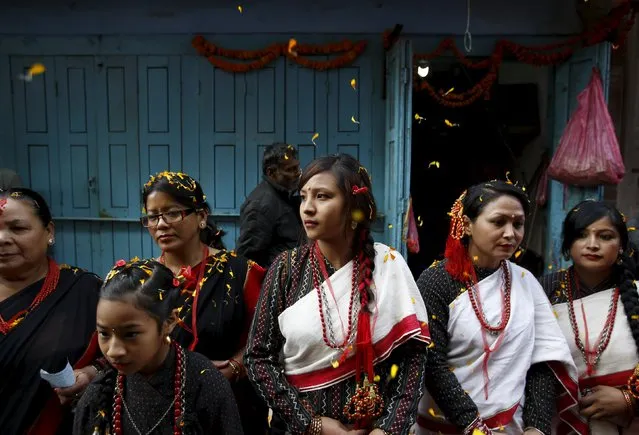
Participants from Newar community in traditional attire, takes part in the parade to celebrate Newari New Year that falls during the Tihar festival, also called Diwali, in Kathmandu, Nepal November 12, 2015. (Photo by Navesh Chitrakar/Reuters)

Participants from Newar community in traditional attire, takes part in the parade to celebrate Newari New Year that falls during the Tihar festival, also called Diwali, in Kathmandu, Nepal November 12, 2015. The Newar community observes the start of their Newari New Year 1136, in accordance with their lunar calendar, by worshipping their spiritual selves in a ritual known as "mahapuja". (Photo by Navesh Chitrakar/Reuters)
Details
16 Nov 2015 08:01:00
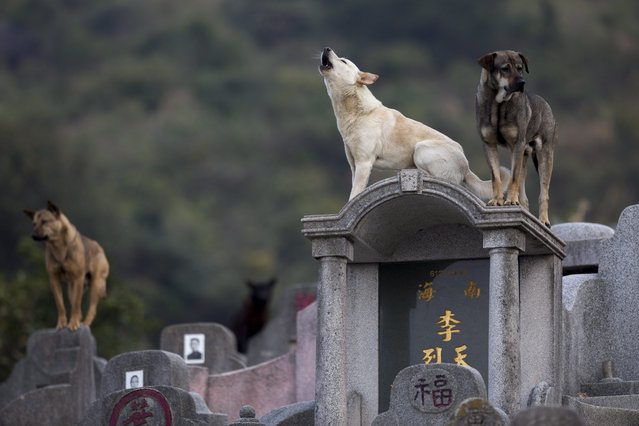
Stray dogs stand on tombs in Diamond Hill cemetery in Hong Kong, China, 04 April 2017. (Photo by Jerome Favre/EPA)

Stray dogs stand on tombs in Diamond Hill cemetery in Hong Kong, China, 04 April 2017. According to the lunar calendar, the Qingming Festival is observed on 04 April . The Qingming Festival, also known as Tomb-Sweeping Day, is marked by Chinese people by going to the cemetery to cleaning up tombs, bring flowers, and making offerings to their ancestors. (Photo by Jerome Favre/EPA)
Details
05 Apr 2017 09:30:00
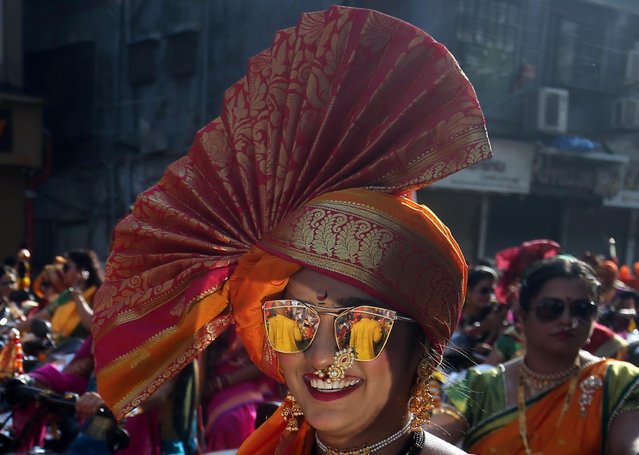
A woman wearing her traditional headgear attends celebrations to mark the Gudi Padwa festival, the beginning of the New Year for Maharashtrians, in Mumbai, April 6, 2019. (Photo by Francis Mascarenhas/Reuters)

A woman wearing her traditional headgear attends celebrations to mark the Gudi Padwa festival, the beginning of the New Year for Maharashtrians, in Mumbai, April 6, 2019. Gudi Padwa is the Hindu festival that falls on the first day of Chaitra month and marks the beginning of the Lunar Calendar, which dictates the dates for all Hindu festivals, also known as Panchang. (Photo by Francis Mascarenhas/Reuters)
Details
08 Apr 2019 00:07:00
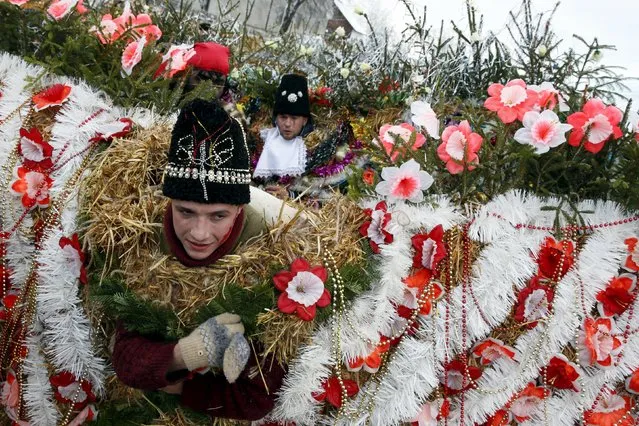
Local residents dressed in costumes perform during celebrations for the Malanka holiday in the village of Krasnoilsk in the Chernivtsi region of Ukraine, January 14, 2016. The Malanka traditional holiday is more popular in the western regions of the country and is also known as the Old New Year celebrated on January 13 and 14 - St. Basil's and St. Melania's Day, according to the old Julian calendar. During the celebrations, youngsters and adults wear traditional carnival costumes and masks, and visit local houses while singing carols, playing pranks or performing short plays. (Photo by Valentyn Ogirenko/Reuters)

Local residents dressed in costumes perform during celebrations for the Malanka holiday in the village of Krasnoilsk in the Chernivtsi region of Ukraine, January 14, 2016. The Malanka traditional holiday is more popular in the western regions of the country and is also known as the Old New Year celebrated on January 13 and 14 – St. Basil's and St. Melania's Day, according to the old Julian calendar. During the celebrations, youngsters and adults wear traditional carnival costumes and masks, and visit local houses while singing carols, playing pranks or performing short plays. (Photo by Valentyn Ogirenko/Reuters)
Details
16 Jan 2016 08:04:00
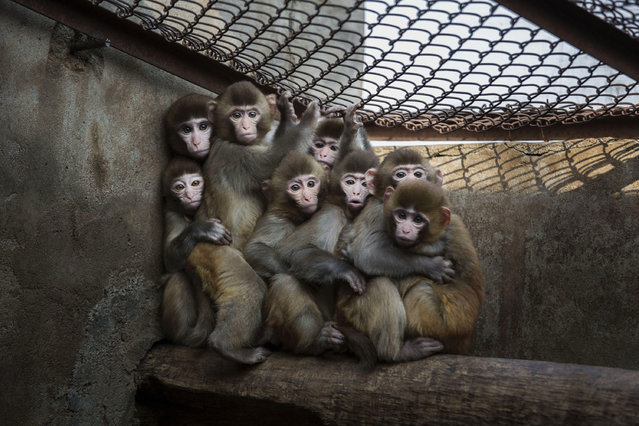
Macaque monkeys crowd together in their cage at a monkey farm on February 3, 2016 in Xinye county, Henan province, China. The area boasts a centuries-long and lucrative history of raising and training monkeys for performance. In Xinye, villagers are seeing an increase in business with the lunar calendar's “Year of the Monkey”. Farmers say most of the monkeys are bred and raised for domestic zoos, circuses, and performing groups, but add that some are also sold for medical research in China and the United States. Despite the popularity of the tradition, critics contend the training methods and conditions constitute animal cruelty. (Photo by Kevin Frayer/Getty Images)

Macaque monkeys crowd together in their cage at a monkey farm on February 3, 2016 in Xinye county, Henan province, China. The area boasts a centuries-long and lucrative history of raising and training monkeys for performance. In Xinye, villagers are seeing an increase in business with the lunar calendar's “Year of the Monkey”. Farmers say most of the monkeys are bred and raised for domestic zoos, circuses, and performing groups, but add that some are also sold for medical research in China and the United States. Despite the popularity of the tradition, critics contend the training methods and conditions constitute animal cruelty. (Photo by Kevin Frayer/Getty Images)
Details
31 Dec 2016 09:56:00