Loading...
Done
Malabon Zoo owner Manny Tangco holds a full-grown but very small rooster named “Small But Terrible” from Malaysia to compare it with the giant red rooster from France named “Mr. Universe” as they are shown to the media as part of the “Roosters of the World” exhibition to celebrate the “Red Fire Rooster” in the Chinese lunar calendar Friday, January 27, 2017 in suburban Malabon city north of Manila, Philippines. The Roosters of the World exhibition features roosters from countries as the United States, Japan, United Kingdom, France, China, Malaysia, Indonesia and Poland. (Photo by Bullit Marquez/AP Photo)

Malabon Zoo owner Manny Tangco holds a full-grown but very small rooster named “Small But Terrible” from Malaysia to compare it with the giant red rooster from France named “Mr. Universe” as they are shown to the media as part of the “Roosters of the World” exhibition to celebrate the “Red Fire Rooster” in the Chinese lunar calendar Friday, January 27, 2017 in suburban Malabon city north of Manila, Philippines. The Roosters of the World exhibition features roosters from countries as the United States, Japan, United Kingdom, France, China, Malaysia, Indonesia and Poland. (Photo by Bullit Marquez/AP Photo)
Details
29 Jan 2017 11:42:00
Teyana Taylor attends the CFDA Fashion Awards at the Brooklyn Museum of Art on June 03, 2019 in New York City. (Photo by Dimitrios Kambouris/Getty Images)

Teyana Taylor attends the CFDA Fashion Awards at the Brooklyn Museum of Art on June 03, 2019 in New York City. (Photo by Dimitrios Kambouris/Getty Images)
Details
05 Jun 2019 00:01:00
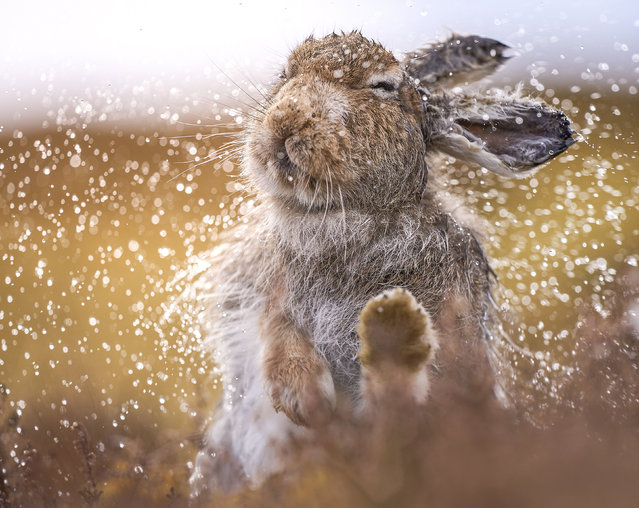
A mountain hare shakes off rain from its fur, in Findhorn Valley, Moray, Scotland in the second decade of August 2024. In summer, the hare’s coat is a grey-brown colour with a tinge of blue, making them hard to spot against the heather moorland. In winter, it changes to almost completely white for camouflage in the snow. (Photo by Will Hall/Solent News)

A mountain hare shakes off rain from its fur, in Findhorn Valley, Moray, Scotland in the second decade of August 2024. In summer, the hare’s coat is a grey-brown colour with a tinge of blue, making them hard to spot against the heather moorland. In winter, it changes to almost completely white for camouflage in the snow. (Photo by Will Hall/Solent News)
Details
25 Aug 2024 03:50:00
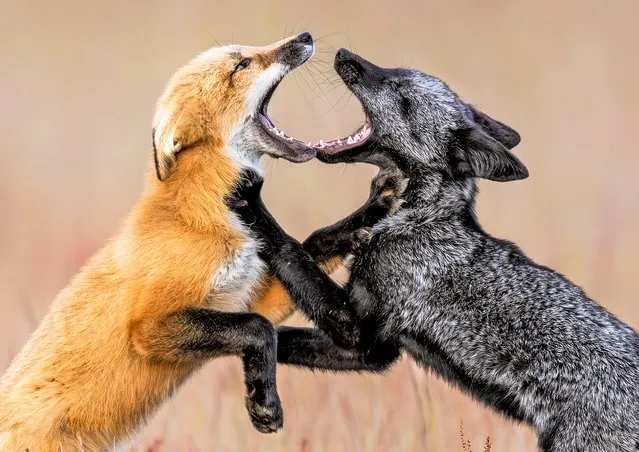
The rabbit population of San Juan Island, brought in to feed lighthouse keepers, got so big that in the 1930s foxes were introduced to kill them. Although they are red foxes, their coats can be orange, silver, black or multi-coloured. Picture date: September 2023. (Photo by Jun Zuo/Solent News)

The rabbit population of San Juan Island, brought in to feed lighthouse keepers, got so big that in the 1930s foxes were introduced to kill them. Although they are red foxes, their coats can be orange, silver, black or multi-coloured. Picture date: September 2023. (Photo by Jun Zuo/Solent News)
Details
08 Oct 2023 04:03:00
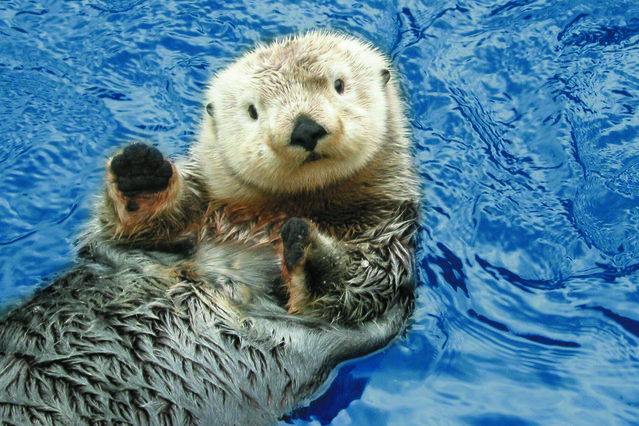
The Sea Otter

The sea otter (Enhydra lutris) is a marine mammal native to the coasts of the northern and eastern North Pacific Ocean. Adult sea otters typically weigh between 14 and 45 kg (31 and 99 lb), making them the heaviest members of the weasel family, but among the smallest marine mammals. Unlike most marine mammals, the sea otter's primary form of insulation is an exceptionally thick coat of fur, the densest in the animal kingdom. Although it can walk on land, the sea otter lives mostly in the ocean.
Details
26 Jan 2014 12:20:00
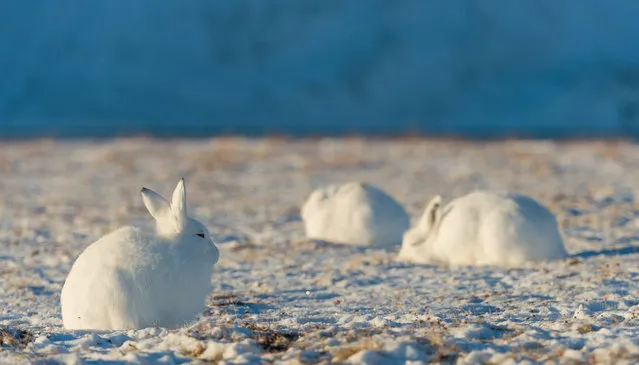
Arctic Hare

The arctic hare, or polar rabbit, is a species of hare which is adapted largely to polar and mountainous habitats. The arctic hare survives with a thick coat of fur and usually digs holes in the ground or under snow to keep warm and sleep. Arctic hares look like rabbits but have shorter ears, are taller when standing, and, unlike rabbits, can thrive in cold climates. They can travel together with many other hares, sometimes huddling with dozens or more, but are usually found alone, taking, in some cases, more than one partner. The arctic hare can run up to 60 kilometres per hour (40 mph). Its predators include the arctic wolf, arctic fox, and ermine.
Details
17 Mar 2014 13:56:00
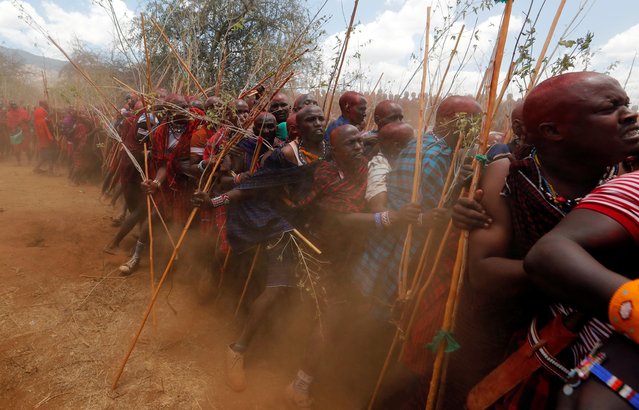
Maasai men of Matapato jostle to parade as they attend the Olng'esherr (meat-eating) passage ceremony to unite two age-sets; the older Ilpaamu and the younger Ilaitete into senior elderhood as the final rite of passage, in Maparasha hills of Kajiado, Kenya on September 23, 2020. Thousands of Maasai men clad in red and purple shawls and with their heads coated in red ochre gathered this week for a ceremony that transforms them from Moran (warriors) to Mzee (elders). (Photo by Thomas Mukoya/Reuters)

Maasai men of Matapato jostle to parade as they attend the Olng'esherr (meat-eating) passage ceremony to unite two age-sets; the older Ilpaamu and the younger Ilaitete into senior elderhood as the final rite of passage, in Maparasha hills of Kajiado, Kenya on September 23, 2020. Thousands of Maasai men clad in red and purple shawls and with their heads coated in red ochre gathered this week for a ceremony that transforms them from Moran (warriors) to Mzee (elders). (Photo by Thomas Mukoya/Reuters)
Details
29 Sep 2020 00:01:00
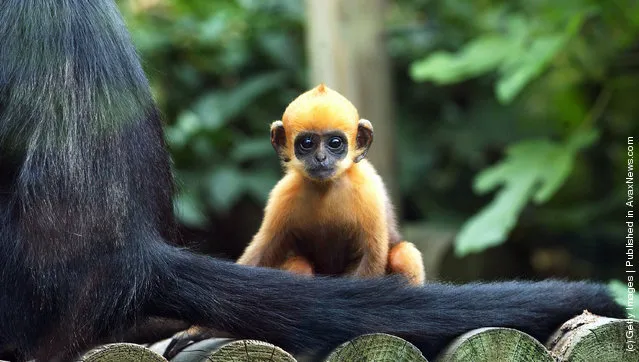
Baby Francois' Langur

“Francois' langur is one of several species of leaf monkeys. Over 50% of its diet is made up of young leaves. It will also consume fruits (17.2%), seeds, flowers, stems, roots, bark and occasionally minerals and insects off of rock surfaces and cliffs. This langur consumes its favorite food, young leaves, at the highest rate during the dry season, April through September, also known as the young leaf-lean period”. – Wikipedia

Photo: An endangered baby Francois' Langur monkey called Laa Laa settles in following her July 6 birth at London Zoo, Regent's Park on August 5, 2004 in London. The bright ginger youngster was born to glossy black parents Max and Shaneka and has the typical orange baby coat which is in stark contrast against the black of her parent's and older brother Grub's fur. (Photo by Steve Finn/Getty Images)
Details
22 Sep 2011 11:28:00