Loading...
Done
Model Kendall Jenner attends the “120 Battements Par Minutes (120 Beats Per Minute)” screening during the 70th annual Cannes Film Festival at Palais des Festivals on May 20, 2017 in Cannes, France. (Photo by Eric Gaillard/Reuters)

Model Kendall Jenner attends the “120 Battements Par Minutes (120 Beats Per Minute)” screening during the 70th annual Cannes Film Festival at Palais des Festivals on May 20, 2017 in Cannes, France. (Photo by Eric Gaillard/Reuters)
Details
21 May 2017 08:44:00
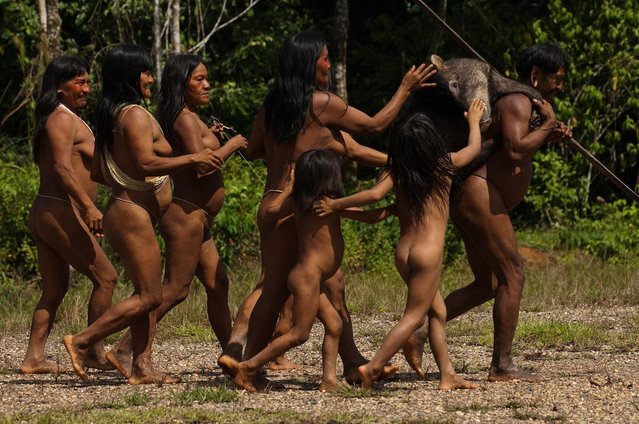
Spectacular images offering insight into the lives of the Huaorani people in the Ecuadorian Amazon have been revealed showing how they use traditional methods to hunt monkeys for food. The stunning pictures were taken by conservation photographer Pete Oxford from Torquay, Devon in the Ecuadorian Amazon. “The Huaorani Indians are a forest people highly in tune with their environment. Many are now totally acculturated since the 1950s by missionaries”, said Pete. “Today they face radical change to their culture to the proximity of oil exploration within their territory and the Yasuni National Park and Biosphere Reserve, they are vastly changed. Some still live very traditionally and for this shoot, through my Huaorani friend, a direct relative of those photographed he wanted to depict them as close to their original culture as possible. They still largely hunt with blow pipes and spears eating a lot of monkeys and peccaries”. The Huaorani are also known as the Waorani, Waodani or the Waos and are native Amerindians. Their lands are located between the Curaray and Napo rivers and speak the Huaorani language. Pete says that during his visit he was welcomed into the group and hopes that ancient cultures can be saved. Here: The tribe were seen celebrating after a hunter returned to camp with a wild pig. (Photo by Pete Oxford/Mediadrumworld.com)

Spectacular images offering insight into the lives of the Huaorani people in the Ecuadorian Amazon have been revealed showing how they use traditional methods to hunt monkeys for food. The stunning pictures were taken by conservation photographer Pete Oxford from Torquay, Devon in the Ecuadorian Amazon. Here: The tribe were seen celebrating after a hunter returned to camp with a wild pig. (Photo by Pete Oxford/Mediadrumworld.com)
Details
20 Jan 2017 07:58:00
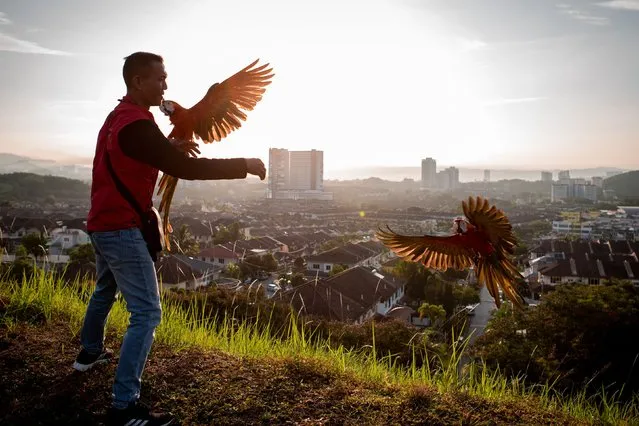
A parrot breeder and his parrots are seen at the Damai Perdana hill in the Cheras region ahead of the May 31 World Parrot Day in Kuala Lumpur, Malaysia on May 29, 2022. A group of parrot breeders in the capital Kuala Lumpur performed a “free flight” performance with different species of parrots. (Photo by Syaiful Redzuan/Anadolu Agency via Getty Images)

A parrot breeder and his parrots are seen at the Damai Perdana hill in the Cheras region ahead of the May 31 World Parrot Day in Kuala Lumpur, Malaysia on May 29, 2022. A group of parrot breeders in the capital Kuala Lumpur performed a “free flight” performance with different species of parrots. (Photo by Syaiful Redzuan/Anadolu Agency via Getty Images)
Details
23 Jul 2022 05:01:00
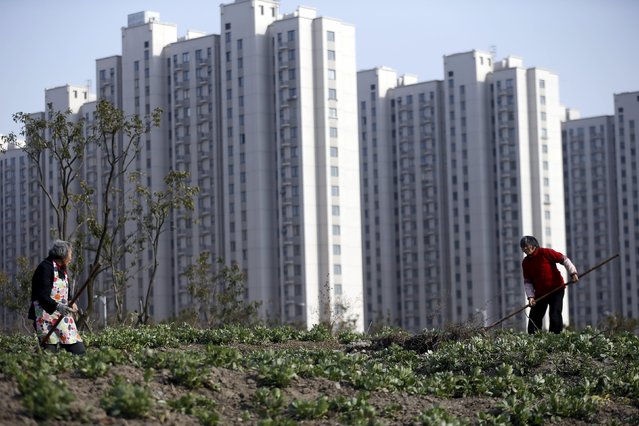
Farmers work on a farm near a construction site of new residential buildings in Shanghai, China, February 20, 2016. (Photo by Aly Song/Reuters)

Farmers work on a farm near a construction site of new residential buildings in Shanghai, China, February 20, 2016. (Photo by Aly Song/Reuters)
Details
27 Feb 2016 10:11:00
Fuzzbucket. “Not only did we keep our jobs, but because of the pictures, all the kittens were adopted within hours!”. (Photo by  Seth Casteel/Hachette Australia)

California-based photographer Seth Casteel made his name taking photographs of dogs underwater, but before that, he was snapping cats on land. In fact, they were his first animal subjects. Casteel’s new book, Pounce – a follow-up to his bestselling Underwater Dogs and Underwater Puppies – features more than 80 photographs of playful cats doing what they do best. Here: Fuzzbucket. (Photo by Seth Casteel/Hachette Australia)
Details
18 Nov 2016 11:21:00
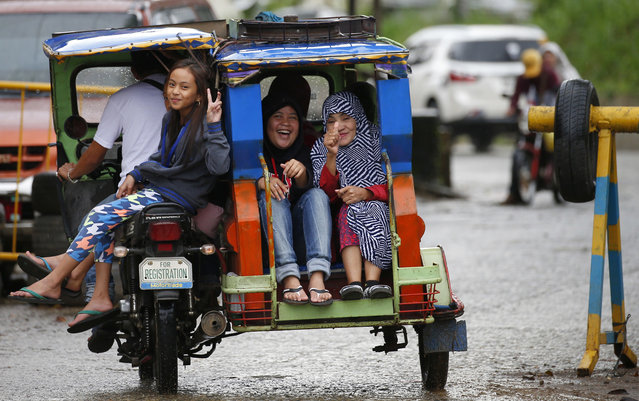
Residents recently returning to their area cleared by government troops react as they ride a tricycle a day after President Rodrigo Duterte declared the liberation of Marawi city in southern Philippines Wednesday, October 18, 2017. Sporadic explosions continue Wednesday as Philippine soldiers fought to gain control of the last pocket of Marawi controlled by Islamic militants. (Photo by Bullit Marquez/AP Photo)

Residents recently returning to their area cleared by government troops react as they ride a tricycle a day after President Rodrigo Duterte declared the liberation of Marawi city in southern Philippines Wednesday, October 18, 2017. Sporadic explosions continue Wednesday as Philippine soldiers fought to gain control of the last pocket of Marawi controlled by Islamic militants. (Photo by Bullit Marquez/AP Photo)
Details
08 Feb 2018 06:57:00
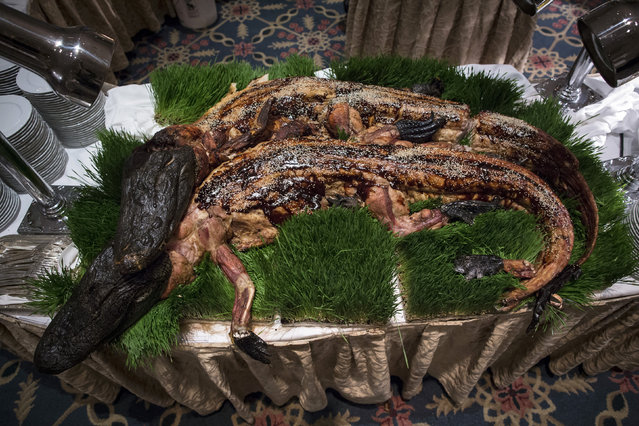
Whole cooked alligators are displayed before being served at the 110th Explorers Club Annual Dinner at the Waldorf Astoria in New York March 15, 2014. The club, which promotes the scientific exploration of land, sea, air and space featured catering by chef and exotic creator Gene Rurka. Chef Rurka prepared a variety of dishes featuring an array of insects, wildlife, animal body parts and invasive species. (Photo by Andrew Kelly/Reuters)

Whole cooked alligators are displayed before being served at the 110th Explorers Club Annual Dinner at the Waldorf Astoria in New York March 15, 2014. The club, which promotes the scientific exploration of land, sea, air and space featured catering by chef and exotic creator Gene Rurka. Chef Rurka prepared a variety of dishes featuring an array of insects, wildlife, animal body parts and invasive species. (Photo by Andrew Kelly/Reuters)
Details
20 Mar 2014 10:03:00
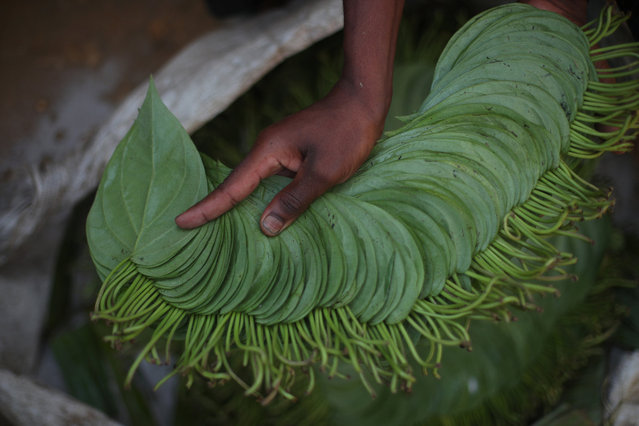
Faruk, 17, a Rohingya refugee trader holds betel leaves which are on sale at a stall in Palong Khali refugee camp near Cox's Bazar, Bangladesh, November 3, 2017. He left his village in Myanmar when the military opened fire towards the Rohingya. “I buy this betel leaf from Palong Khali market, in one bundle there are 160 pieces, I buy it for 80 taka and I sell it for 100 taka. Bangladeshi's and I sell for the same rate in the camp. Outside in the local market it is 80 taka per bundle. My problem is that I don't have money so I can't buy anything to eat, I can't buy fish to eat”, he said. (Photo by Hannah McKay/Reuters)


Faruk, 17, a Rohingya refugee trader holds betel leaves which are on sale at a stall in Palong Khali refugee camp near Cox's Bazar, Bangladesh, November 3, 2017. He left his village in Myanmar when the military opened fire towards the Rohingya. “I buy this betel leaf from Palong Khali market, in one bundle there are 160 pieces, I buy it for 80 taka and I sell it for 100 taka (1 Bangladeshi Taka = 0.012 US Dollar). Bangladeshi's and I sell for the same rate in the camp. Outside in the local market it is 80 taka per bundle. My problem is that I don't have money so I can't buy anything to eat, I can't buy fish to eat”, he said. (Photo by Hannah McKay/Reuters)
Details
27 Nov 2017 08:54:00