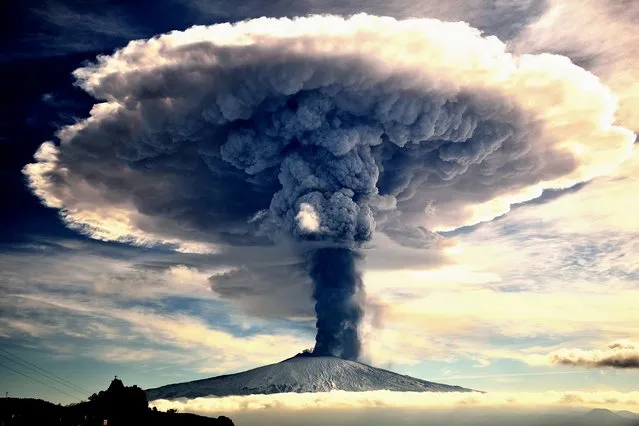
“The power of nature”. Magma, ash and gas erupt from Mount Etna in December 2015, rising to a height of several kilometres. Winner: Nature. (Photo by Giuseppe Mario Famiani/SIPA Contest)
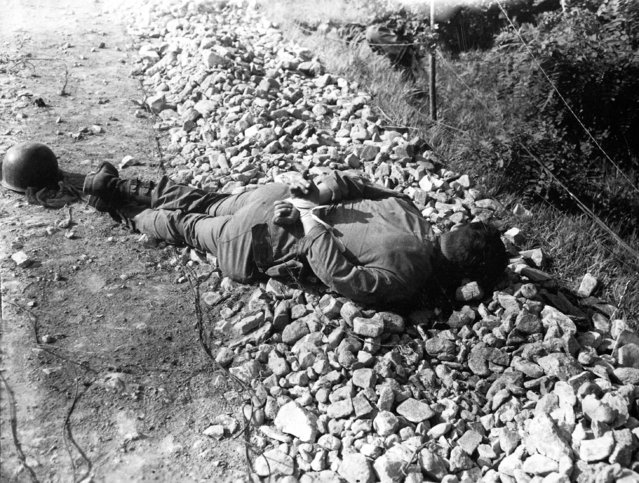
The body of one of several U.S. soldiers who were executed after being captured by North Korean troops just south of Seoul in early July 1950. (Photo by AP Photo)
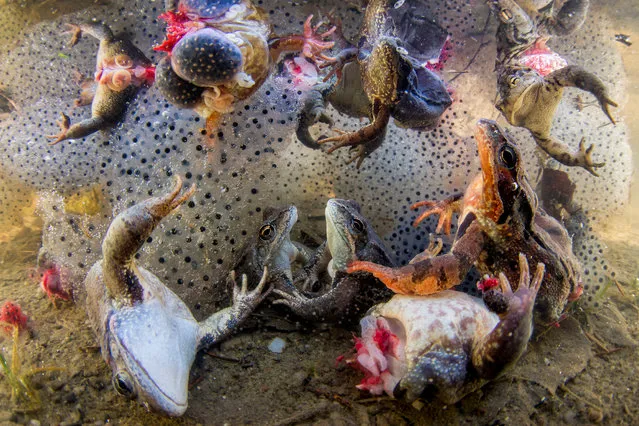
Nature, singles winner: Frogs with their legs severed struggle to the surface, surrounded by frogspawn, after being thrown back into the water in Covasna, Romania. (Photo by Bence Mate/World Press Photo 2019)
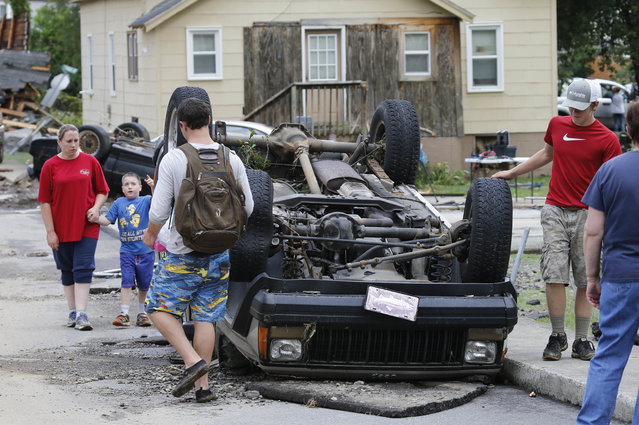
Residents walk past an overturned car as the cleanup begins from severe flooding in White Sulphur Springs, W. Va., Friday, June 24, 2016. (Photo by Steve Helber/AP Photo)
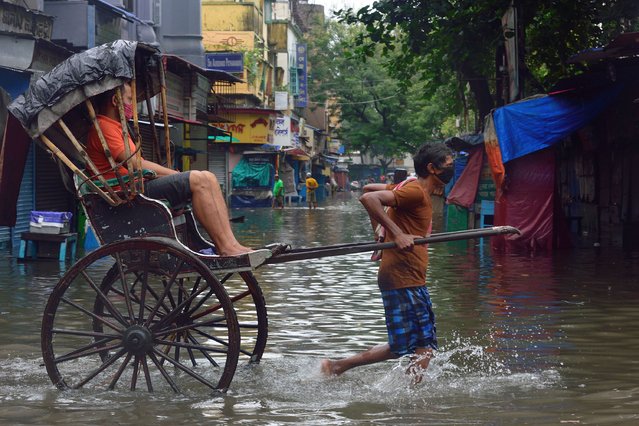
Heavy monsoon rains cause floods in several parts of Kolkata, West Bengal, India on June 17, 2021. (Photo by Sumit Sanyal/Anadolu Agency via Getty Images)
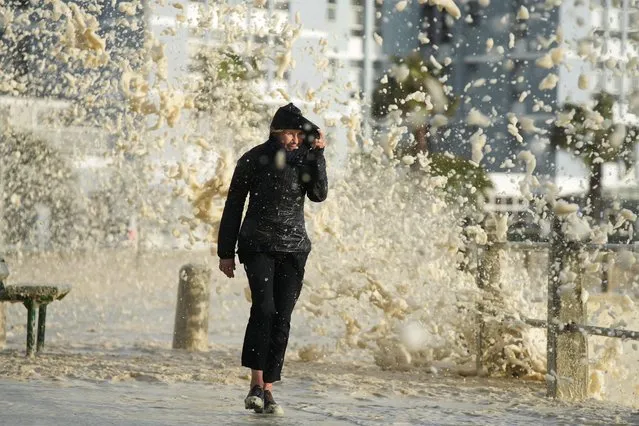
A woman runs through a sea foam, as a seasonal cold front moved over the Cape Peninsula, following a week of severe weather and flooding in Cape Town, South Africa on June 19, 2023. (Photo by Nic Bothma/Reuters)
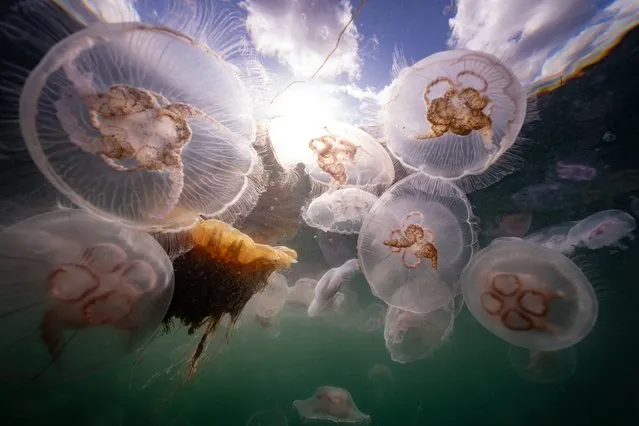
This picture taken on September 11, 2023 shows Moon Jellyfish (with rings) and Sting Jellyfish (yellow-orange inside) among a smack of a several thousand swimming off Seglvik, in northern Norway. (Photo by Olivier Morin/AFP Photo)
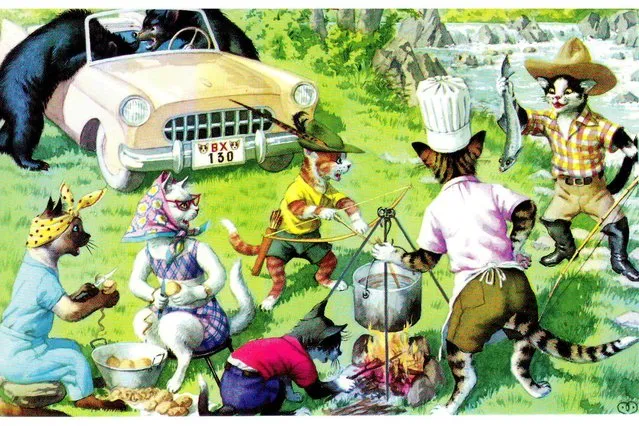
From the 1940s through the 1960s, the Alfred Mainzer Company of Long Island City, NY published a series of linen and photochrome humorous cat postcards illustrated by Eugen Hartung (or Hurtong) (1897–1973), sometimes referred to as “Mainzer Cats”. These postcards normally illustrate settings that are filled with action, often with a minor disaster just about to occur. While the dressed cats were by far the most popular and most plentiful cards, Hartung also painted other dressed animals – primarily mice, dogs, and hedgehogs.