Loading...
Done
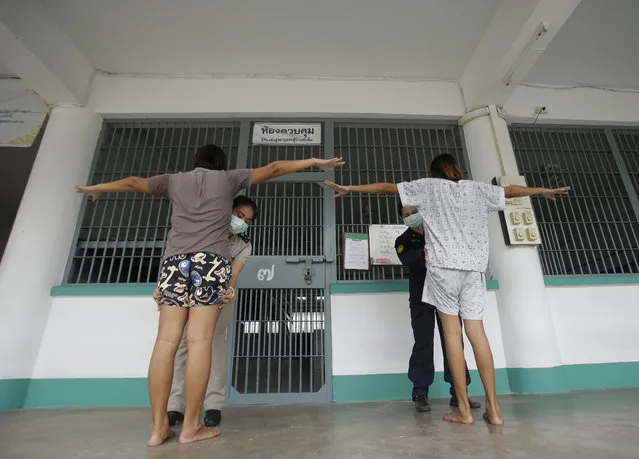
In this January 6, 2017 photo, transgender inmates get a security check from female officers before entering their cell at Pattaya Remand Prison in Pattaya, Chonburi province, Thailand. (Photo by Sakchai Lalit/AP Photo)

In this January 6, 2017 photo, transgender inmates get a security check from female officers before entering their cell at Pattaya Remand Prison in Pattaya, Chonburi province, Thailand. The prison separates lesbian, gay, bisexual and transgender prisoners from other inmates, a little-known policy despite being in place nationwide since 1993, according to the Department of Corrections. (Photo by Sakchai Lalit/AP Photo)
Details
30 Jan 2017 10:01:00
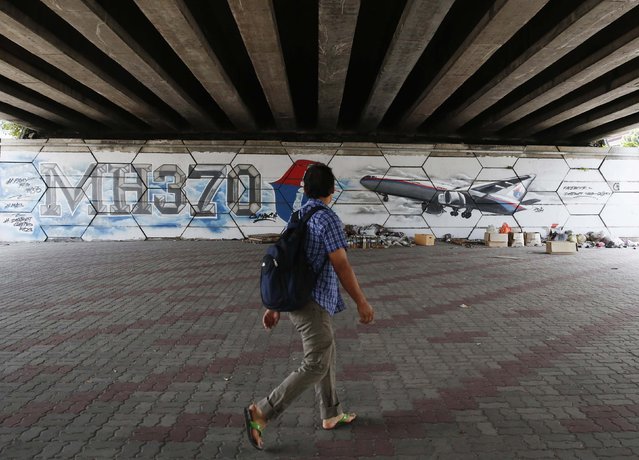
A man walks past graffiti depicting the missing Malaysia Airlines flight MH370 on the one year anniversary of its disappearance in Kuala Lumpur, March 8, 2015. Prime Minister Najib Razak said on Sunday Malaysia remains committed to the search for the missing MH370 jetliner a year after it vanished without trace and he is hopeful it will be found. REUTERS/Olivia Harris (MALAYSIA - Tags: TRANSPORT DISASTER ANNIVERSARY)

A man walks past graffiti depicting the missing Malaysia Airlines flight MH370 on the one year anniversary of its disappearance in Kuala Lumpur, March 8, 2015. Prime Minister Najib Razak said on Sunday Malaysia remains committed to the search for the missing MH370 jetliner a year after it vanished without trace and he is hopeful it will be found. REUTERS/Olivia Harris (MALAYSIA - Tags: TRANSPORT DISASTER ANNIVERSARY)
Details
13 Mar 2015 13:07:00
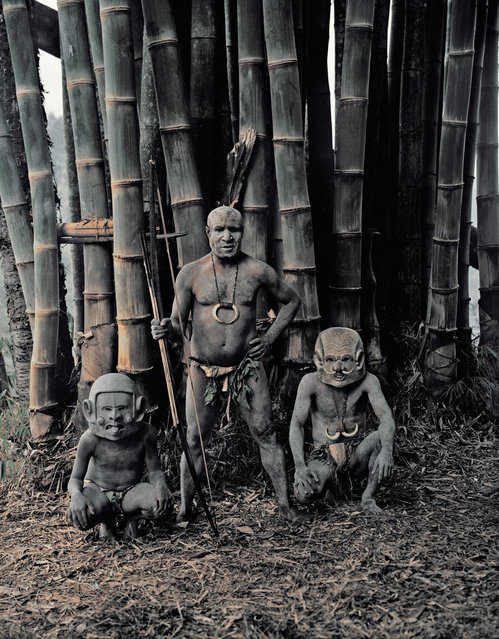
“Asaro from the Eastern Highlands”. The mudmen could not cover their faces with mud because the people of Papua New Guinea thought that the mud from the Asaro river was poisonous. So instead of covering their faces with this alleged poison, they made masks from pebbles that they heated and water from the waterfall, with unusual designs such as long or very short ears either going down to the chin or sticking up at the top, long joined eyebrows attached to the top of the ears, horns and sideways mouths. (Jimmy Nelson)

“Asaro from the Eastern Highlands”. The mudmen could not cover their faces with mud because the people of Papua New Guinea thought that the mud from the Asaro river was poisonous. So instead of covering their faces with this alleged poison, they made masks from pebbles that they heated and water from the waterfall, with unusual designs such as long or very short ears either going down to the chin or sticking up at the top, long joined eyebrows attached to the top of the ears, horns and sideways mouths. (Photo and caption by Jimmy Nelson)
Details
20 Oct 2013 08:54:00
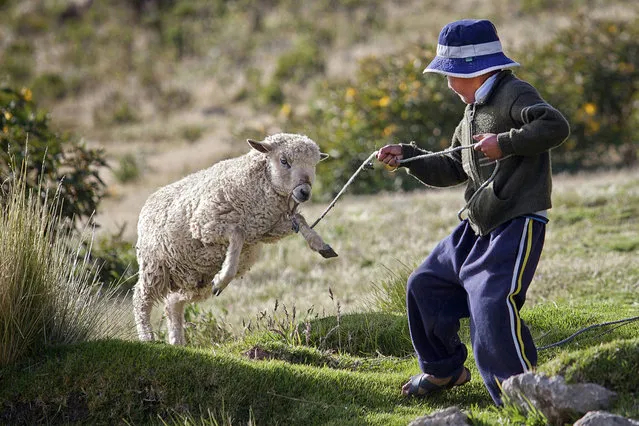
“The Challenge!” Young boy relishes in a game of tug of war before school. Photo location:  Lake Titicaca, Peru. (Photo and caption by Paul Heyman/National Geographic Photo Contest)

“The Challenge!” Young boy relishes in a game of tug of war before school. Photo location: Lake Titicaca, Peru. (Photo and caption by Paul Heyman/National Geographic Photo Contest)
Details
18 Jun 2014 12:40:00
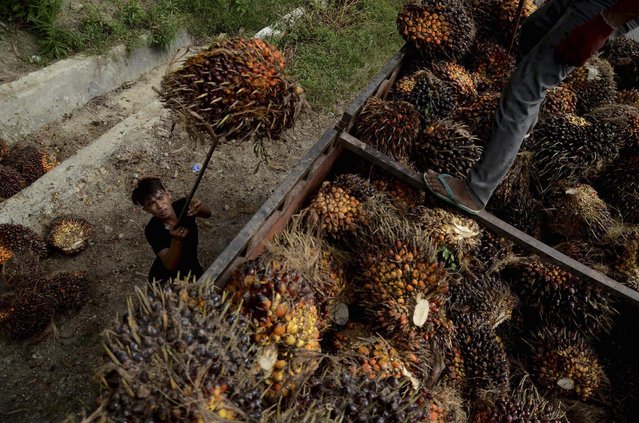
A worker loads palm fruit at a palm oil plantation in North Mamuju regency, West Sulawesi province, Indonesia March 10, 2016 in this photo taken by Antara Foto. (Photo by Sahrul Manda Tikupadang/Reuters/Antara Foto)

A worker loads palm fruit at a palm oil plantation in North Mamuju regency, West Sulawesi province, Indonesia March 10, 2016 in this photo taken by Antara Foto. (Photo by Sahrul Manda Tikupadang/Reuters/Antara Foto)
Details
13 Mar 2016 09:22:00
Festival goers attend day one of the Parklife Festival at Heaton Park on June 9, 2018 in Manchester, England. (Photo by Mercury Press)

Festival goers attend day one of the Parklife Festival at Heaton Park on June 9, 2018 in Manchester, England. (Photo by Mercury Press)
Details
10 Jun 2018 07:18:00
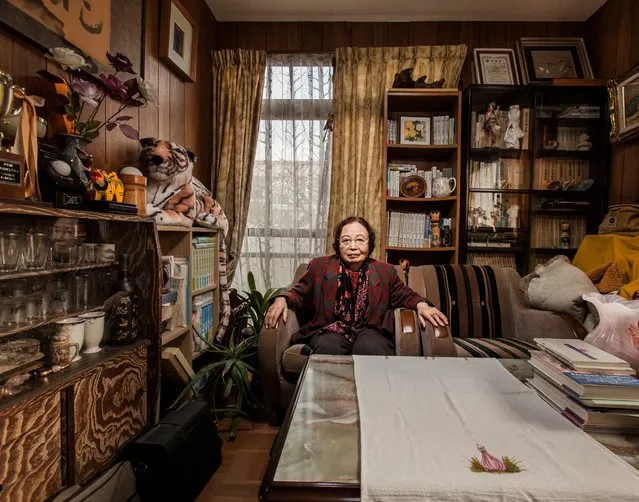
Takeoka Chisaka, Hiroshima, Japan. “One morning in August 1945, I was walking home from the night shift at a factory in Hiroshima. As I reached my door, there was a huge explosion. When I came to, my head was bleeding and I had been blasted 30m away”. (Photo and caption by Sasha Maslov)

Takeoka Chisaka, Hiroshima, Japan. “One morning in August 1945, I was walking home from the night shift at a factory in Hiroshima. As I reached my door, there was a huge explosion. When I came to, my head was bleeding and I had been blasted 30m away. The atomic bomb had detonated. When I found my mother, her eyes were badly burned. A doctor said they had to come out, but he didn’t have the proper tools so used a knife instead. It was hellish. I became a peace-worker after the war. In the 1960s, at a meeting at the UN, I met one of the people who created the atomic bomb. He apologised”. (Photo and caption by Sasha Maslov)
Details
11 May 2015 11:56:00
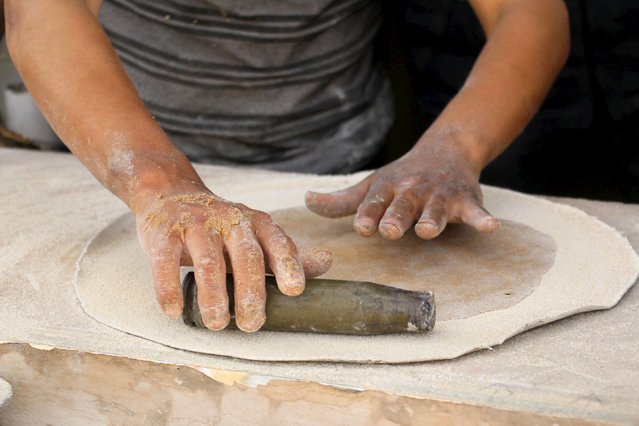
A boy uses remnants of ordnance as he prepares dough inside Abu Khaled's shop in the Douma neighborhood of Damascus April 28, 2015. Abu Khaled opened a shop for making “barley bread” using remnants of weapons including rockets, tank shells and other ordnance fired by forces loyal to Syria's President Bashar al-Assad. (Photo by Amer Almohibany/Reuters)

A boy uses remnants of ordnance as he prepares dough inside Abu Khaled's shop in the Douma neighborhood of Damascus April 28, 2015. Abu Khaled opened a shop for making “barley bread” using remnants of weapons including rockets, tank shells and other ordnance fired by forces loyal to Syria's President Bashar al-Assad. (Photo by Amer Almohibany/Reuters)
Details
09 Aug 2015 11:13:00