Loading...
Done
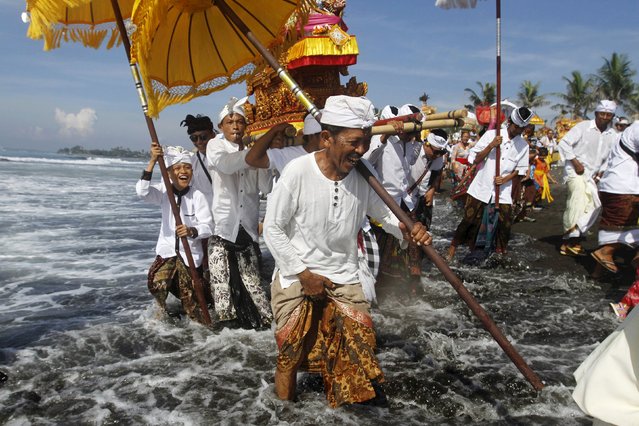
Balinese Hindus carry Pratimas, or symbols of God, on the beach during Melasti, a purification ceremony, ahead of the holy day of Nyepi, in Gianyar on the Indonesian resort island of Bali, March 6, 2016. Nyepi is a day of silence to celebrate the Balinese new year, reserved for self-reflection, where people are not allowed to use lights, light fires, work, travel or enjoy entertainment. (Photo by Roni Bintang/Reuters)

Balinese Hindus carry Pratimas, or symbols of God, on the beach during Melasti, a purification ceremony, ahead of the holy day of Nyepi, in Gianyar on the Indonesian resort island of Bali, March 6, 2016. Nyepi is a day of silence to celebrate the Balinese new year, reserved for self-reflection, where people are not allowed to use lights, light fires, work, travel or enjoy entertainment. (Photo by Roni Bintang/Reuters)
Details
07 Mar 2016 11:19:00
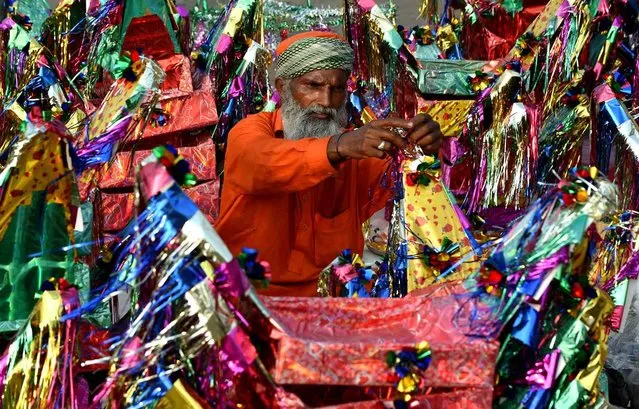
In this photograph taken on September 22, 2016, a Pakistani devotee decorates symbolic paper boats, an offering to Muslim saint Abdulqadir Jilani as a way of giving thanks after their desire to give birth to a son was fulfilled, before dropping it into the water during an annual ceremony on the banks of the River Ravi in Lahore. The ceremony commemorates a centuries-old tale that Muslim saint Abdulqadir Jilani raised a sunken ship carrying a wedding party, at the pleading of the groom's mother, saving all the occupants. (Photo by Arif Ali/AFP Photo)

In this photograph taken on September 22, 2016, a Pakistani devotee decorates symbolic paper boats, an offering to Muslim saint Abdulqadir Jilani as a way of giving thanks after their desire to give birth to a son was fulfilled, before dropping it into the water during an annual ceremony on the banks of the River Ravi in Lahore. The ceremony commemorates a centuries-old tale that Muslim saint Abdulqadir Jilani raised a sunken ship carrying a wedding party, at the pleading of the groom's mother, saving all the occupants. (Photo by Arif Ali/AFP Photo)
Details
06 Oct 2016 09:19:00
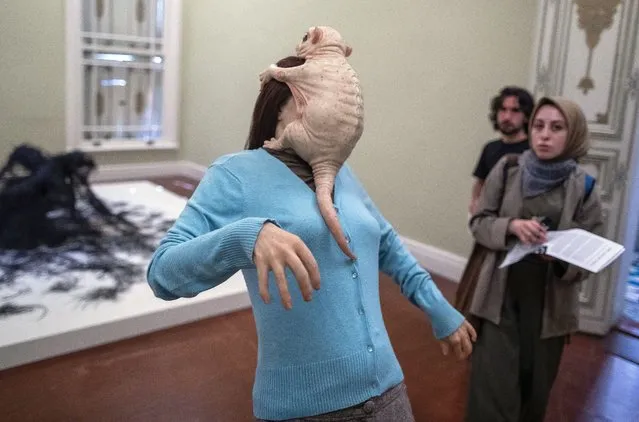
vVisitors view Patricia Piccinini's “The Embrace” artwork during the “You Know Who” exhibition at the Abdulmecit Efendi mansion in Istanbul, Turkey, 27 September 2022. The exhibition, which by the organizers is described as questioning “the representation of the unknown in contemporary art, based on the symbolic world of the supernatural and unknown in the Byzantine period”, is shown from 20 September until 11 December 2022. (Photo by Erdem Sahin/EPA/EFE/Rex Features/Shutterstock)

Visitors view Patricia Piccinini's “The Embrace” artwork during the “You Know Who” exhibition at the Abdulmecit Efendi mansion in Istanbul, Turkey, 27 September 2022. The exhibition, which by the organizers is described as questioning “the representation of the unknown in contemporary art, based on the symbolic world of the supernatural and unknown in the Byzantine period”, is shown from 20 September until 11 December 2022. (Photo by Erdem Sahin/EPA/EFE/Rex Features/Shutterstock)
Details
28 Sep 2022 05:03:00
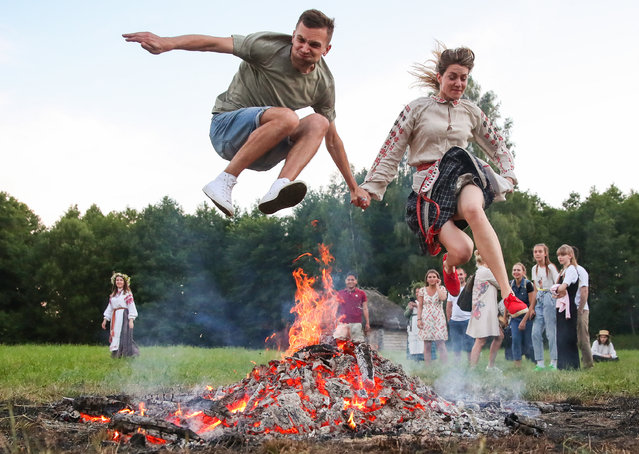
A man and a woman jump over a bonfire during Ivan Kupala Day celebrations held by the Belarusian State Museum of Folk Architecture and Rural Lifestyle in the village of Ozertso near Minsk, Belarus on July 4, 2020. Ivan Kupala Day, also known as Ivana-Kupala or Kupala Night, is a traditional pagan holiday celebrated in eastern Slavic cultures. Various rituals are traditionally performed on Kupala Night, including making flower wreaths, fortune-telling, jumping over bonfires, and burning a wheel-like effigy symbolizing the sun. (Photo by Natalia Fedosenko/TASS)

A man and a woman jump over a bonfire during Ivan Kupala Day celebrations held by the Belarusian State Museum of Folk Architecture and Rural Lifestyle in the village of Ozertso near Minsk, Belarus on July 4, 2020. Ivan Kupala Day, also known as Ivana-Kupala or Kupala Night, is a traditional pagan holiday celebrated in eastern Slavic cultures. Various rituals are traditionally performed on Kupala Night, including making flower wreaths, fortune-telling, jumping over bonfires, and burning a wheel-like effigy symbolizing the sun. (Photo by Natalia Fedosenko/TASS)
Details
23 Jan 2021 09:53:00
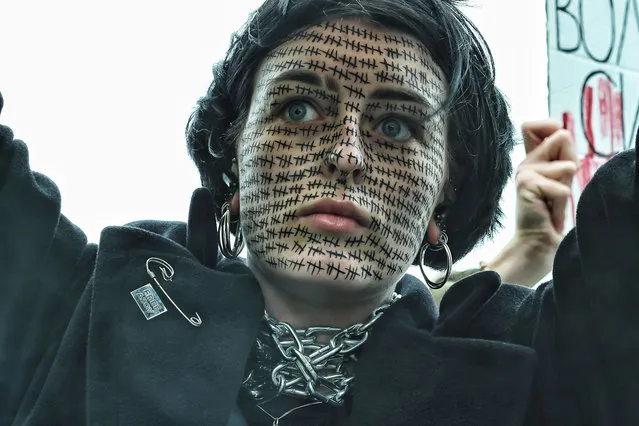
An activist with a painted face symbolizing the count of days spent in captivity attends the Free Azov rally in support of the captured defenders of Mariupol on April 21, 2024 in Kyiv, Ukraine. The participants came out to remind about the Ukrainian soldiers who have been held in Russian captivity for more than two years. (Photo by Yan Dobronosov/Global Images Ukraine via Getty Images)

An activist with a painted face symbolizing the count of days spent in captivity attends the Free Azov rally in support of the captured defenders of Mariupol on April 21, 2024 in Kyiv, Ukraine. The participants came out to remind about the Ukrainian soldiers who have been held in Russian captivity for more than two years. (Photo by Yan Dobronosov/Global Images Ukraine via Getty Images)
Details
05 May 2024 04:35:00
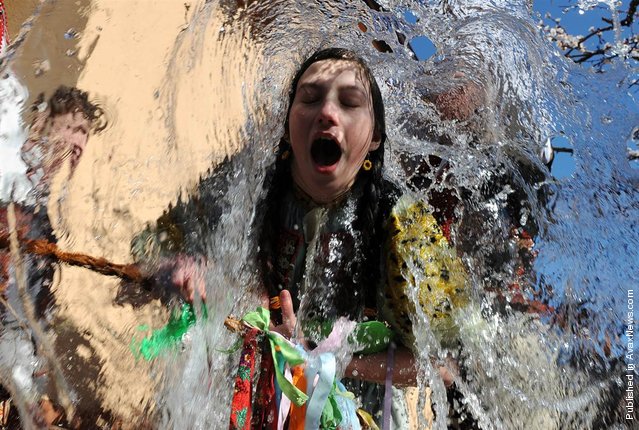
Young Slovaks dressed in traditional costumes throw a bucket of water at a girl as part of Easter celebrations in the village of Trencianska Tepla, Slovakia, April 9, 2012. Slovakia's men splash women with water to symbolize youth, strength and beauty for the upcoming spring season

Young Slovaks dressed in traditional costumes throw a bucket of water at a girl as part of Easter celebrations in the village of Trencianska Tepla, Slovakia, April 9, 2012. Slovakia's men splash women with water to symbolize youth, strength and beauty for the upcoming spring season. (Photo by Samuel Kubani/AFP)
Details
13 Apr 2012 10:38:00
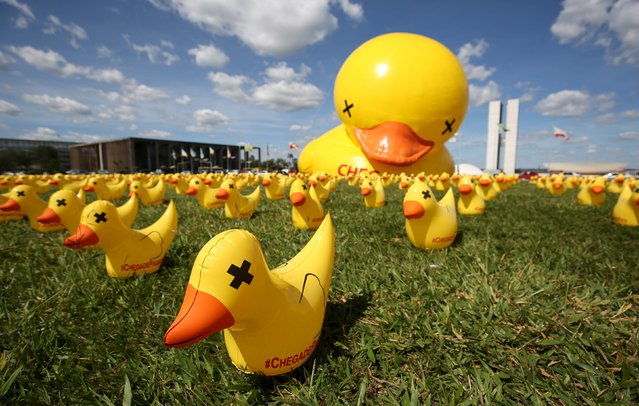
Inflatable dolls in the shape of ducks are seen in front of the National Congress during a protest against tax increases in Brasilia, Brazil, March 29, 2016. The campaign “I will not pay the Duck” is organized by the Federation of Industries of Sao Paulo (FIESP) and uses the duck symbol in reference to industries that pay high taxes. (Photo by Gregg Newton/Reuters)

Inflatable dolls in the shape of ducks are seen in front of the National Congress during a protest against tax increases in Brasilia, Brazil, March 29, 2016. The campaign “I will not pay the Duck” is organized by the Federation of Industries of Sao Paulo (FIESP) and uses the duck symbol in reference to industries that pay high taxes. (Photo by Gregg Newton/Reuters)
Details
30 Mar 2016 11:27:00
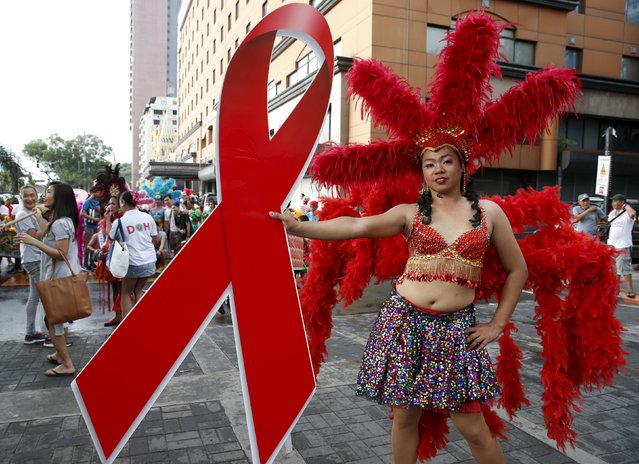
A Filipino transgender woman holds a huge red ribbon symbolizing fight against the HIV virus as she poses before photographers, during a World Aids Day celebration in Manila, Philippines, December 1, 2015. (Photo by Erik De Castro/Reuters)

A Filipino transgender woman holds a huge red ribbon symbolizing fight against the HIV virus as she poses before photographers, during a World Aids Day celebration in Manila, Philippines, December 1, 2015. (Photo by Erik De Castro/Reuters)
Details
03 Dec 2015 08:04:00