Loading...
Done
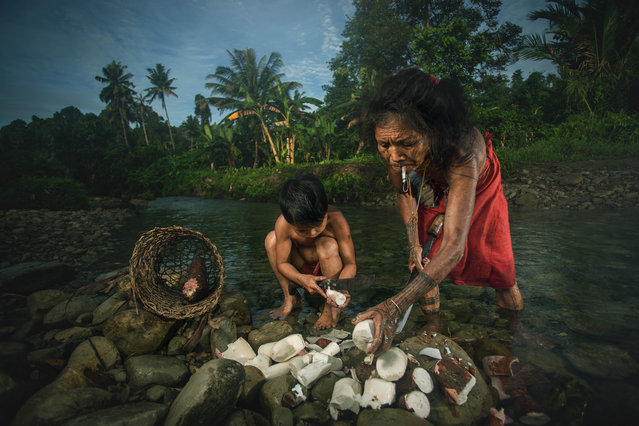
These stunning images document the everyday lives of the men, women and children of the Mentawai tribe. The Mentawai people, a native population in Indonesia, are famous for their decorative tattoos and for living a semi-nomadic life on the Mentawai Islands in West Sumatra. Shot by professional photographer Mohammed Saleh Bin Dollah, the series captures a glimpse of life on the island as the Mentawai men smoke and hunt for food and the children play in the river. (Photo by Muhamad Saleh Dollah/Barcroft Media)

These stunning images document the everyday lives of the men, women and children of the Mentawai tribe. The Mentawai people, a native population in Indonesia, are famous for their decorative tattoos and for living a semi-nomadic life on the Mentawai Islands in West Sumatra. Shot by professional photographer Mohammed Saleh Bin Dollah, the series captures a glimpse of life on the island as the Mentawai men smoke and hunt for food and the children play in the river. Here: A young boy helps a woman to prepare food taken on July 19, 2014 on the Mentawai Islands, Indonesia. (Photo by Muhamad Saleh Dollah/Barcroft Media)
Details
06 Feb 2016 13:09:00
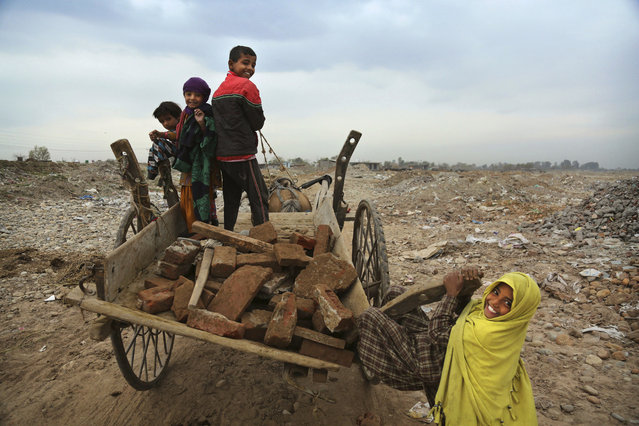
An Indian nomadic Gujjar girl hangs on to a horse cart after collecting bricks from debris on the outskirts of Jammu, India, Tuesday, March 7, 2017. The Gujjar tribal communities are considered by some to be economically and socially backward and the lack of care by the state government has led to resentment amongst the community. The tribe moves to the plains from the hills to escape the cold winters. (Photo by Channi Anand/AP Photo)

An Indian nomadic Gujjar girl hangs on to a horse cart after collecting bricks from debris on the outskirts of Jammu, India, Tuesday, March 7, 2017. The Gujjar tribal communities are considered by some to be economically and socially backward and the lack of care by the state government has led to resentment amongst the community. The tribe moves to the plains from the hills to escape the cold winters. (Photo by Channi Anand/AP Photo)
Details
09 Jun 2017 06:36:00
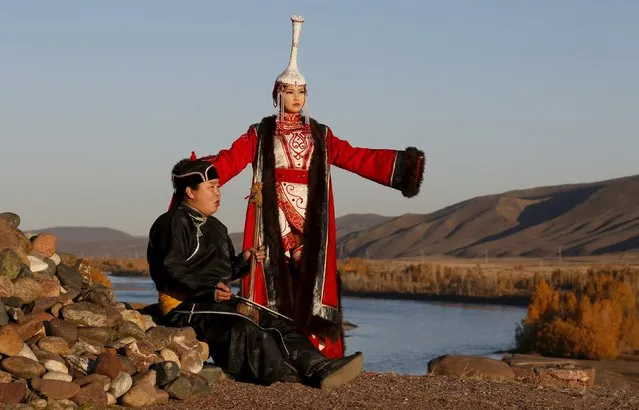
Master of throat singing (or Khoomei) Aikhan Orzhak (L) and model Choigana Kertek, dressed in traditional costume, perform during sunset at the Aldyn Bulak area on the bank of the Yenisei River outside the village of Ust-Elegest in Tuva region, Southern Siberia, Russia, October 7, 2015. The region is inhabited by Tuvans, historically cattle-herding nomads, who nowadays practise two main confessions - Buddhism and Shamanism. (Photo by Ilya Naymushin/Reuters)

Master of throat singing (or Khoomei) Aikhan Orzhak (L) and model Choigana Kertek, dressed in traditional costume, perform during sunset at the Aldyn Bulak area on the bank of the Yenisei River outside the village of Ust-Elegest in Tuva region, Southern Siberia, Russia, October 7, 2015. The region is inhabited by Tuvans, historically cattle-herding nomads, who nowadays practise two main confessions – Buddhism and Shamanism. (Photo by Ilya Naymushin/Reuters)
Details
17 Oct 2015 08:03:00
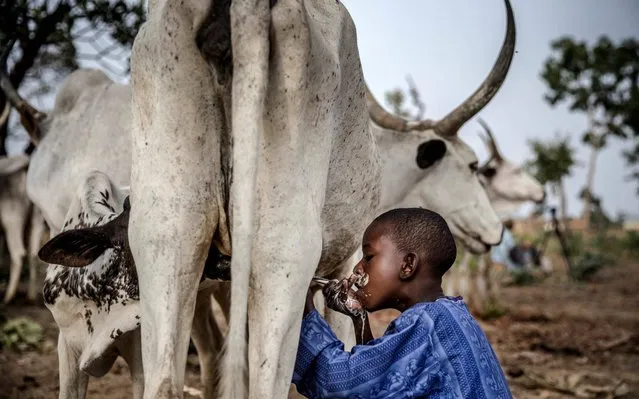
8-year-old Fulani boy Suleiman Yusuf drinks milk from a cow belonging to his father cattle near his family's house at Kachia Grazing Reserve, Kaduna State, Nigeria, on April 16, 2019. Kachia Grazing Reserve is an area set aside for the use of Fulani pastoralist and it is intended to be the foci of livestock development. The purpose for the grazing reserves is the settlement of nomadic pastoralists and inducement to sedentarisation through the provision of land for grazing and permanent water as way to avoid conflict. (Photo by Luis Tato/AFP Photo)

8-year-old Fulani boy Suleiman Yusuf drinks milk from a cow belonging to his father cattle near his family's house at Kachia Grazing Reserve, Kaduna State, Nigeria, on April 16, 2019. Kachia Grazing Reserve is an area set aside for the use of Fulani pastoralist and it is intended to be the foci of livestock development. The purpose for the grazing reserves is the settlement of nomadic pastoralists and inducement to sedentarisation through the provision of land for grazing and permanent water as way to avoid conflict. (Photo by Luis Tato/AFP Photo)
Details
10 Jul 2019 00:01:00
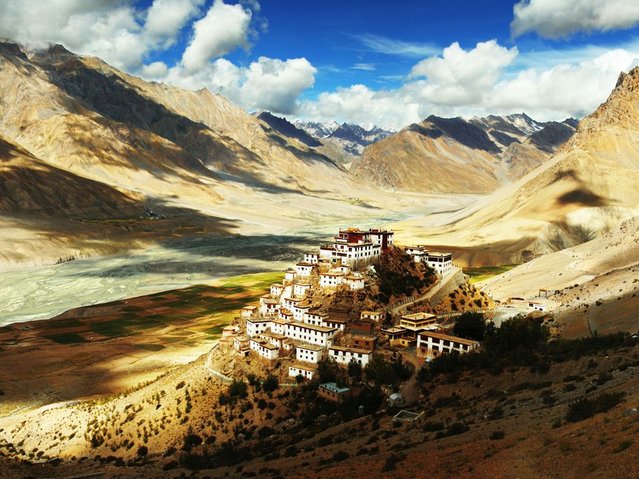
Buddhist Monastery Key Gompa

Key Gompa (also spelled Ki, Kye or Kee) is a Tibetan Buddhist monastery located on top of a hill at an altitude of 4,166 metres (13,668 ft) above sea level, close to the Spiti River, in the Spiti Valley of Himachal Pradesh, Lahaul and Spiti district, India. It is the biggest monastery of Spiti Valley and a religious training centre for Lamas. It reportedly had 100 monks in 1855.
Details
05 Dec 2013 10:48:00
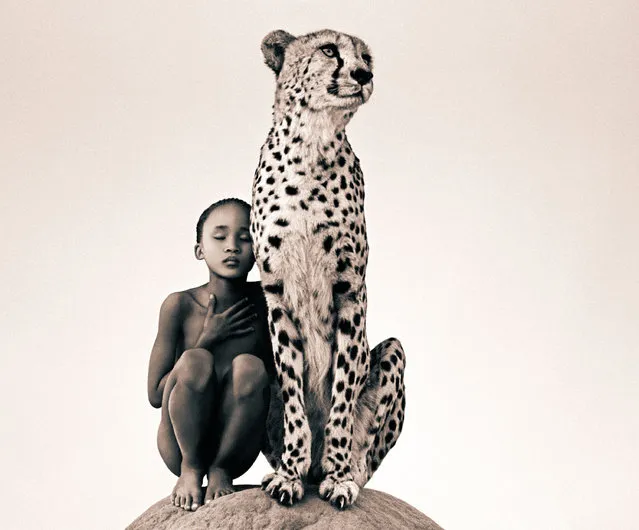
“Ashes and Snow” by Gregory Colbert

“Ashes and Snow by Canadian artist Gregory Colbert is an installation of photographic artworks, films, and a novel in letters that travels in the Nomadic Museum, a temporary structure built exclusively to house the exhibition. The work explores the shared poetic sensibilities of human beings and animals”. – Wikipedia. (Photo by Gregory Colbert)
Details
12 Mar 2013 12:09:00
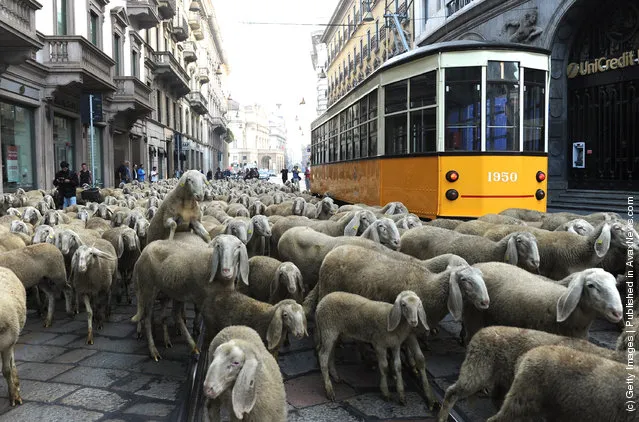
Sheep In The Streets Of Milan During Filming For The Last Shepherd

Sheep are waiting in Via Manzoni before the final filming of the Last Shepherd on October 1, 2011 in Milan, Italy. Directed by Marco Bonfanti, L'Ultimo Pastore (The Last Shepherd) tells the story of the life of Renato Zucchelli, the last nomadic shepherd in Milan. (Photo by Pier Marco Tacca/Getty Images)
Details
02 Oct 2011 12:49:00
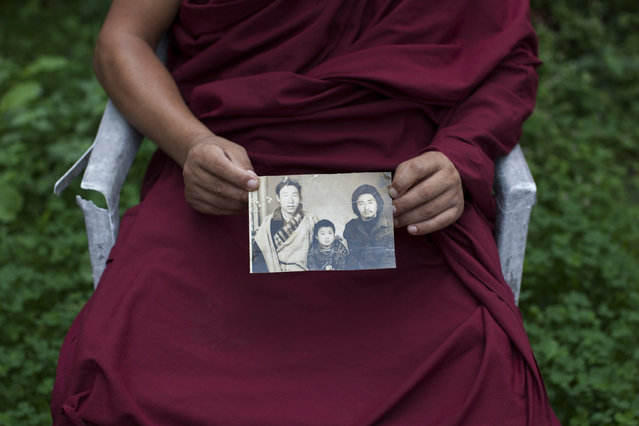
In this Saturday, September 27, 2014 photo, Tibetan monk Dorjee, 38, displays a photograph of his father, left, and himself, center, taken in Tibet, in Dharamsala, India. Dorjee said he held back his tears when he spoke with his parents on the phone after a separation period of 27 years. He exchanged a few words with his father but said his mother fainted on hearing his voice. (Photo by Tsering Topgyal/AP Photo)

“When I was 8 years old, my parents paid a smuggler to take me across the Himalayas, a weekslong walk over the mountains from Tibet to India. It was a trek that tens of thousands of other Tibetans have taken since the Dalai Lama fled a failed 1959 uprising against Chinese rule. My parents must have had their reasons to send me here; they must have had the best of intentions. But 18 years later, I still don't know why they did it. They are not political people. They are small farmers who raise barley and a few yak in a rural area not far from Lhasa, the Tibetan capital. I have not seen them since I left...”. – Tsering Topgyal via The Associated Press. (Photo by Tsering Topgyal/AP Photo)
Details
05 Nov 2014 12:27:00