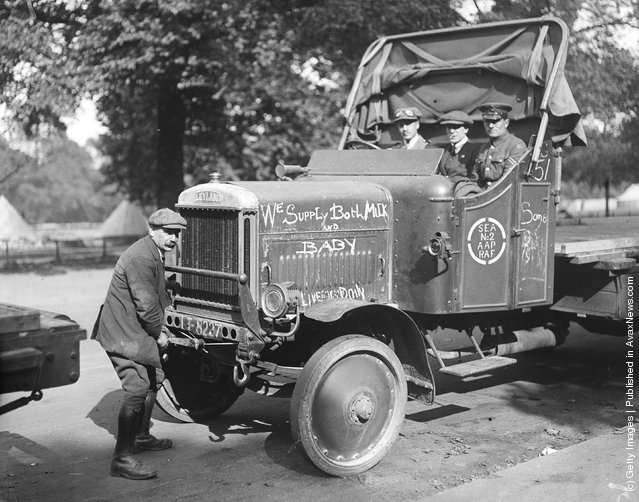
A Leyland lorry during the railway strike, “we supply both milk and baby” is chalked on the bonnet. (Photo by A. R. Coster/Topical Press Agency/Getty Images). 3rd October 1919
“We take rusty old junk and we put love into it”. The old Motor City has a unique style in bicycles these days: from fat wheels and fake fuel tanks to stretched cycles with powerful sound systems – and even a family-sized BBQ. “Detroit’s custom bike scene developed alongside Slow Roll, a weekly cycle ride started in 2010 by Jason Hall and Mike MacKool. Now upwards of 2,000 people turn up each Monday to cruise a different part of the city. The week I go the crowd seems evenly split between black and white, male and female, city and suburbs. It’s the most inclusive cycle event I’ve ever witnessed”. (Photo by Jason Walker/Slow Roll Monday Nights)
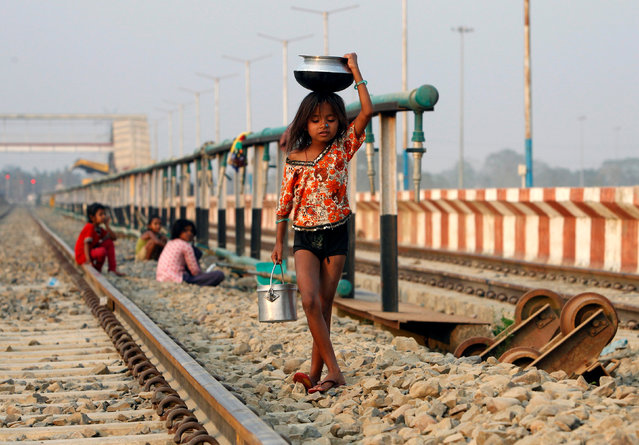
A girl carries utensils after filling them with water from a pipe that supplies water to trains at a railway station on the outskirts of Agartala, India, February 28, 2017. (Photo by Jayanta Dey/Reuters)
A murmuration of starlings above the the small village of Rigg, near Gretna, in the Scottish Borders, on November 25, 2013. The weight of the resting birds on power lines caused some power localised power outages in the village. Still one of the commonest of garden birds, its decline elsewhere puts it on the Red List of endangered species. (Photo by Owen Humphreys/PA Wire)
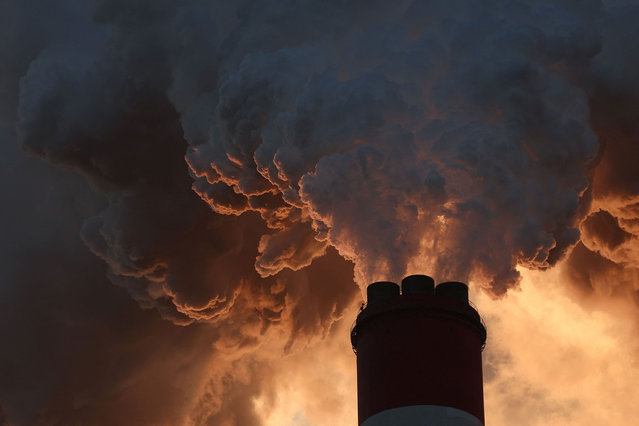
Smoke and steam billow from Belchatow Power Station, Europe's largest coal-fired power plant powered by lignite, operated by Polish utility PGE, in Rogowiec, Poland on November 22, 2023. (Photo by Kacper Pempel/Reuters)
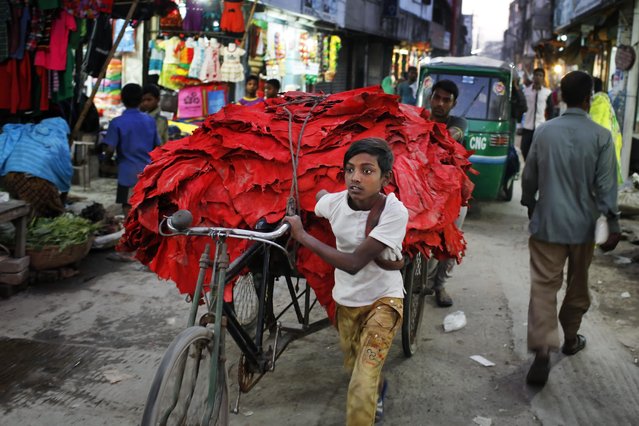
In this Thursday, February 9, 2017 photo, a Bangladeshi boy pulls a rickshaw loaded with strips of leather at the highly polluted Hazaribagh tannery area in Dhaka, Bangladesh. Hazardous, heavily polluting tanneries with workers as young as 14 supplied leather to companies that make shoes and handbags for Western brands, a nonprofit group that investigates supply chains says. (Photo by A.M. Ahad/AP Photo)
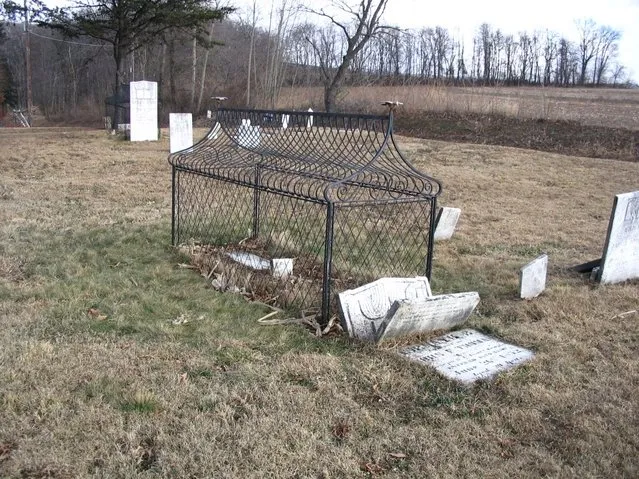
Mortsafes were contraptions designed to protect graves from disturbance. Resurrectionists had supplied the schools of anatomy in Scotland since the early 18th century. This was due to the necessity for medical students to learn anatomy by attending dissections of human subjects, which was frustrated by the very limited allowance of dead bodies – for example the corpses of executed criminals – granted by the government, which controlled the supply.
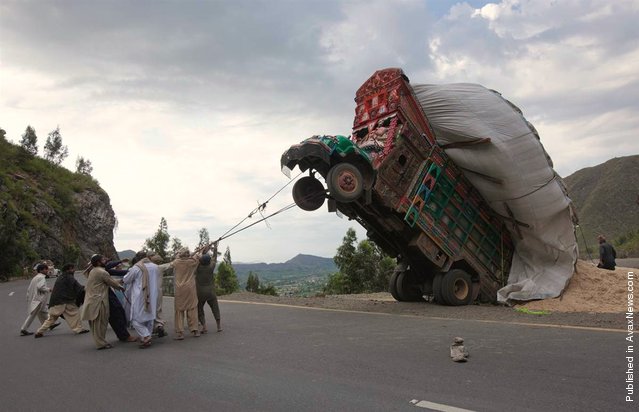
Men use ropes to try and right a supply truck overloaded with wheat straw along a road in Dargai, in the Malakand district, about 100 miles northwest of Pakistan's capital Islamabad, on April 13, 2012. (Photo by Mian Khursheed/Reuters)