Loading...
Done
An actor playing the role of the Conductor, poses for a photograph alongside the Polar Express Train Ride at the Swanage Railway in Dorset, UK on Thursday, November 16, 2023, a festive-themed train journey based on the Polar Express book and film, which invites visitors to travel in their pyjamas and dressing gowns as they journey from Swanage to the “North Pole”. (Photo by Andrew Matthews/PA Images via Getty Images)

An actor playing the role of the Conductor, poses for a photograph alongside the Polar Express Train Ride at the Swanage Railway in Dorset, UK on Thursday, November 16, 2023, a festive-themed train journey based on the Polar Express book and film, which invites visitors to travel in their pyjamas and dressing gowns as they journey from Swanage to the “North Pole”. (Photo by Andrew Matthews/PA Images via Getty Images)
Details
24 Jan 2025 04:47:00


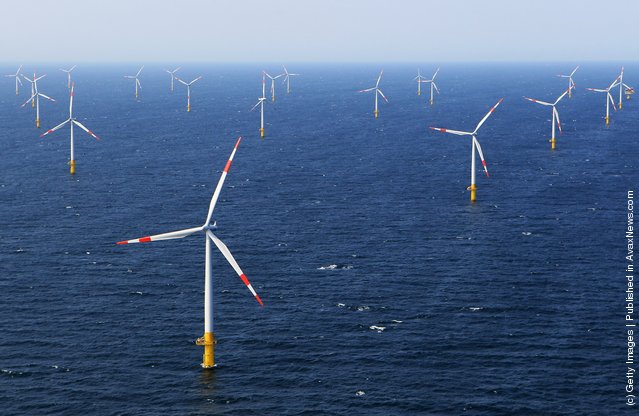
Wind turbines stand in the Baltic 1 offshore wind farm on April 29, 2011 in the Baltic Sea near Zingst, Germany. Baltic 1, a project of German energy utility EnBW that includes 21 turbines rated at 2.3 megawatts each, will be Germany's first commercial offshore wind farm once it officially begins operation on May 2. Germany has thus far lagged in offshore wind farm construction when compared to neighbors like Great Britain and Denmark, though German Chancellor Angela Merkel has vowed to invest heavily into offshore wind farms as part of an overall policy to encourage renewable energy production. (Photo by Joern Pollex/Getty Images)
Details
30 Apr 2011 12:54:00
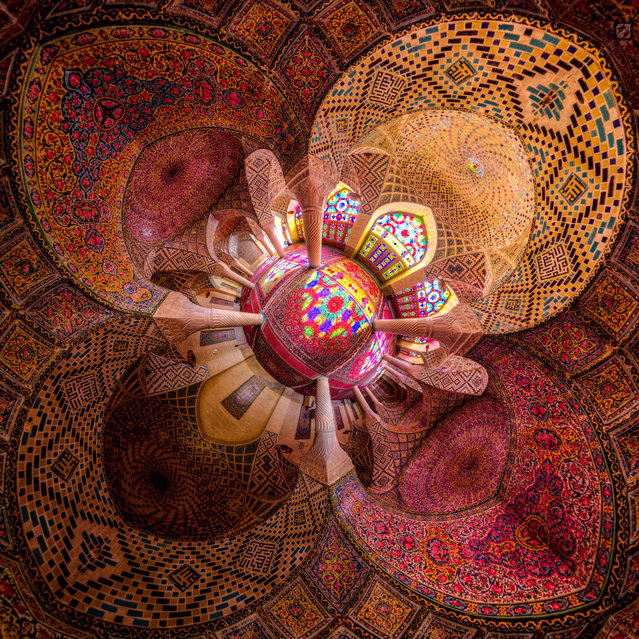
The Nasir al-mulk or “Pink” mosque in Shiraz, Iran. (Photo by Mohammad Reza Domiri Ganj)

Amateur Iranian photographer Mohammad Reza Domiri Ganji, 23 likes to learn as much as he can about a site before he photographs it. Then he utilizes a variety of wide-angle and fisheye lenses, as well as occasional panoramic techniques to create beautiful new, often mind-bending images. He usually shoots the architectural wonders of Iran, and hopes that the Iranian government will allow him to travel further from home in pursuit of other iconic architectural treasures. Photo: The Nasir al-mulk or “Pink” mosque in Shiraz, Iran. (Photo by Mohammad Reza Domiri Ganj)
Details
17 Aug 2014 08:58:00
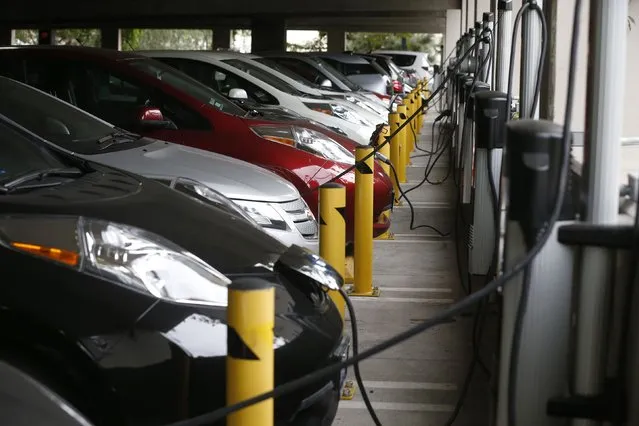
Electric cars sit charging in a parking garage at the University of California, Irvine January 26, 2015. “The Irvine Smart Grid Demonstration”, a $79 million project funded half by federal stimulus money and half by Edison and partners like UC Irvine, was launched in 2010. (Photo by Lucy Nicholson/Reuters)

Electric cars sit charging in a parking garage at the University of California, Irvine January 26, 2015. “The Irvine Smart Grid Demonstration”, a $79 million project funded half by federal stimulus money and half by Edison and partners like UC Irvine, was launched in 2010. The $12 billion utility's research team Southern California Edison is testing everything from charging electronic vehicles via cell phone to devices that smooth out the power created by rooftop solar panels. Those are some of the roughly 60 projects in the works at Edison's Advanced Technology division. It has a small $19 million annual budget, but its influence far exceeds that. (Photo by Lucy Nicholson/Reuters)
Details
28 Jan 2015 11:50:00
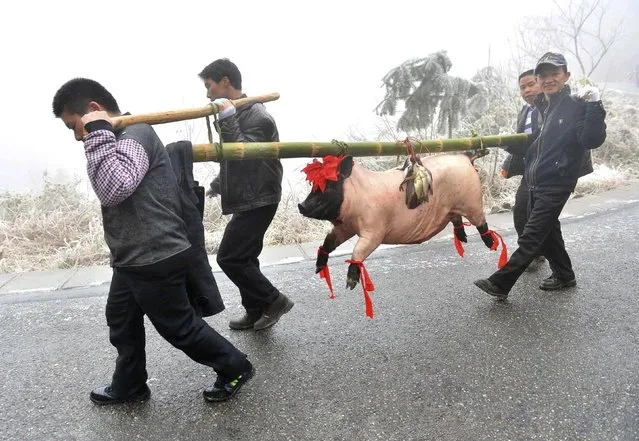
Residents carry a slaughtered pig with a bamboo pole as they walk home on a street, which was shut to traffic due to ice, in Leishan county, Guizhou province January 31, 2015. Blizzards and icy rain that lasted for several days at the end of January have disrupted traffic, collapsed houses and decimated crops in central Chinese provinces, Xinhua News Agency reported. (Photo by Reuters/Stringer)

Residents carry a slaughtered pig with a bamboo pole as they walk home on a street, which was shut to traffic due to ice, in Leishan county, Guizhou province January 31, 2015. Blizzards and icy rain that lasted for several days at the end of January have disrupted traffic, collapsed houses and decimated crops in central Chinese provinces, Xinhua News Agency reported. (Photo by Reuters/Stringer)
Details
07 Feb 2015 14:03:00
In this photograph taken on May 20, 2014 nine year old Indian boy Lakhan Kale is tied with a cloth rope around his ankle, to a bus-stop pole in Mumbai. (Photo by Punit Paranjpe/AFP Photo)

In this photograph taken on May 20, 2014 nine year old Indian boy Lakhan Kale is tied with a cloth rope around his ankle, to a bus-stop pole in Mumbai. The nine-year-old boy dressed in blue lay listlessly on the pavement in the scorching Mumbai summer afternoon, his ankle tethered with rope to a bus stop, unheeded by pedestrians strolling past. Lakhan Kale cannot hear or speak and suffers from cerebral palsy and epilepsy, so his grandmother and carer tied him up to keep him safe while she went to work, selling toys and flower garlands on the city's roadsides. (Photo by Punit Paranjpe/AFP Photo)
Details
04 Jul 2014 09:54:00
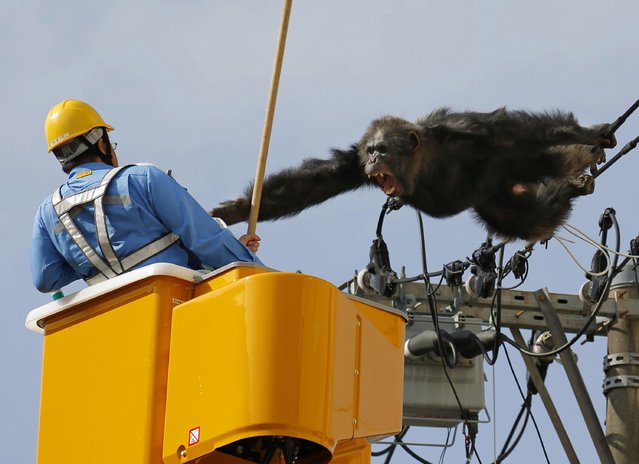
Chacha, the male chimp, screams at a worker in Sendai, northern Japan, Thursday, April 14, 2016 after fleeing from a zoo. The chimpangzee tried desperately to avoid being captured by climbing an electric pole. Chacha was on the loose nearly two hours Thursday after it disappeared from the Yagiyama Zoological Park in Sendai, the city that's hosting finance ministers from the Group of Seven industrialized nations in May. (Photo by Kyodo News via AP Photo)

Chacha, the male chimp, screams at a worker in Sendai, northern Japan, Thursday, April 14, 2016 after fleeing from a zoo. The chimpangzee tried desperately to avoid being captured by climbing an electric pole. Chacha was on the loose nearly two hours Thursday after it disappeared from the Yagiyama Zoological Park in Sendai, the city that's hosting finance ministers from the Group of Seven industrialized nations in May. (Photo by Kyodo News via AP Photo)
Details
15 Apr 2016 11:34:00
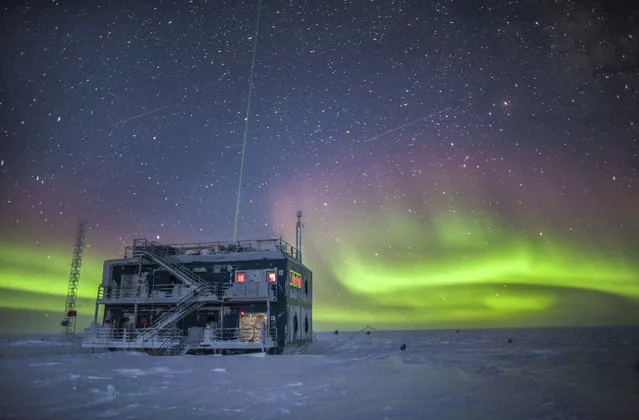
This undated photo provided by NOAA in May 2018 shows aurora australis near the South Pole Atmospheric Research Observatory in Antarctica. When a hole in the ozone formed over Antarctica, countries around the world in 1987 agreed to phase out several types of ozone-depleting chemicals called chlorofluorocarbons (CFCs). Production was banned, emissions fell and the hole shriveled. But according to a study released on Wednesday, May 16, 2018, scientists say since 2013, there’s more of a banned CFC going into the atmosphere. (Photo by Patrick Cullis/NOAA via AP Photo)

This undated photo provided by NOAA in May 2018 shows aurora australis near the South Pole Atmospheric Research Observatory in Antarctica. When a hole in the ozone formed over Antarctica, countries around the world in 1987 agreed to phase out several types of ozone-depleting chemicals called chlorofluorocarbons (CFCs). Production was banned, emissions fell and the hole shriveled. But according to a study released on Wednesday, May 16, 2018, scientists say since 2013, there’s more of a banned CFC going into the atmosphere. (Photo by Patrick Cullis/NOAA via AP Photo)
Details
15 Aug 2018 00:05:00