Loading...
Done
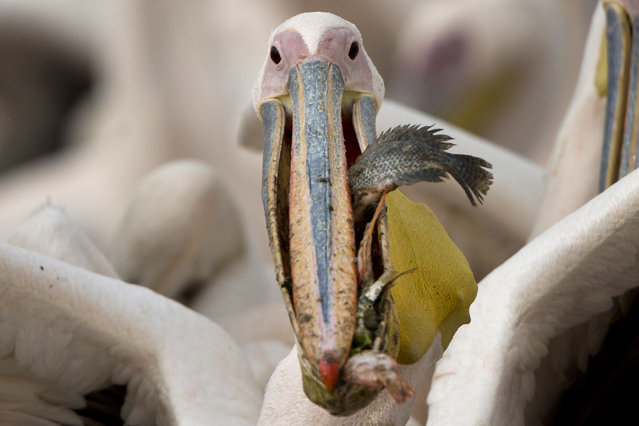
A Great White Pelicans eats fish in the Mishmar HaSharon reservoir, Israel, Wednesday, November 4, 2015. Thousands of Pelicans stop in the reservoir for food provided by the Israeli nature reserves authority as they make their way to Africa. (Photo by Ariel Schalit/AP Photo)

A Great White Pelicans eats fish in the Mishmar HaSharon reservoir, Israel, Wednesday, November 4, 2015. Thousands of Pelicans stop in the reservoir for food provided by the Israeli nature reserves authority as they make their way to Africa. (Photo by Ariel Schalit/AP Photo)
Details
11 Nov 2015 08:04:00
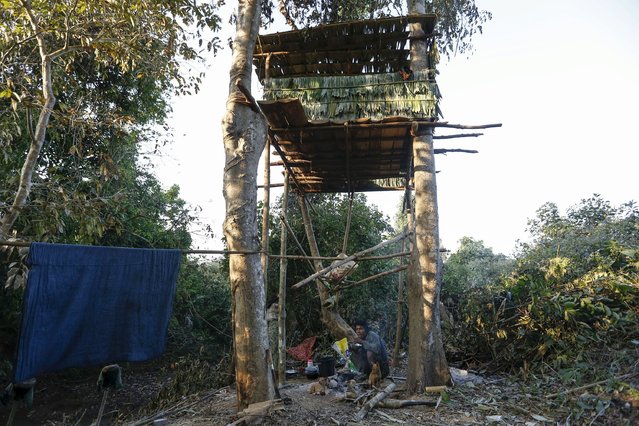
A man eats a meal under his tree house, which acts as a shelter from wild elephants, in Gwe Cho village, Shwe Taung Yan township Ayeyarwady division January 18, 2016. (Photo by Soe Zeya Tun/Reuters)

A man eats a meal under his tree house, which acts as a shelter from wild elephants, in Gwe Cho village, Shwe Taung Yan township Ayeyarwady division January 18, 2016. Wild elephants are driving villagers in a Myanmar township to seek refuge while the animals storm their rice paddies, in Ayeyarwady in the Delta region, West of Yangon. (Photo by Soe Zeya Tun/Reuters)
Details
20 Jan 2016 08:05:00
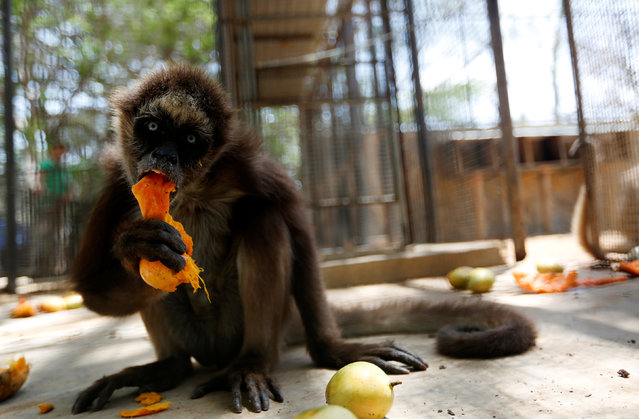
A spider monkey eats a mango at the Paraguana zoo in Punto Fijo, Venezuela July 22, 2016. (Photo by Carlos Jasso/Reuters)

A spider monkey eats a mango at the Paraguana zoo in Punto Fijo, Venezuela July 22, 2016. Some 50 animals have starved to death in the last six months at one of Venezuela's main zoos due to chronic food shortages that have plagued the crisis-stricken South American nation. (Photo by Carlos Jasso/Reuters)
Details
28 Jul 2016 13:48:00
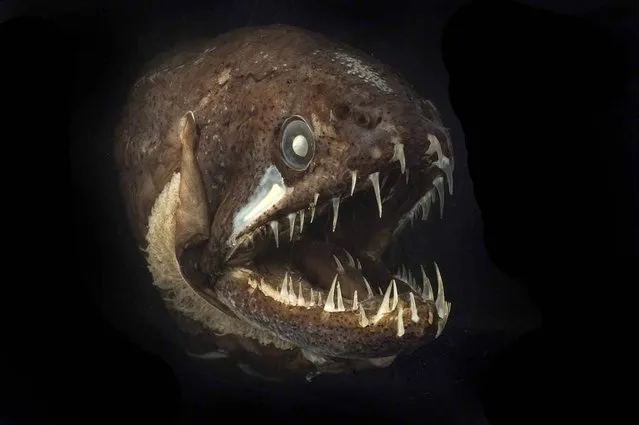
Imagine living in the sea where it is permanently dark, cold, and food is hard to find. For many animals at depth, it may be weeks to months between meals. If you find something to eat, you have to hang on to it

Imagine living in the sea where it is permanently dark, cold, and food is hard to find. For many animals at depth, it may be weeks to months between meals. If you find something to eat, you have to hang on to it. This is why so many deep-sea fishes have lots of big teeth. This dragonfish, spotted off the coast of Australia, even has teeth on its tongue. They would be terrifying animals ... if they weren’t the size of a banana. (Photo by Julian Finn/Museum Victoria)
Details
21 May 2012 12:14:00
Harry Sprinkle eats a meal at St. John's Bread and Life, a free meal service in the Brooklyn borough of New York City

Harry Sprinkle eats a meal at St. John's Bread and Life, a free meal service, on December 23, 2011 in the Brooklyn borough of New York City. St. John's Bread and Life serves approximately 2,200 meals per day; the organization has existed since 1982. (Photo by Andrew Burton/Getty Images)
Details
26 Dec 2011 13:38:00
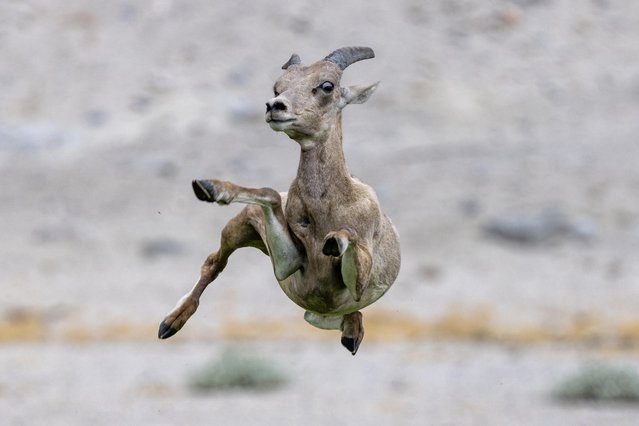
An endangered desert bighorn lamb leaps in play at a park where bighorns are tempted to leave the safety of their native habitat to eat grass and drink water in the summertime on August 9, 2023 near Indio, California. (Photo by David McNew/Getty Images)

An endangered desert bighorn lamb leaps in play at a park where bighorns are tempted to leave the safety of their native habitat to eat grass and drink water in the summertime on August 9, 2023 near Indio, California. (Photo by David McNew/Getty Images)
Details
26 Dec 2023 20:14:00
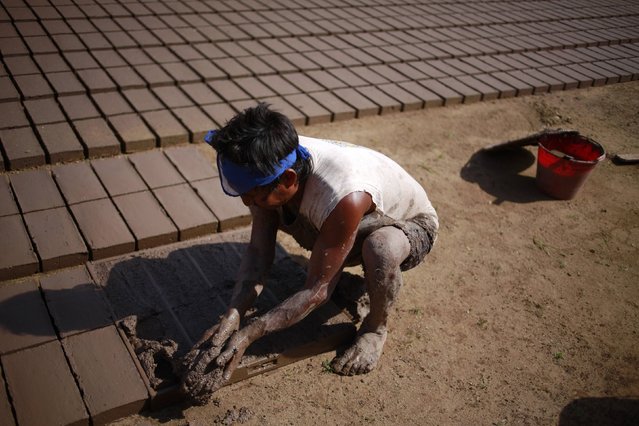
A worker settles mud in a mold to make bricks at a brick factory in Tixtla, on the outskirts of Chilpancingo, in the Guerrero state, January 26, 2015. The worker earns a salary of 15 Mexican pesos, or one dollar, for every 100 bricks made on a working day of at least 5 hours. (Photo by Jorge Dan Lopez/Reuters)

A worker settles mud in a mold to make bricks at a brick factory in Tixtla, on the outskirts of Chilpancingo, in the Guerrero state, January 26, 2015. The worker earns a salary of 15 Mexican pesos, or one dollar, for every 100 bricks made on a working day of at least 5 hours. (Photo by Jorge Dan Lopez/Reuters)
Details
28 Jan 2015 11:33:00
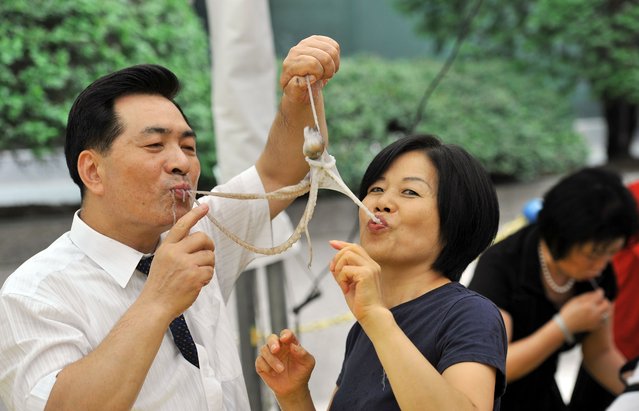
A South Korean man and a woman eat a live octopus during an event to promote a local food festival in Seoul on September 12, 2013. (Photo by Jung Yeon-Je/AFP Photo)

Live octopus is a delicacy in South Korea but is a known choking hazard, since the still-moving suction cups can cause tentacle pieces to stick in a person's throat. A baby octopus is often consumed whole, while larger varieties are cut up and the still-wriggling tentacles eaten with a splash of sesame oil. Photo: A South Korean man and a woman eat a live octopus during an event to promote a local food festival in Seoul on September 12, 2013. (Photo by Jung Yeon-Je/AFP Photo)
Details
13 Sep 2013 09:40:00