Loading...
Done
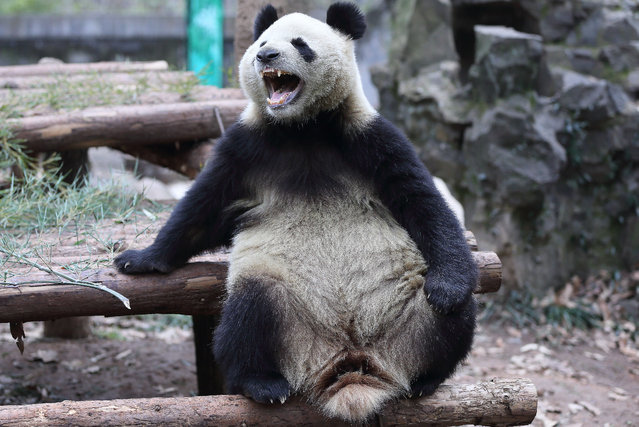
A panda bear sits on a logs in a zoo on January 15, 2015 in Hangzhou, China. (Photo by Feature China/Barcroft Media)

A panda bear sits on a logs in a zoo on January 15, 2015 in Hangzhou, China. (Photo by Feature China/Barcroft Media)
Details
17 Jan 2015 12:56:00
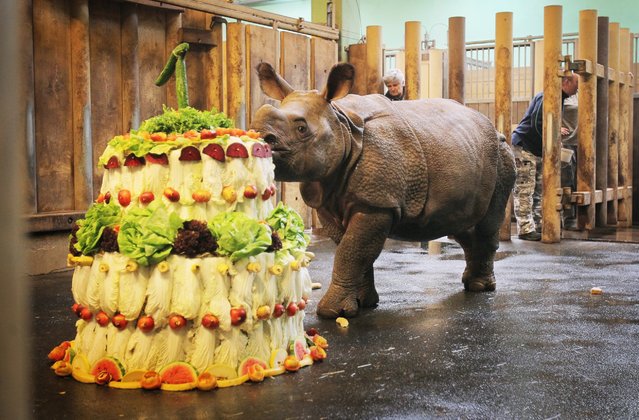
A female Indian rhinoceros called Maruska eats a vegetable birthday cake on her first birthday celebration at the Plzen Zoo on February 3, 2015 in Plzen, Czech Republic. (Photo by Ladislav Nemec/Isifa)

A female Indian rhinoceros called Maruska eats a vegetable birthday cake on her first birthday celebration at the Plzen Zoo on February 3, 2015 in Plzen, Czech Republic. (Photo by Ladislav Nemec/Isifa)
Details
07 Feb 2015 14:55:00
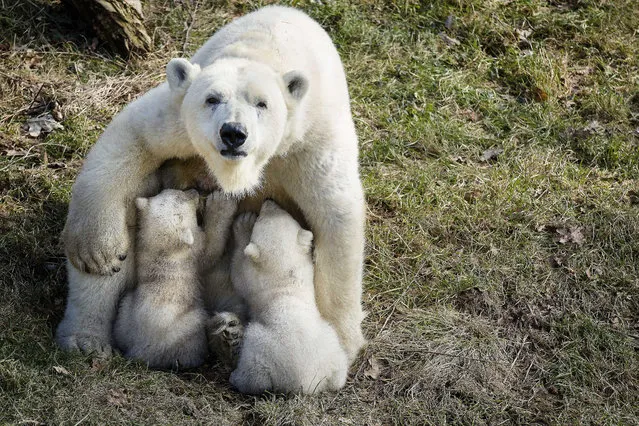
Polar bear twins make their first public appearance with their mother “Freedom” at Ouwehands Zoo Rhenen, in Rhenen, The Netherlands, 19 February 2015. The twins, who were born in November 2014, have not been named because their gender has not yet been determined. (Photo by Bart Maat/EPA)

Polar bear twins make their first public appearance with their mother “Freedom” at Ouwehands Zoo Rhenen, in Rhenen, The Netherlands, 19 February 2015. The twins, who were born in November 2014, have not been named because their gender has not yet been determined. (Photo by Bart Maat/EPA)
Details
21 Feb 2015 11:58:00
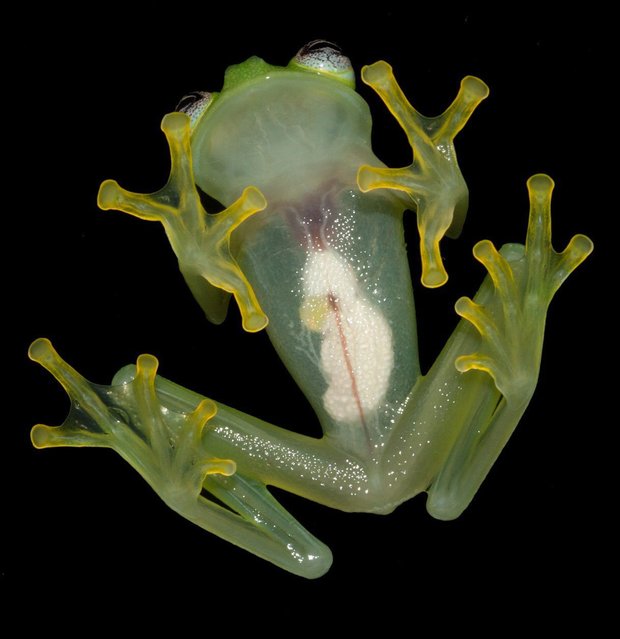
A handout photograph provided by Brian Kubicki of Costa Rican Amphibian Research Center on 26 April 2016 shows a “Crystal frog”, Hyalinobatrachium dianae (H. diane). This frog was discovered by US biologist Brian Kubicki and Costa Ricans Stanley Salazar and Robert Puschendorf in a rainy forest of Costa Rican caribbean after 40 years without notice of any new example of this kind. (Photo by Brian Kubicki/EPA/Costa Rican Amphibian Research Center)

A handout photograph provided by Brian Kubicki of Costa Rican Amphibian Research Center on 26 April 2016 shows a “Crystal frog”, Hyalinobatrachium dianae (H. diane). This frog was discovered by US biologist Brian Kubicki and Costa Ricans Stanley Salazar and Robert Puschendorf in a rainy forest of Costa Rican caribbean after 40 years without notice of any new example of this kind. (Photo by Brian Kubicki/EPA/Costa Rican Amphibian Research Center)
Details
02 May 2015 15:23:00
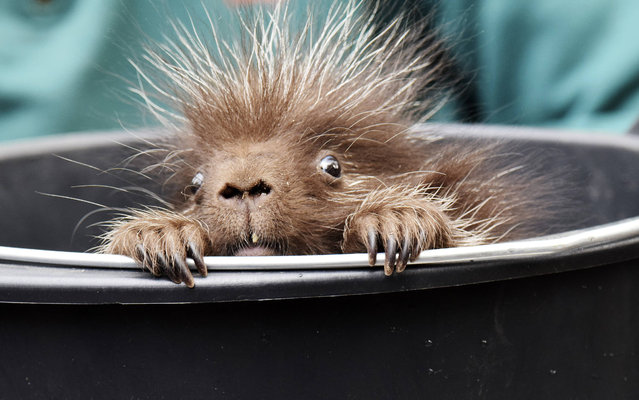
The New World porcupine, family Erethizontidae, 1280 Gram born at 11 April 2015 Inventory in Zoo. Counting trade Fairs Weighing the Zoo is at 7 May 2015 too the 108 Birthday Zoo Hagenbeck Hamburg, Germany. (Photo by Imago/ZUMA Wire)

The New World porcupine, family Erethizontidae, 1280 Gram born at 11 April 2015 Inventory in Zoo. Counting trade Fairs Weighing the Zoo is at 7 May 2015 too the 108 Birthday Zoo Hagenbeck Hamburg, Germany. (Photo by Imago/ZUMA Wire)
Details
09 May 2015 12:38:00
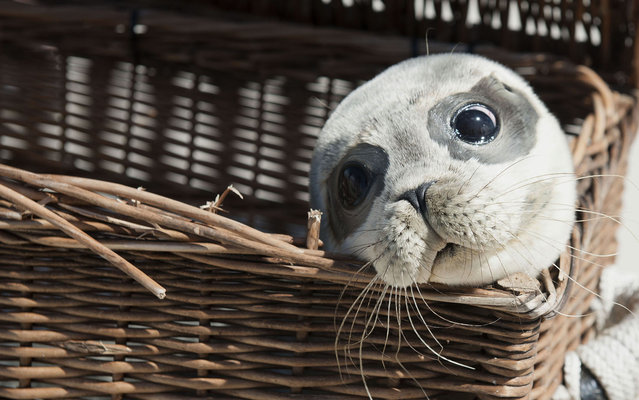
Seehund “Bruno” looks out of his transport box before making his way to the water on the beach of the island of Juist, Germany on August 14, 2013. Four young seals were released after six weeks of recovery at a rescue station in Norden-Norddeich. (Photo by Carmen Jaspersen/AFP Photo/DPA)

Seehund “Bruno” looks out of his transport box before making his way to the water on the beach of the island of Juist, Germany on August 14, 2013. Four young seals were released after six weeks of recovery at a rescue station in Norden-Norddeich. (Photo by Carmen Jaspersen/AFP Photo/DPA)
Details
31 Aug 2013 14:16:00
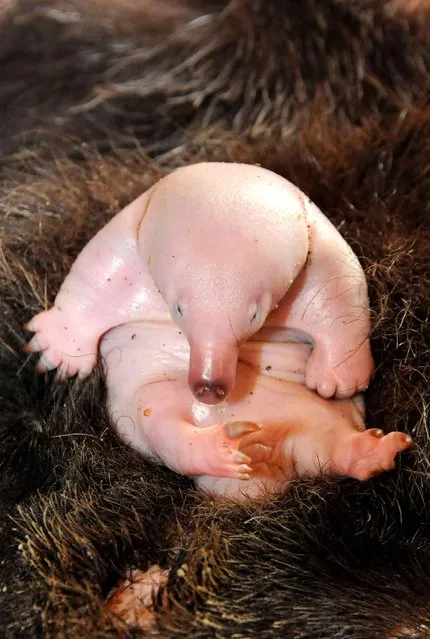
It's a 30-day-old Echidna baby, known as a “puggle” – one of only 24 ever bred in captivity. The proud parents are Tippy and Pickle of Australia Zoo. The tiny baby, whose s*x has not yet been identified, hatched from a soft egg and will continue to develop and nurse inside Tippy's warm pouch. (Photo by Australia Zoo/Rex/Sipa Press)

It's a 30-day-old Echidna baby, known as a “puggle” – one of only 24 ever bred in captivity. The proud parents are Tippy and Pickle of Australia Zoo. The tiny baby, whose s*x has not yet been identified, hatched from a soft egg and will continue to develop and nurse inside Tippy's warm pouch. (Photo by Australia Zoo/Rex/Sipa Press)
Details
21 Sep 2013 10:30:00
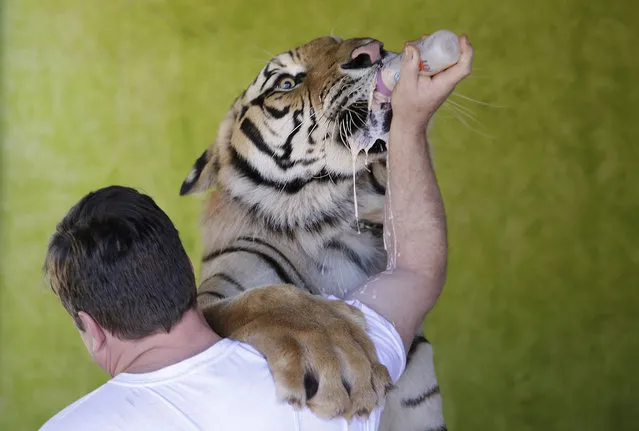
Ary Borges feeds his tiger named Dan at his home in Maringa, Brazil, Thursday, September 26, 2013.  Borges is in a legal battle with federal wildlife officials to keep his endangered animals from undergoing vasectomies and being taken away from him. He defends his right to breed the animals and says he gives them a better home than they might find elsewhere in Brazil. (Photo by Renata Brito/AP Photo)

Ary Borges feeds his tiger named Dan at his home in Maringa, Brazil, Thursday, September 26, 2013. Borges is in a legal battle with federal wildlife officials to keep his endangered animals from undergoing vasectomies and being taken away from him. He defends his right to breed the animals and says he gives them a better home than they might find elsewhere in Brazil. (Photo by Renata Brito/AP Photo)
Details
29 Sep 2013 12:49:00