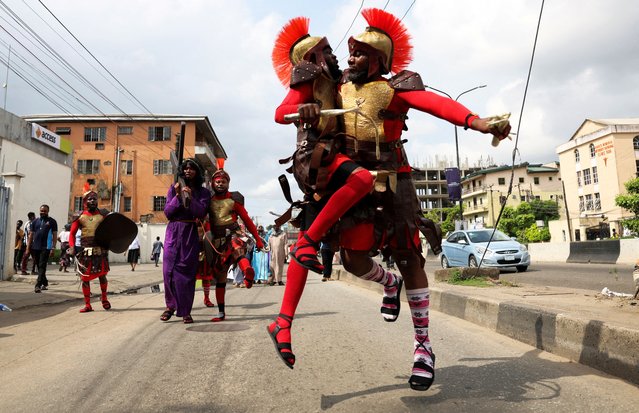
Members of St. Dominic Catholic Church take part in a re-enactment of the crucifixion of Jesus Christ, on Good Friday in Yaba, Lagos, Nigeria, on April 18, 2025. (Photo by Sodiq Adelakun/Reuters)
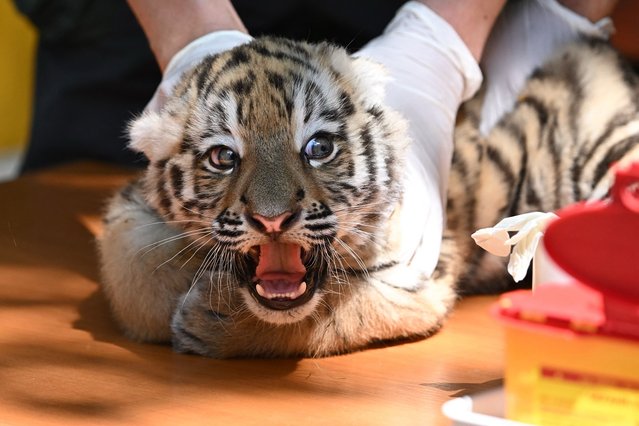
One of the Siberian tiger twins, born on April 13, 2025, is presented to the press at the Budapest zoo and botanic garden, on June 12, 2025 during their first veterinary examination. (Photo by Attila Kisbenedek/AFP Photo)
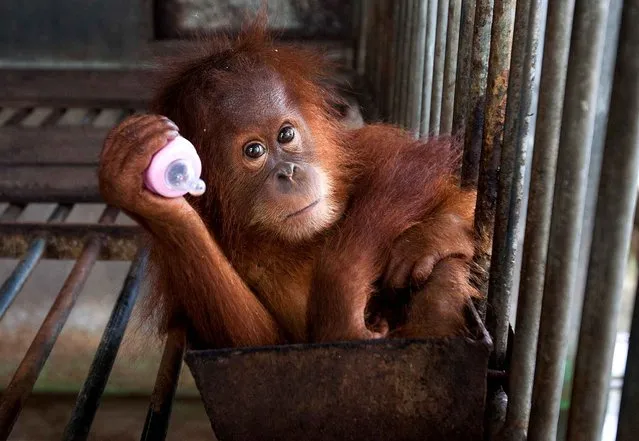
This picture shows a two-year old orangutan seized from a residents house at the provincial Nature Conservation and Agency (BKSDSA) office in Banda Aceh on September 16, 2014. The critically-endangered primates population are dwindling rapidly due to poaching and rapid destruction of their forest habitat that is being converted into palm oil plantations. (Photo by Chaideer Mahyuddin/AFP Photo)
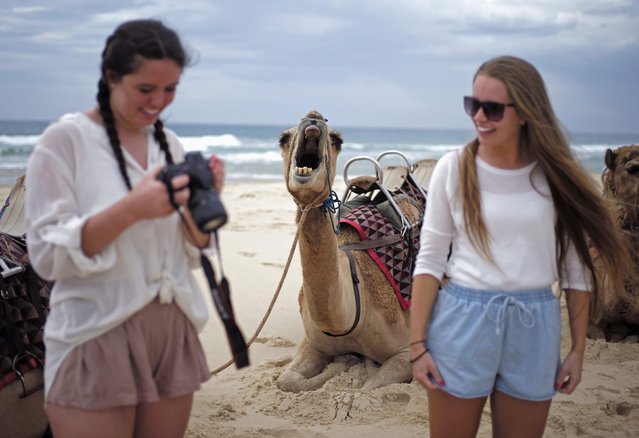
A camel yawns as a tourist checks images on her camera following a ride on a camel safari alongside the Pacific Ocean on Lighthouse Beach, north of Sydney, December 4, 2014. For 25 years camel rides on this beach have given visitors to Australia's holiday coast a rare experience available only in a handful of locations in the country. Australia's long history with the “ships of the desert” goes back to the 1800s when they were imported from Afghanistan and India for use as transportation across Australia's vast deserts before being released into the wild following their replacement by motorised transport. (Photo by Jason Reed/Reuters)
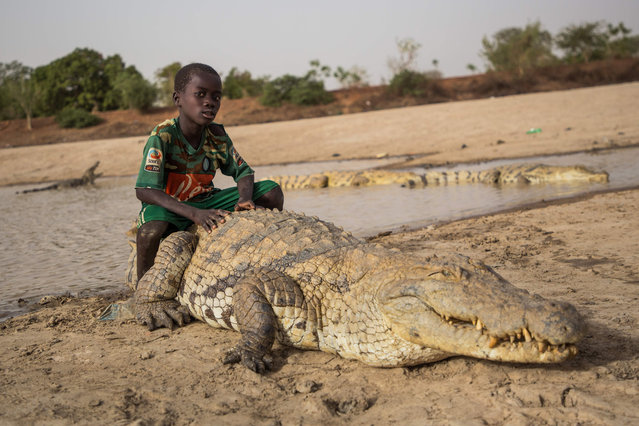
A boy sits on the back of a crocodile on May 19, 2018 at a pond in Bazoule in Burkina Faso, a village which happily shares its local pond with “sacred” crocodiles. Crocodiles may be one of the deadliest hunters in the animal kingdom, but in a small village in Burkina Faso it is not unusual to see someone sitting atop one of the fearsome reptiles. According to local legend, the startling relationship with the predators dates back to at least the 15 th century. The village was in the grip of an agonising drought until the crocodiles led women to a hidden pond where the population could slake their thirst. (Photo by Olympia de Maismont/AFP Photo)
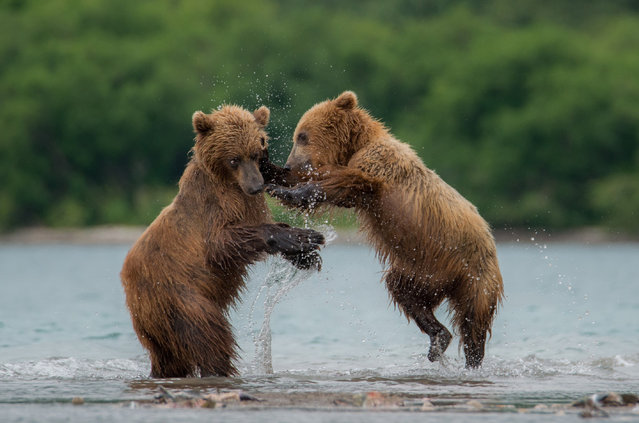
Kamchatka brown bears at Kurile Lake in Kamchatka peninsula’s volcanic terrain, Russia on August, 2017. Kamchatka brown bears are generally not dangerous to humans, and only 1% of encounters result in attack. (Photo by Igor Ivanko/Anadolu Agency/Getty Images)
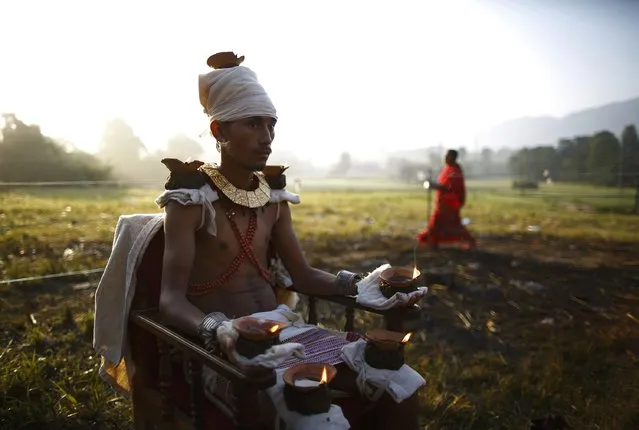
A devotee sits with lighted oil lamps while offering prayers during the “Dashain”, Hinduism's biggest religious festival in Bhaktapur October 3, 2014. Hindus in Nepal celebrate victory over evil during the festival by flying kites, feasting, playing swings, sacrificing animals and worshipping the Goddess Durga as well as other gods and goddess as part of celebrations held throughout the country. (Photo by Navesh Chitrakar/Reuters)