Loading...
Done
A Tibetan mastiff dog is displayed for sale at a mastiff show in Baoding, Hebei province, south of Beijing on March 9, 2013. Fetching prices up to around 750,000 USD, mastiffs have become a prized status-symbol amongst China's wealthy, with rich buyers across the country sending prices skyrocketing. Owners say the mastiffs, descendents of dogs used for hunting by nomadic tribes in central Asia and Tibet are fiercely loyal and protective. (Photo by Ed Jones/AFP Photo)

A Tibetan mastiff dog is displayed for sale at a mastiff show in Baoding, Hebei province, south of Beijing on March 9, 2013. Fetching prices up to around 750,000 USD, mastiffs have become a prized status-symbol amongst China's wealthy, with rich buyers across the country sending prices skyrocketing. Owners say the mastiffs, descendents of dogs used for hunting by nomadic tribes in central Asia and Tibet are fiercely loyal and protective. Breeders still travel to the Himalayan plateau to collect young puppies, although many are unable to adjust to the low altitudes and die during the journey. (Photo by Ed Jones/AFP Photo)
Details
02 May 2014 09:40:00
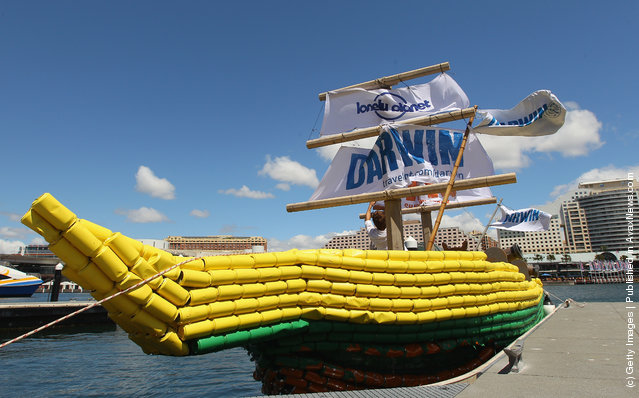
Darwin's Beer Can Boat Cruises Into Sydney Harbour

“The Darwin Beer Can Regatta is an event which has been held annually since 1974 in Darwin, Northern Territory, Australia at Mindil Beach. Participants create boats using empty beer cans, soft drink (soda) cans, soft drink bottle and milk cartons. The vessels are not tested for seaworthiness, prior to water events, and those that fall apart are part of the day's entertainment. A great many sundry events go along with the regatta, including concerts, a thong-throwing contest and the "Henley-on-Mindil" competition (named after the Henley-on-Todd Regatta), where participants run their "boats" around like Flintstones cars”. – Wikipedia

Photo: A Darwin Beer Can Boat sails in Darling Harbour on October 31, in Sydney, Australia. Darwin has been named as one of Lonely Planet's top ten cities in the world to visit in it's Best in Travel publication. (Photo by Mark Kolbe/Getty Images for Tourism NT)
Details
31 Oct 2011 10:50:00
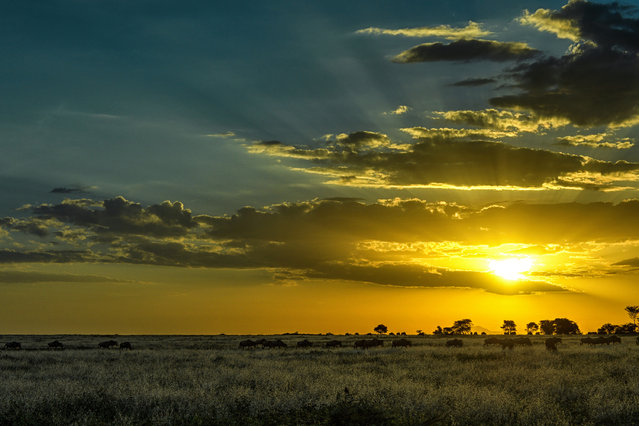
Using his camera skills, Marc meters the background sky in order to achieve the beautiful black silhouettes of the wildlife, Africa, 2010-2016. A photographer has travelled around Africa for six years to capture striking silhouettes of lions, giraffes and birds. Australian wildlife photographer, Marc Mol took the series of pictures in various areas of Africa; including Botswana and Kenya to Tanzania and Zambia. Whether grazing, hunting or resting, the animals' daily activities are transformed into something majestic when cast against golden evenings and pink dawns. (Photo by Marc Mol/Barcroft Images)

Using his camera skills, Marc meters the background sky in order to achieve the beautiful black silhouettes of the wildlife, Africa, 2010-2016. (Photo by Marc Mol/Barcroft Images)
Details
10 Jan 2017 13:36:00
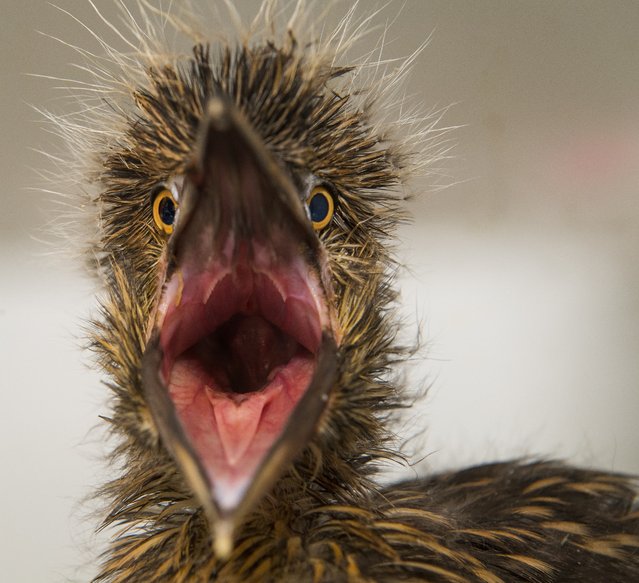
A baby Black-crowned Night Heron squawks in its incubator while being cared for at City Wildlife rescue and rehabilitation center in Washington, DC on May 31, 2017. The heron is one of several that have been brought to CW by the staff at The National Zoo over the past few years. The heron is a native bird and has made an established rookery inside the zoo grounds over a hundred years ago.  Every year at this time, some of the chicks get pushed or fall out of the nest and require human care.  Because the birds are native and not part of the Smithsonian collection, they partnered with CW to rehabilitate the herons for re-release back to the flock inside Zoo. They're reintroduced back to their flock so that they can migrate together in the Fall. The Black-crowned heron usually migrates from the DC area down to southeast North Carolina, some going as far as Jacksonville, FL in winter. The Black-crowned heron is the species of greatest conservation need in the District of Columbia because their numbers are in such rapid decline due to habitat loss. (Photo Linda Davidson/The Washington Post)

A baby Black-crowned Night Heron squawks in its incubator while being cared for at City Wildlife rescue and rehabilitation center in Washington, DC on May 31, 2017. The heron is one of several that have been brought to CW by the staff at The National Zoo over the past few years. (Photo Linda Davidson/The Washington Post)
Details
04 Jun 2017 08:04:00
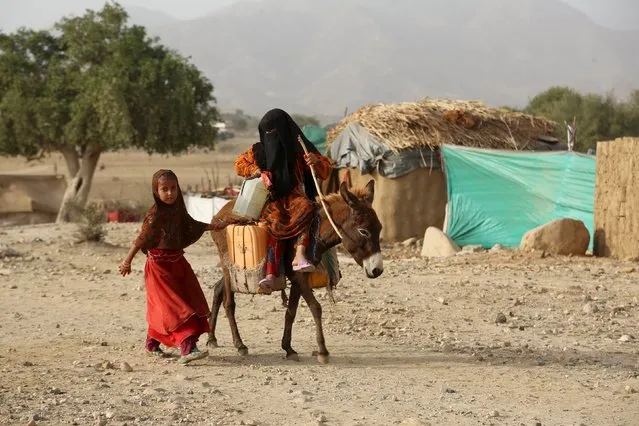
A girl rides a donkey as another walks by at the Shawqaba camp for internally displaced people who were forced to leave their villages by the war in Yemen's northwestern province of Hajjah March 12, 2016. In northwest Yemen, one of the poorest countries in the Middle East, about 400 families uprooted by the war have been stuck in the Shawqaba camp in Hajjah province for the past year. Residents live in poorly built huts that protect them neither from summer heat nor winter cold in a camp that lacks the most basic services. (Photo by Abduljabbar Zeyad/Reuters)

A girl rides a donkey as another walks by at the Shawqaba camp for internally displaced people who were forced to leave their villages by the war in Yemen's northwestern province of Hajjah March 12, 2016. In northwest Yemen, one of the poorest countries in the Middle East, about 400 families uprooted by the war have been stuck in the Shawqaba camp in Hajjah province for the past year. Residents live in poorly built huts that protect them neither from summer heat nor winter cold in a camp that lacks the most basic services. (Photo by Abduljabbar Zeyad/Reuters)
Details
09 Apr 2016 13:16:00
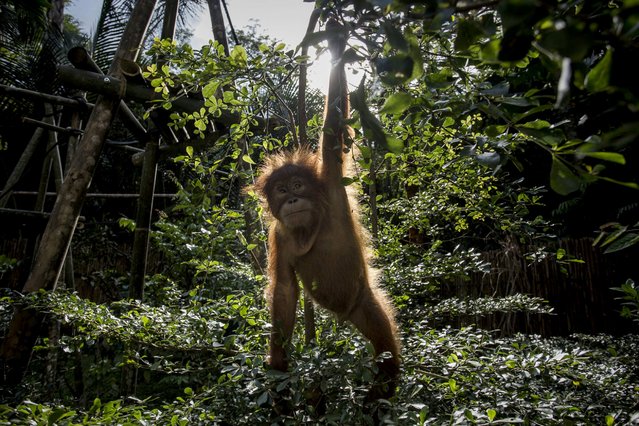
A Baby sumatran orangutan (Pongo abelii) plays around in a tree as they train at Sumatran Orangutan Conservation Programme's rehabilitation center on November 12, 2016 in Kuta Mbelin, North Sumatra, Indonesia. The Orangutans in Indonesia have been known to be on the verge of extinction as a result of deforestation and poaching. Found mostly in South-East Asia, where they live on the islands of Sumatra and Borneo, the endangered species continue to lose their habitat as a result of corporate expansion in a developing economy. Indonesia approved palm oil concessions on nearly 15 million acres of peatlands over the past years and thousands of square miles have been cleared for plantations, including the lowland areas that are the prime habitat for orangutans. (Photo by Ulet Ifansasti/Getty Images)

A Baby sumatran orangutan (Pongo abelii) plays around in a tree as they train at Sumatran Orangutan Conservation Programme's rehabilitation center on November 12, 2016 in Kuta Mbelin, North Sumatra, Indonesia. The Orangutans in Indonesia have been known to be on the verge of extinction as a result of deforestation and poaching. Found mostly in South-East Asia, where they live on the islands of Sumatra and Borneo, the endangered species continue to lose their habitat as a result of corporate expansion in a developing economy. Indonesia approved palm oil concessions on nearly 15 million acres of peatlands over the past years and thousands of square miles have been cleared for plantations, including the lowland areas that are the prime habitat for orangutans. (Photo by Ulet Ifansasti/Getty Images)
Details
16 Nov 2016 11:14:00
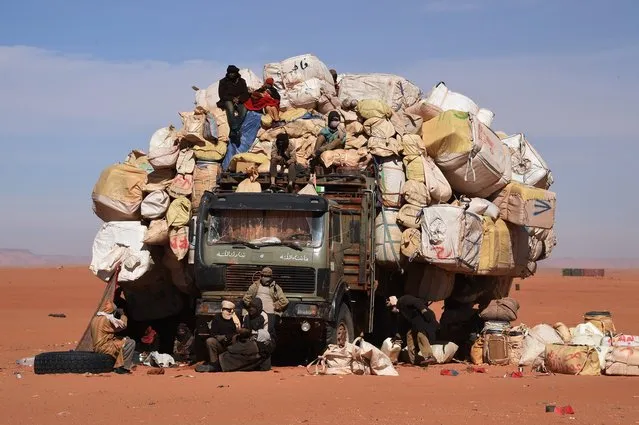
People sit near a fully loaded in Madama near the border with Lybia on January 1, 2015. French Defence Minister Jean-Yves Le Drian paid a surprise visit to northern Niger on January 1, to visit a base being built to combat the growing flow of weapons and jihadists from neighbouring Libya. Le Drian travelled from Chad to Madama, a desert outpost about 100 kilometres from Libya, where he saw in the New Year with troops at a French base. (Photo by Dominique Faget/AFP Photo)

People sit near a fully loaded in Madama near the border with Lybia on January 1, 2015. French Defence Minister Jean-Yves Le Drian paid a surprise visit to northern Niger on January 1, to visit a base being built to combat the growing flow of weapons and jihadists from neighbouring Libya. Le Drian travelled from Chad to Madama, a desert outpost about 100 kilometres from Libya, where he saw in the New Year with troops at a French base. Madama is situated on the route used by jihadists and arms smugglers in southern Libya to reach northern Mali and Niger. (Photo by Dominique Faget/AFP Photo)
Details
03 Jan 2015 13:27:00
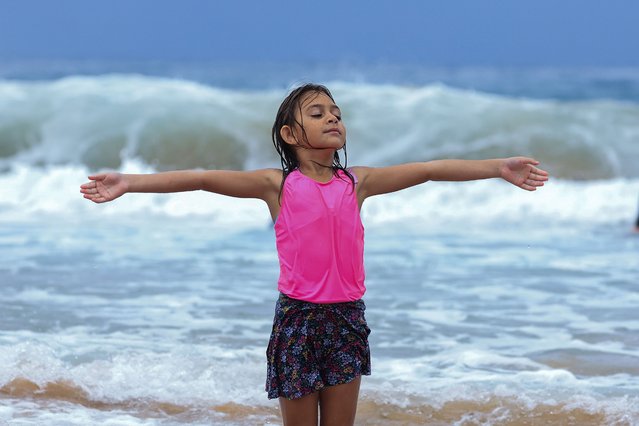
A girl stands with arms outstretched at North Narrabeen on January 27, 2024 in Sydney, Australia. Around 30 indigenous children from Brewarrina, Weilmoringle, and Goodooga in the far North West NSW travelled to Sydney to participate in the program. The initiative is part of the Bush to Beach programme, which now in its 19th year, gives indigenous children a unique opportunity to learn and explore Sydney's beach culture. The efforts are made possible entirely by volunteers, donations and sponsorship. Bush to Beach is a charity dedicated to inspiring hope, confidence, and self-esteem and promoting education for Aussie bush kids, a release by the charity said. This trip is a reward for school attendance and an opportunity for the kids to see that there is another world outside their community and help develop confidence and self-esteem, according to Bush to Beach co-founder Jack Cannons. (Photo by Jenny Evans/Getty Images)

A girl stands with arms outstretched at North Narrabeen on January 27, 2024 in Sydney, Australia. Around 30 indigenous children from Brewarrina, Weilmoringle, and Goodooga in the far North West NSW travelled to Sydney to participate in the program. The initiative is part of the Bush to Beach programme, which now in its 19th year, gives indigenous children a unique opportunity to learn and explore Sydney's beach culture. (Photo by Jenny Evans/Getty Images)
Details
10 Feb 2024 09:26:00