Loading...
Done
A goat hops from student to student during a goat yoga class at the University of Tennessee on August 25, 2022 as part of welcome back week. The session was organised by Goat Yoga Nashville. (Photo by Matt Hamilton/Chattanooga Times Free Press via AP Photo)

A goat hops from student to student during a goat yoga class at the University of Tennessee on August 25, 2022 as part of welcome back week. The session was organised by Goat Yoga Nashville. (Photo by Matt Hamilton/Chattanooga Times Free Press via AP Photo)
Details
04 Sep 2022 03:51:00
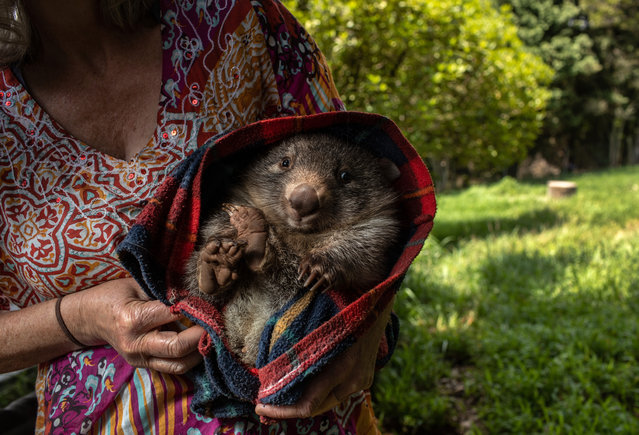
A wildlife caregiver holds an orphaned wombat at the Native Wildlife Rescue center on January 29, 2020 in Robertson, Australia. The center has taken in many burned kangaroos and wallabies injured in recent bushfires. Wombat orphans are often rescued from the pouch of their mothers struck by vehicles. (Photo by John Moore/Getty Images)

A wildlife caregiver holds an orphaned wombat at the Native Wildlife Rescue center on January 29, 2020 in Robertson, Australia. The center has taken in many burned kangaroos and wallabies injured in recent bushfires. Wombat orphans are often rescued from the pouch of their mothers struck by vehicles. (Photo by John Moore/Getty Images)
Details
16 Feb 2020 00:03:00
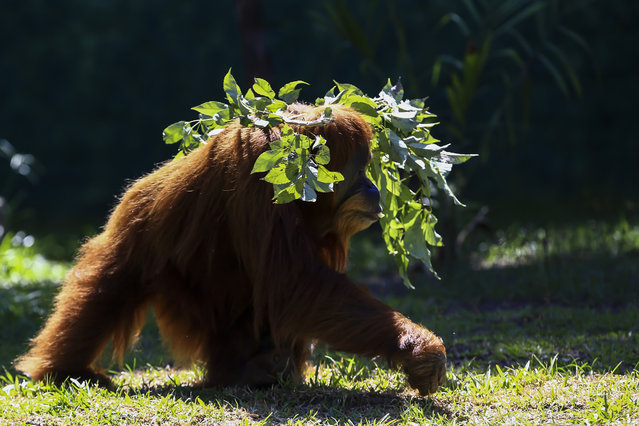
An Orangutan named Elze walks in the Biopark of Rio during a media tour in Rio de Janeiro, Brazil, Thursday, March 18, 2021. The park was closed to the public for renovations to convert the city zoo into a center for biodiversity conservation and will reopen to the general public at the end of March. (Photo by Bruna Prado/AP Photo)

An Orangutan named Elze walks in the Biopark of Rio during a media tour in Rio de Janeiro, Brazil, Thursday, March 18, 2021. The park was closed to the public for renovations to convert the city zoo into a center for biodiversity conservation and will reopen to the general public at the end of March. (Photo by Bruna Prado/AP Photo)
Details
28 Mar 2021 09:55:00
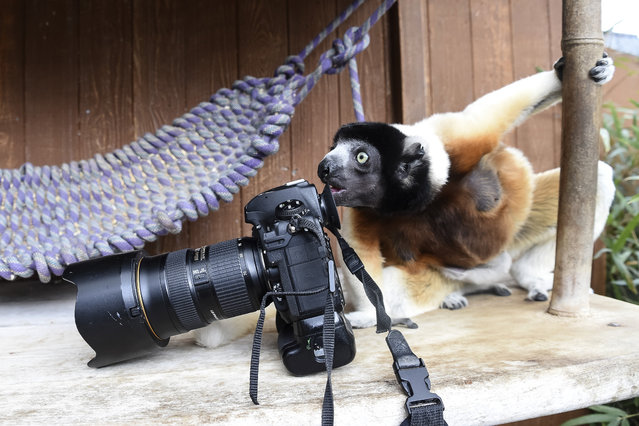
Poppy, a female Crowned sifaka, inspects a photographer's camera in the enclosure at the zoo of Mulhouse, eastern France, on March 5, 2019. The Crowned sifaka is a critically endangered species from Madagascar. (Photo by Sebastien Bozon/AFP Photo)

Poppy, a female Crowned sifaka, inspects a photographer's camera in the enclosure at the zoo of Mulhouse, eastern France, on March 5, 2019. The Crowned sifaka is a critically endangered species from Madagascar. (Photo by Sebastien Bozon/AFP Photo)
Details
10 Mar 2019 00:03:00
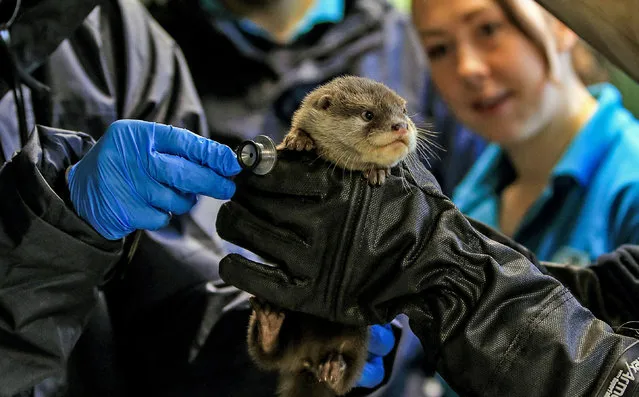
A baby otter has its first health checkup at Chester zoo, England on May 2, 2018. It was among five pups being weighed and microchipped. (Photo by Peter Byrne/PA Wire)

A baby otter has its first health checkup at Chester zoo, England on May 2, 2018. It was among five pups being weighed and microchipped. (Photo by Peter Byrne/PA Wire)
Details
06 May 2018 00:03:00
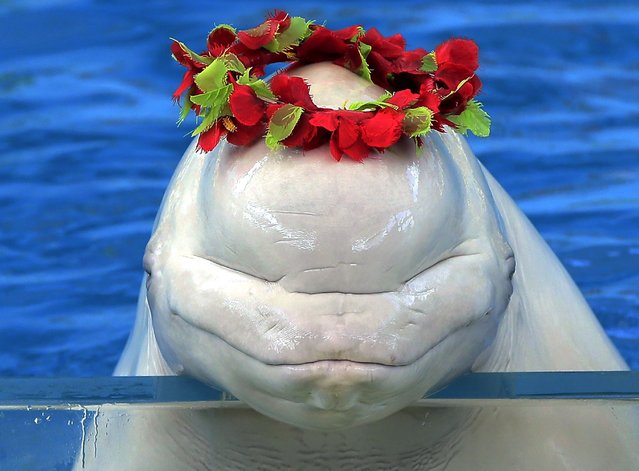
A white whale wears a wreath at the Hakkeijima Sea Paradise aquarium-amusement park complex in Yokohama, Japan, on October 3, 2012. (Photo by Associated Press)

A white whale wears a wreath at the Hakkeijima Sea Paradise aquarium-amusement park complex in Yokohama, Japan, on October 3, 2012. (Photo by Associated Press)
Details
13 Oct 2012 11:08:00


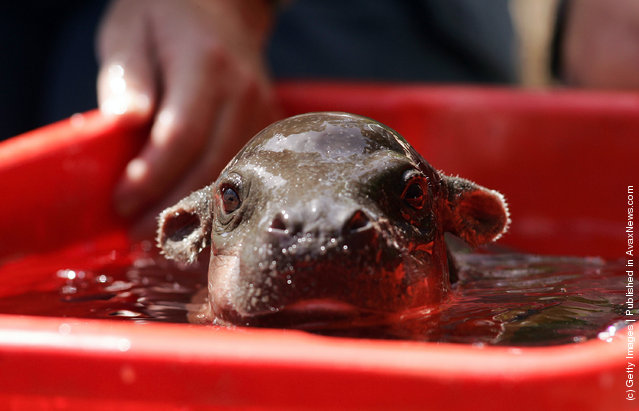
“The pygmy hippopotamus (Choeropsis liberiensis or Hexaprotodon liberiensis) is a large mammal native to the forests and swamps of western Africa (the specific name liberiensis means “of Liberia”, as this is where the vast majority live). The pygmy hippo is reclusive and nocturnal. It is one of only two extant species in the Hippopotamidae family, the other being its much larger cousin the common hippopotamus”. – Wikipedia

Photo: Monifa, a one month old baby Pygmy Hippopotamus takes a morning bath at Taronga Zoo on November 7, 2008 in Sydney, Australia. Monifa is the first Pygmy Hippopotamus to be born at Taronga Zoo in the past twenty three years. (Photo by Sergio Dionisio/Getty Images)

Details
11 Apr 2011 08:11:00


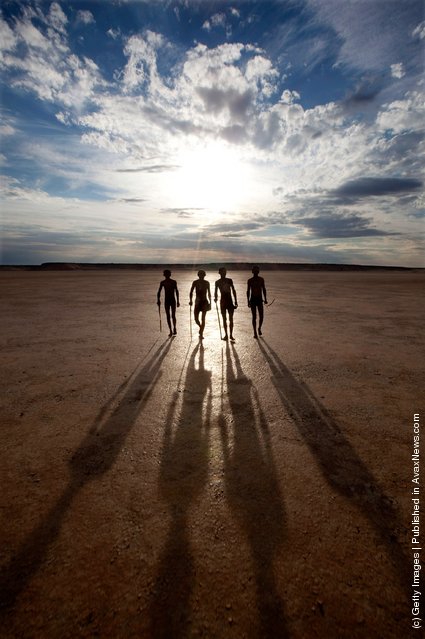
A group of San Bushmen from the Khomani San community practice their hunter-gatherer craft in the Southern Kalahari desert on October 15, 2009 in the Kalahari, South Africa. One of the largest studies of African genetics by an international team from the University of Pennsylvania, published in April 2009, revealed that the San of Southern Africa are the most genetically diverse on earth, and that the San homeland could be the spot where modern humanity began. (Photo by Dan Kitwood/Getty Images)
Details
07 May 2011 09:35:00