Loading...
Done
People take part in a traditional mid-summer solstice night celebration (Rasos Festival) at the Open-Air Museum of Lithuania in Rumsiskes, east of Kaunas, Lithuania, on late June 23, 2020. (Photo by Petras Malukas/AFP Photo)

People take part in a traditional mid-summer solstice night celebration (Rasos Festival) at the Open-Air Museum of Lithuania in Rumsiskes, east of Kaunas, Lithuania, on late June 23, 2020. (Photo by Petras Malukas/AFP Photo)
Details
30 Jul 2020 00:05:00
Seven-year-old Mimi Meade winces from the sting as Dr. Richard Mulvaney inoculates her April 26, 1954 in McClean, Va., with the new Salk polio vaccine.  Mrs. John Lucas, a registered nurse, holds Mimi's arm steady as she gets one of the first injections of the countrywide test. (Photo by Harvey Georges/AP Photo)

Seven-year-old Mimi Meade winces from the sting as Dr. Richard Mulvaney inoculates her April 26, 1954 in McClean, Va., with the new Salk polio vaccine. Mrs. John Lucas, a registered nurse, holds Mimi's arm steady as she gets one of the first injections of the countrywide test. (Photo by Harvey Georges/AP Photo)
Details
07 Aug 2020 00:03:00
Sniper rifles sit on display for sale at the “Ready Gunner” gun store in Provo, Utah, U.S., June 21, 2016. (Photo by George Frey/Reuters)

Sniper rifles sit on display for sale at the “Ready Gunner” gun store in Provo, Utah, U.S., June 21, 2016. (Photo by George Frey/Reuters)
Details
22 Jun 2016 12:52:00
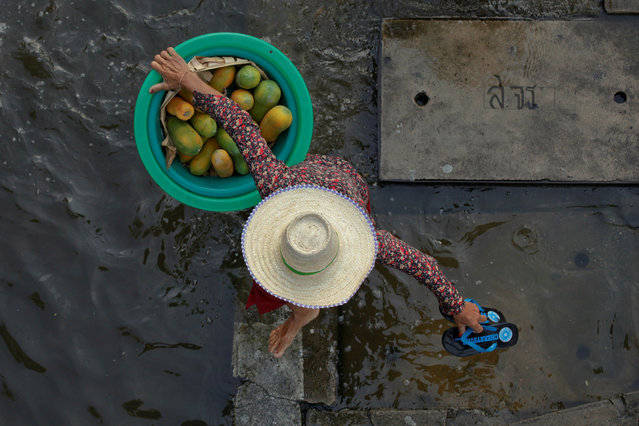
A woman carrying a basket of papayas while walking through a vegetable market in Bangkok, Thailand November 11, 2011. (Photo by Kerek Wongsa/Reuters)

A woman carrying a basket of papayas while walking through a vegetable market in Bangkok, Thailand November 11, 2011. (Photo by Kerek Wongsa/Reuters)
Details
11 Jul 2016 12:20:00
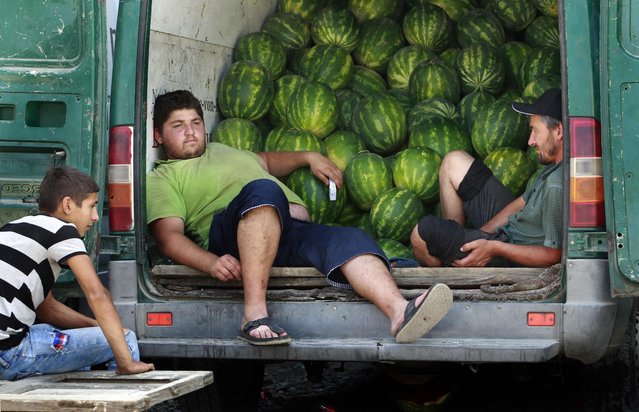
Georgian men take a break from selling fruit and vegetable at a street market in Tbilisi, Georgia, Wednesday, July 20, 2016. (Photo by Shakh Aivazov/AP Photo)

Georgian men take a break from selling fruit and vegetable at a street market in Tbilisi, Georgia, Wednesday, July 20, 2016. (Photo by Shakh Aivazov/AP Photo)
Details
02 Aug 2016 08:05:00
A view of traditional bolinhos de bacalhau (fried codfish balls) in Rio de Janeiro, Brazil, May 7, 2016. (Photo by Sergio Moraes/Reuters)


If the most popular foods of Rio de Janeiro have one thing in common, it is their informality. You can find fine restaurants in the city, but they do not set Rio apart from other places. What does set it apart, and what invariably brings its residents, known as "Cariocas," together is the unpretentious food they eat in bright, loud, crowded bars and restaurants, on busy street corners, or after a day at the beach. Here: A view of traditional bolinhos de bacalhau (fried codfish balls) in Rio de Janeiro, Brazil, May 7, 2016. (Photo by Sergio Moraes/Reuters)

Details
05 Aug 2016 13:20:00
Indian school children wearing traditional Punjabi attire sit as they take part in the full and final dress rehearsal for India's Independence Day parade and celebrations in Amritsar, India, 13 August 2016. India's 70th Independence Day will be celebrated on 15 August, to commemorate its independence from British rule and its birth as a sovereign nation on that day in 1947. (Photo by Raminder Pal Singh/EPA)

Indian school children wearing traditional Punjabi attire sit as they take part in the full and final dress rehearsal for India's Independence Day parade and celebrations in Amritsar, India, 13 August 2016. India's 70th Independence Day will be celebrated on 15 August, to commemorate its independence from British rule and its birth as a sovereign nation on that day in 1947. (Photo by Raminder Pal Singh/EPA)
Details
14 Aug 2016 10:08:00
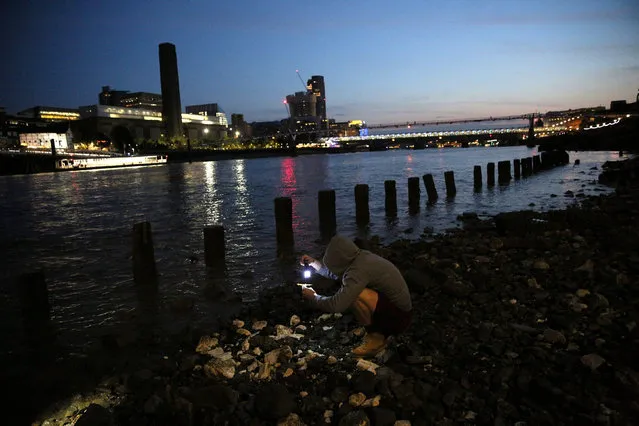
A mudlark uses a torch to look for items on the bank of the River Thames in London, Britain June 06, 2016. Mudlarking is believed to trace its origins to the 18th and 19th century, when scavengers searched the Thames' shores for items to sell. These days, history and archaeology fans are the ones hoping to find old relics such as coins, ceramics, artifacts or everyday items from across centuries. They wait for the low tide and then scour specific areas of exposed shores. "If you're in a field you could be out all day long, with the river you're restricted to about two or three hours," mudlark Nick Stevens said. While many just use the naked eye for their searches, others rely on metal detectors for which a permit from the Port of London Authority is needed. Digging also requires consent. (Photo by Neil Hall/Reuters)

A mudlark uses a torch to look for items on the bank of the River Thames in London, Britain June 06, 2016. Mudlarking is believed to trace its origins to the 18th and 19th century, when scavengers searched the Thames' shores for items to sell. These days, history and archaeology fans are the ones hoping to find old relics such as coins, ceramics, artifacts or everyday items from across centuries. their finds with the Portable Antiquities Scheme. Any item over 300 years old must be recorded. (Photo by Neil Hall/Reuters)
Details
27 Aug 2016 10:43:00