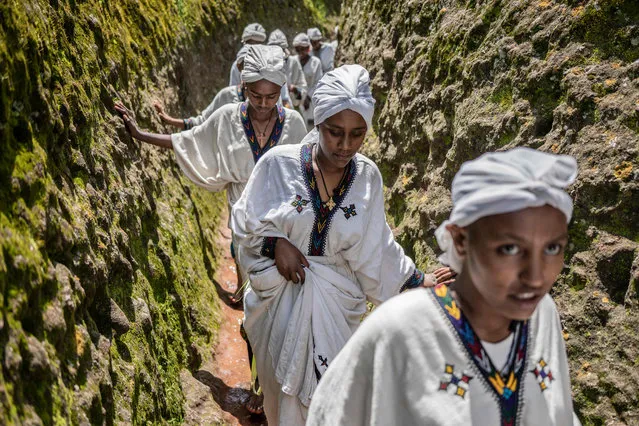
Young women walk through the cave of Saint George during Ashenda festival, at Saint George Church, in Lalibela, Ethiopia, on August 22, 2022. (Photo by Amanuel Sileshi/AFP Photo)
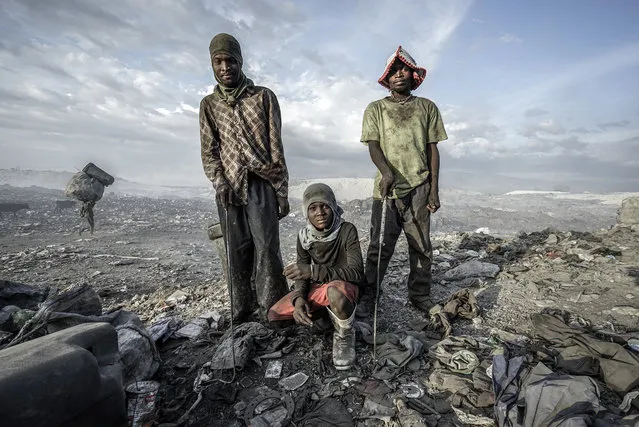
In a 200-acre-plus dump 5 kilometers north of Haiti’s capital, Port-au-Prince, hundreds of men, women and children scavenge day and night through the burning wasteland. They earn $12 to $15 a day – on a good day – for recycling plastics as well as clothing, household items and aluminum (for smelting). Some 5,000 tons of waste is created each day in the Port-au-Prince area. (Photo and caption by Giles Clarke/Getty Images Reportage)
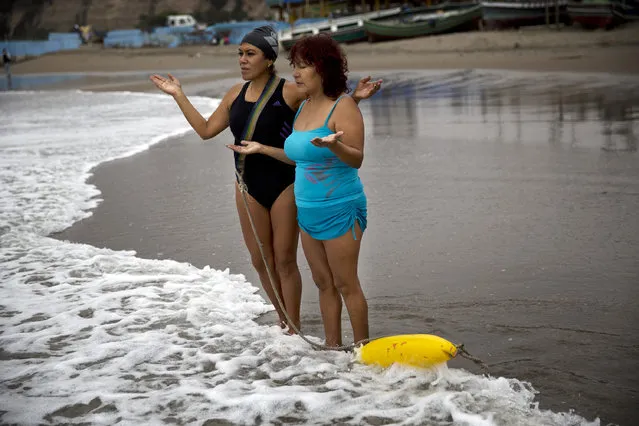
In this May 8, 2015 photo, sisters Zoraida Infante, left, and Graciela Trujillo pray on Fishermen's Beach before therapeutic swimming in the Pacific Ocean in Lima, Peru. Under overcast skies, the bathers practice thalassotherapy, which derives from the Greek “thalasso”, for “sea”, and draws on the ocean's healing properties. (Photo by Rodrigo Abd/AP Photo)
A man demonstrates outside Republican presidential candidate Donald Trump's news conference at Trump Tower in New York, U.S., May 31, 2016. (Photo by Shannon Stapleton/Reuters)
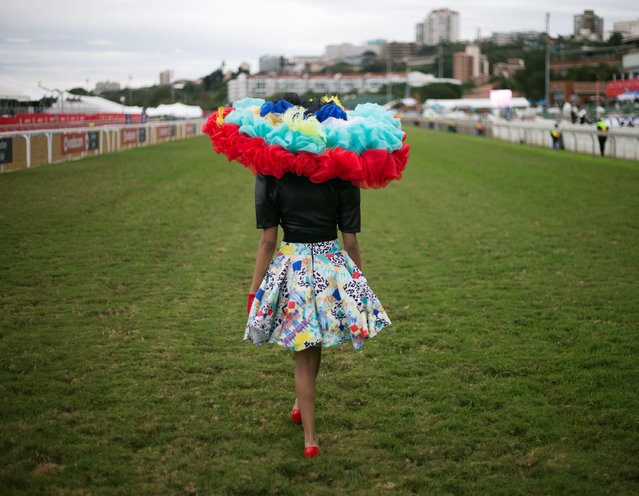
A person poses on the track during a fashion competition at the Durban July horse racing event in Durban, South Africa, July 2, 2016. (Photo by Rogan Ward/Reuters)
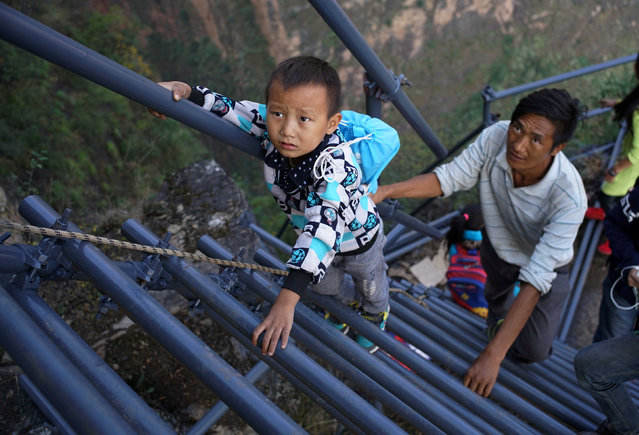
A student from “the cliff village” in Atule'er climbs newly-constructed steel ladders after school to go home for holidays, in Liangshan Sichuan province, China, November 19, 2016. The steel ladders which replaced the unsafe vine ladders shortened the time taken for the children to go home, from three hours to two. (Photo by Reuters/Stringer)
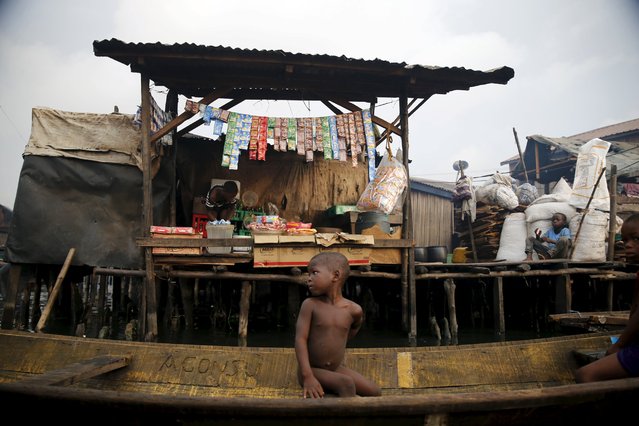
A boy sits in a canoe in front of a shed built on a raft in the Makoko fishing community on the Lagos Lagoon, Nigeria February 29, 2016. In Makoko, a sprawling slum of Nigeria's megacity Lagos, a floating school capable of holding up to a hundred pupils has since November brought free education to the waterways known as the Venice of Lagos. It offers the chance of social mobility for youngsters who, like most of the city's 21 million inhabitants, lack a reliable electricity and water supply and whose water-based way of life is threatened by climate change as well as rapid urbanisation. (Photo by Akintunde Akinleye/Reuters)
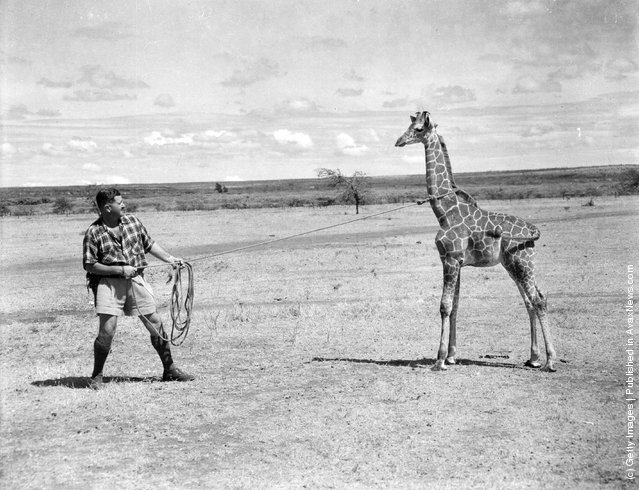
The world's biggest wild animal farmer, Carr Hartley of Rumuruti in Kenya, sells animals to zoos, circuses and film companies. (Photo by Maxim Ruston/BIPs/Getty Images). November 1956