Loading...
Done
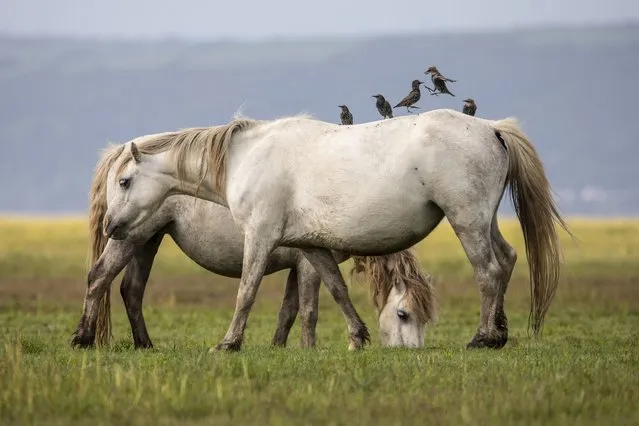
Semi-feral, conservation ponies, graze on the salt marsh's of Gower, Swansea, Wales, United Kingdom on September 7, 2022. (Photo by Joann Randles/Cover Images)

Semi-feral, conservation ponies, graze on the salt marsh's of Gower, Swansea, Wales, United Kingdom on September 7, 2022. (Photo by Joann Randles/Cover Images)
Details
18 Sep 2022 04:43:00
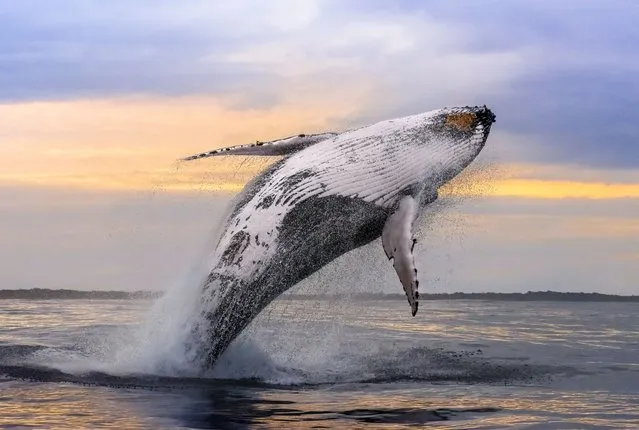
A 40-tonne humpback launching out of the water in an incredible breach in New South Wales, Australia on October 2022 in front of a sunset. The humpback whale can grow up to 56 feet long and typically covers 9,900 miles a year as it travels through the oceans of the world. Humpback whales are a species of Baleen whale, meaning they don't have teeth. Instead, they have baleen which helps them to filter feed. Their main source of food is krill or tiny bait fish. (Photo by Jodie Lowe/Media Drum Images)

A 40-tonne humpback launching out of the water in an incredible breach in New South Wales, Australia on October 2022 in front of a sunset. The humpback whale can grow up to 56 feet long and typically covers 9,900 miles a year as it travels through the oceans of the world. Humpback whales are a species of Baleen whale, meaning they don't have teeth. Instead, they have baleen which helps them to filter feed. Their main source of food is krill or tiny bait fish. (Photo by Jodie Lowe/Media Drum Images)
Details
30 Oct 2022 04:28:00
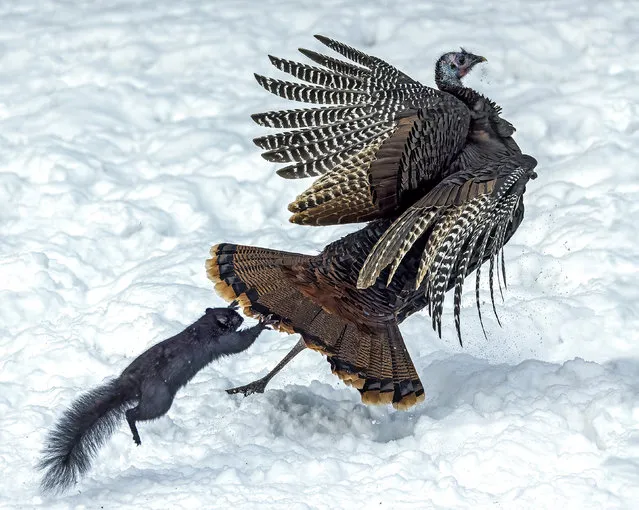
A mischievous squirrel chases a  turkey in a garden in Medford, Wisconsin in the second decade of January 2024. The garden’s owner, artist Cheryl Plautz, said the squirrels chase the birds “for fun”. (Photo by Cheryl Plautz/Solent News)

A mischievous squirrel chases a turkey in a garden in Medford, Wisconsin in the second decade of January 2024. The garden’s owner, artist Cheryl Plautz, said the squirrels chase the birds “for fun”. (Photo by Cheryl Plautz/Solent News)
Details
28 Jan 2024 08:35:00
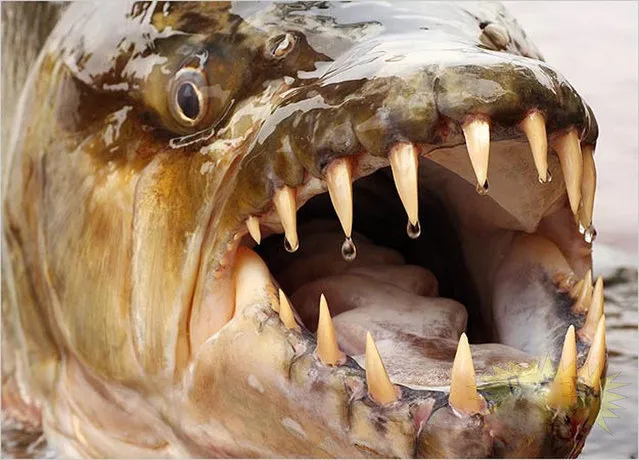
Hydrocynus goliath, also known as the goliath tigerfish, giant tigerfish or mbenga

“Hydrocynus goliath, also known as the goliath tigerfish, giant tigerfish or mbenga, is a very large African predatory freshwater fish. The giant tigerfish is restricted to the Zaire River system, Lualaba River, Lake Upemba and Lake Tanganyika”. (Photo by Tigerfishcamp / Tourettefishing / Bigfishesoftheworld)
Details
15 May 2012 12:04:00
animals famous

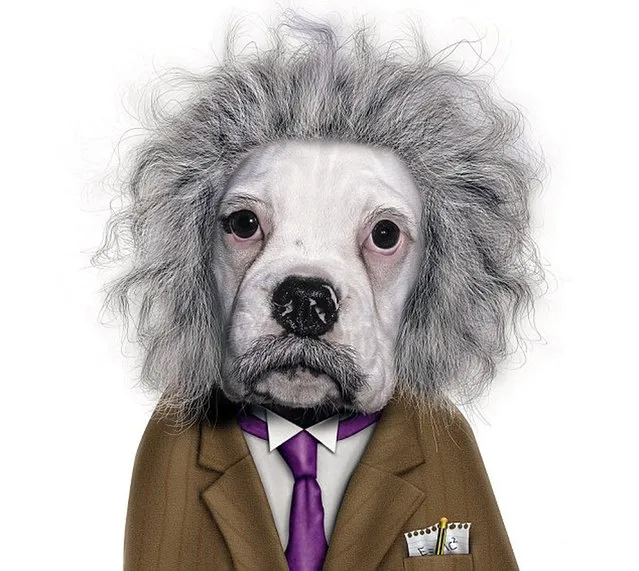
The kiddipops has these animal celebrity portraits in a diary and they have always given us a giggle. The company behind them is ‘Takkoda‘- the name is derived from the Sioux word meaning ‘Friend to all’. The company was started by two couples with a love of animals; who see pets as being big personalities, not as ‘chocolate box’ images. Takkoda is all about funny images of our favourite friends. They photograph real pets in their homes and capture their natural expressions in their natural state! Later they develop their characters by dressing them up digitally to bring out their iconic personalities.
Details
07 Jul 2012 06:22:00
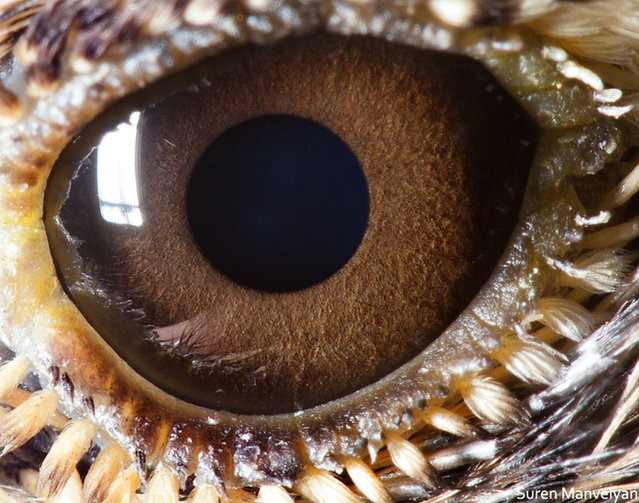
Animal Eyes by Suren Manvelyan

Born in 1976, Suren started to photograph when he was sixteen and became a professional photographer in 2006. His photographic interests span from Macro to Portraits, Creative photo projects, Landscape, and much more.
Details
14 Sep 2012 12:22:00
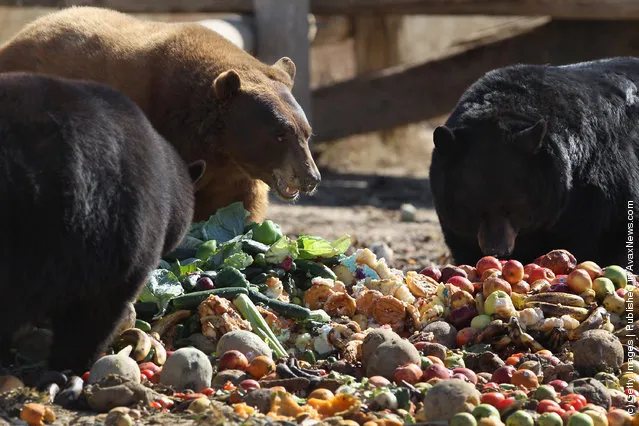
Rescued brown and black bears feed at The Wild Animal Sanctuary

“The Wild Animal Sanctuary is a U.S. organization that specializes in rescuing and caring for large predators which are being ill-treated, for which their owners can no longer care, or which might otherwise be euthanized. Created in 1980, The Wild Animal Sanctuary is situated on 720 acres (291 ha) of grassland near Keenesburg, Colorado North of Denver, and has helped over 1,000 animals since it first opened. As of 2010, it was home to over 290 animals”. – Wikipedia

Photo: Rescued brown and black bears feed at The Wild Animal Sanctuary on October 20, 2011 in Keenesburg, Colorado. (Photo by John Moore/Getty Images)
Details
27 Feb 2012 11:59:00


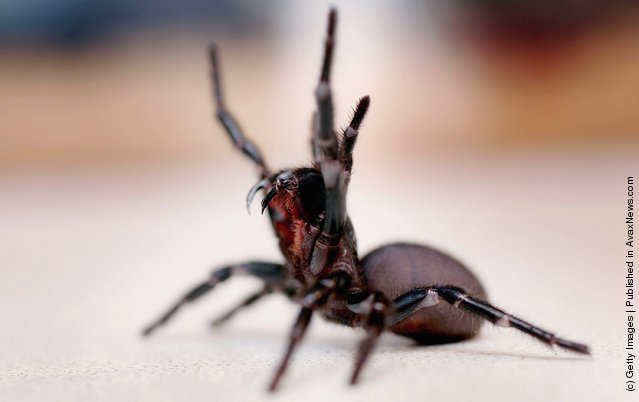
A Funnel Web spider is pictured at the Australian Reptile Park January 23, 2006 in Sydney, Australia. The Funnel Web is one of Australia's deadliest animals, with a venom that is packed with at least 40 different toxic proteins. A bite from a Funnel Web causes massive electrical over-load in the body's nervous system. Finally, fatalities occur from either heart attack or a pulmonary oedema, where the capillaries around the lungs begin to leak fluid and the patient effectively drowns. Death can come as quickly as two hours after a bite if no medical treatment is sought. Due to advances in anti-venom, there has been no death from a Funnel Web bite in Australia since 1980. Australia is home to some of the most deadly and poisonous animals on earth. (Photo by Ian Waldie/Getty Images)
Details
25 Apr 2011 07:49:00