Loading...
Done
An aerial view shows a sinkhole 3.5 km (2 miles) to the east of Solikamsk-2 mine in Perm region, November 20, 2014. Shares in Russia's Uralkali, the world's top potash producer, fell sharply for a second day on Wednesday after a mine accident that could reduce global supplies and push up prices of the crop nutrient worldwide. (Photo by Reuters/Press service of Uralkali company)

An aerial view shows a sinkhole 3.5 km (2 miles) to the east of Solikamsk-2 mine in Perm region, November 20, 2014. Shares in Russia's Uralkali, the world's top potash producer, fell sharply for a second day on Wednesday after a mine accident that could reduce global supplies and push up prices of the crop nutrient worldwide. Uralkali shares have fallen 28 percent since Tuesday when it suspended work at its Solikamsk-2 mine, which accounts for a fifth of the company's output and 3.5 percent of global capacity, following an inflow of water. A sinkhole, stretching 30 by 40 metres (yards), found at an abandoned mine 3.5 km (2 miles) to the east, increased concern about the future of the mine because an inflow of water and the resulting sinkhole in 2006 forced another Uralkali operation to shut permanently. (Photo by Reuters/Press service of Uralkali company)
Details
22 Nov 2014 13:51:00
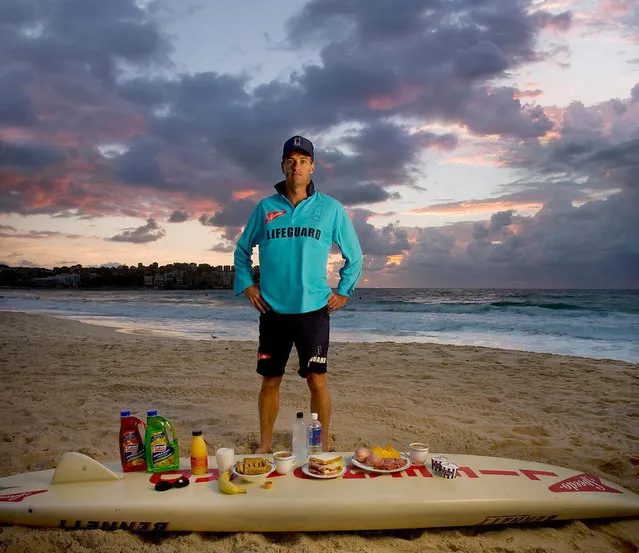
What the World Eats By Peter Menzel And Faith D'Aluisio Part 2

A stunning photographic collection featuring portraits of people from 30 countries and the food they eat in one day. In this fascinating study of people and their diets, 80 profiles are organized by the total number of calories each person puts away in a day. Featuring a Japanese sumo wrestler, a Massai herdswoman, world-renowned Spanish chef Ferran Adria, an American competitive eater, and more, these compulsively readable personal stories also include demographic particulars, including age, activity level, height, and weight. Essays from Harvard primatologist Richard Wrangham, journalist Michael Pollan, and others discuss the implications of our modern diets for our health and for the planet. This compelling blend of photography and investigative reportage expands our understanding of the complex relationships among individuals, culture, and food.
Details
02 May 2014 09:20:00
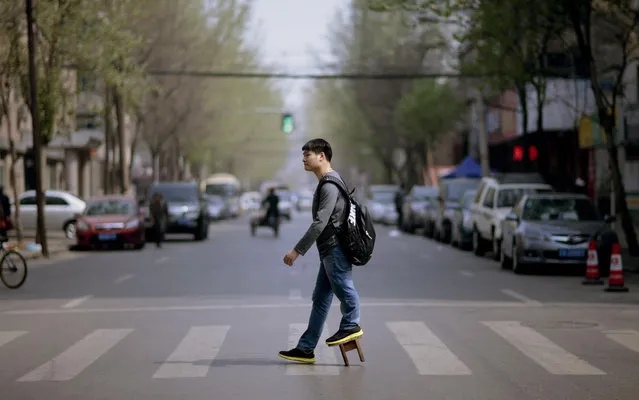
Zhao Qiang walks across a street in Shenyang, Liaoning province, April 14, 2014. Zhao, a community officer of the China Disabled Persons' Federation, was diagnosed with multiple  when he was two, with the resulting tumour affecting the growth of his left leg, his grandmother told local media, citing a doctor's diagnosis. His uncle modified his shoes, fitting them with stools, to allow Zhao to stand and walk. (Photo by Reuters/Stringer)

Zhao Qiang walks across a street in Shenyang, Liaoning province, April 14, 2014. Zhao, a community officer of the China Disabled Persons' Federation, was diagnosed with multiple when he was two, with the resulting tumour affecting the growth of his left leg, his grandmother told local media, citing a doctor's diagnosis. His uncle modified his shoes, fitting them with stools, to allow Zhao to stand and walk. (Photo by Reuters/Stringer)
Details
19 Apr 2014 11:38:00
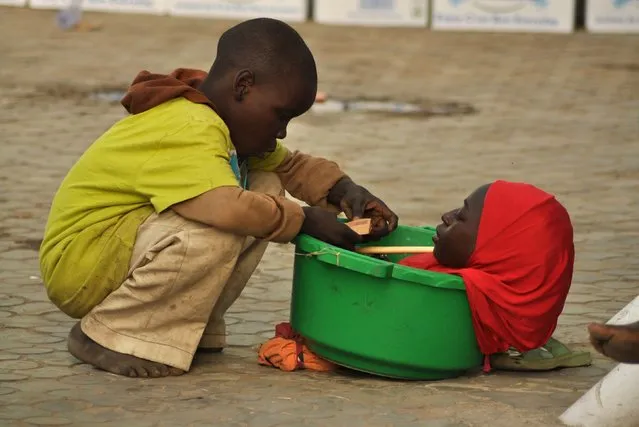
A physically challenged girl looks at her brother as she is kept in a basin to seek alms from people on the street in Kano, Nigeria December 30, 2015. (Photo by Reuters/Stringer)

A physically challenged girl looks at her brother as she is kept in a basin to seek alms from people on the street in Kano, Nigeria December 30, 2015. The girl has suffered from her condition since birth. (Photo by Reuters/Stringer)
Details
02 Jan 2016 11:18:00
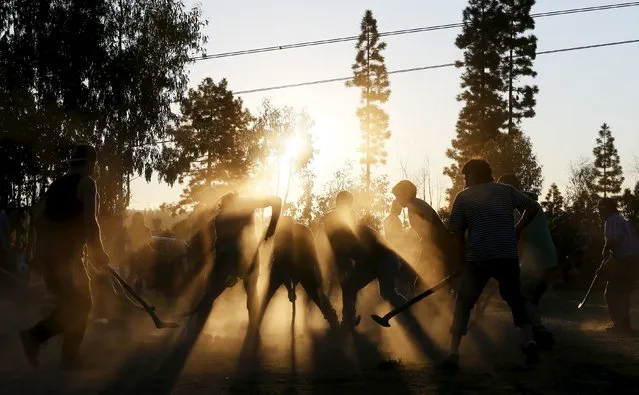
People play "Palin", a traditional ritual and ancestral Mapuche game played with curved sticks called "Chuecas" and a wooden ball, during a meet on Dia de la Raza (Day of the Races), also known as Columbus Day in Vina del Mar, Chile October 11, 2015. (Photo by Rodrigo Garrido/Reuters)

People play "Palin", a traditional ritual and ancestral Mapuche game played with curved sticks called "Chuecas" and a wooden ball, during a meet on Dia de la Raza (Day of the Races), also known as Columbus Day in Vina del Mar, Chile October 11, 2015. (Photo by Rodrigo Garrido/Reuters)
Details
15 Oct 2015 08:01:00
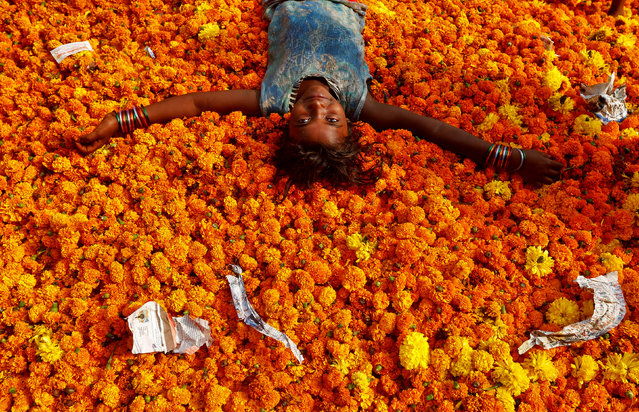
A girl plays on a pile of discarded flowers outside a market, the day after the Diwali celebrations in Mumbai, India October 31, 2016. (Photo by Shailesh Andrade/Reuters)

A girl plays on a pile of discarded flowers outside a market, the day after the Diwali celebrations in Mumbai, India October 31, 2016. (Photo by Shailesh Andrade/Reuters)
Details
01 Nov 2016 12:05:00
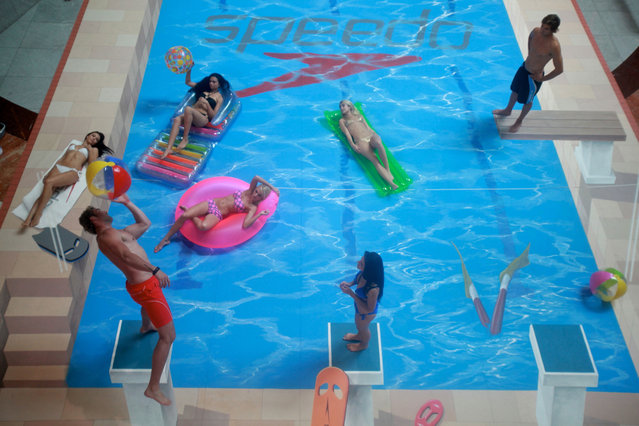
Internationally acclaimed German three-dimensional artist Manfred Stader adds finishing touches to his artwork  in Cape Town, South Africa on 21 November 2010. Stader created this masterpiece to celebrate the opening of Speedo's first dedicated concept store in Africa. (Photo by Foto24/Gallo Images/Getty Images)

Internationally acclaimed German three-dimensional artist Manfred Stader adds finishing touches to his artwork in Cape Town, South Africa on 21 November 2010. Stader created this masterpiece to celebrate the opening of Speedo's first dedicated concept store in Africa. (Photo by Foto24/Gallo Images/Getty Images)
Details
29 Aug 2018 00:03:00
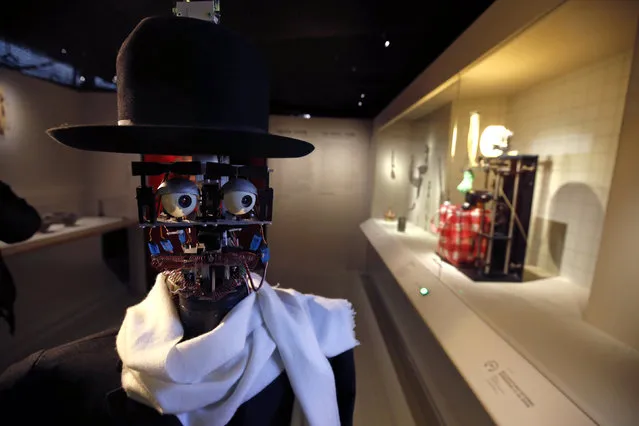
The Berenson robot strolls among visitors during the exhibition “Persona : Oddly Human” at the Quai Branly museum in Paris, France, February 23, 2016. The Berenson robot, developed in France in 2011, is the brainchild of anthropologist Denis Vidal and robotics engineer Philippe Gaussier. Its programming allows it to record reactions of museum visitors to certain pieces of art and then use the data to develop its own unique taste, which allows “Berenson” to judge whether or not it likes a certain work of art within an exhibition. (Photo by Philippe Wojazer/Reuters)

The Berenson robot strolls among visitors during the exhibition “Persona : Oddly Human” at the Quai Branly museum in Paris, France, February 23, 2016. The Berenson robot, developed in France in 2011, is the brainchild of anthropologist Denis Vidal and robotics engineer Philippe Gaussier. Its programming allows it to record reactions of museum visitors to certain pieces of art and then use the data to develop its own unique taste, which allows “Berenson” to judge whether or not it likes a certain work of art within an exhibition. (Photo by Philippe Wojazer/Reuters)
Details
25 Feb 2016 12:26:00