Loading...
Done
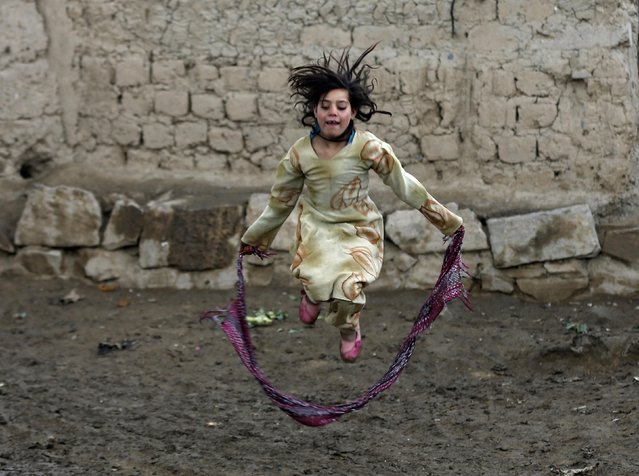
An internally displaced Afghan girl plays near their shelter at a refugee camp in Kabul January 13, 2015. (Photo by Omar Sobhani/Reuters)

An internally displaced Afghan girl plays near their shelter at a refugee camp in Kabul January 13, 2015. (Photo by Omar Sobhani/Reuters)
Details
15 Jan 2015 14:04:00
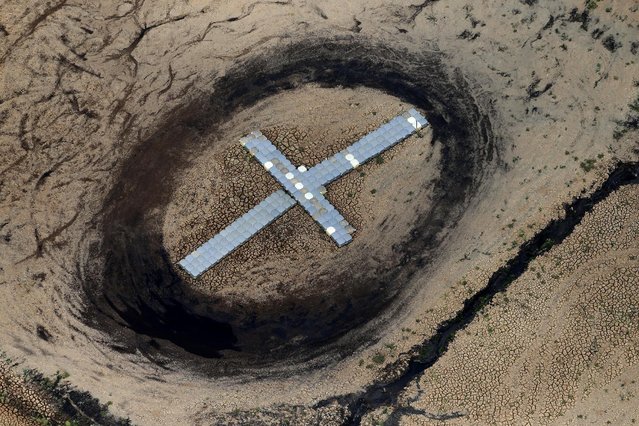
Pontoons, which were previously used as a floating jetty, are seen on the cracked ground of the Atibainha dam, part of the Cantareira reservoir, during a drought in Nazare Paulista, Sao Paulo state February 12, 2015. (Photo by Paulo Whitaker/Reuters)

Pontoons, which were previously used as a floating jetty, are seen on the cracked ground of the Atibainha dam, part of the Cantareira reservoir, during a drought in Nazare Paulista, Sao Paulo state February 12, 2015. Brazil's worst drought in 80 years has left the Cantareira system, that provides greater Sao Paulo with most of its water, with the lowest water level on record. Brazil's economy is already expected to post zero growth this year. Worse yet, since Brazil depends on hydroelectric dams for about three quarters of its electricity, power shortages are also possible due to the drought, federal officials have said. (Photo by Paulo Whitaker/Reuters)
Details
15 Feb 2015 14:19:00
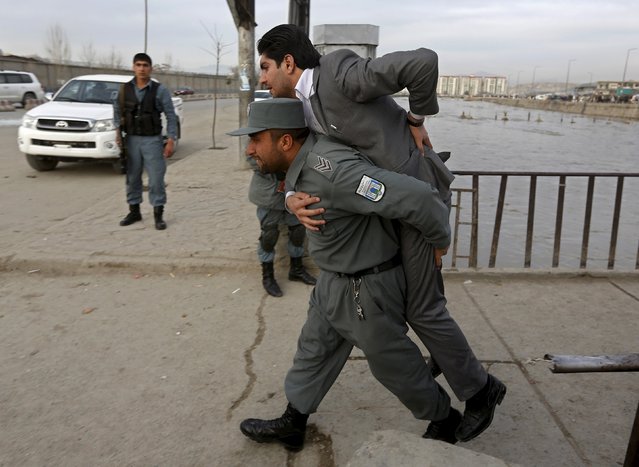
An Afghan policeman carries a wounded man at the site of a suicide attack in Kabul March 25, 2015. Six people were killed and more than 30 injured in the suicide bombing in the Afghan capital on Wednesday that struck close to the presidential palace in the heart of the city, the Interior Ministry said. The suicide bomber had been travelling in a vehicle packed with explosives and it was not immediately clear what the target of the attack had been. (Photo by Omar Sobhani/Reuters)

An Afghan policeman carries a wounded man at the site of a suicide attack in Kabul March 25, 2015. Six people were killed and more than 30 injured in the suicide bombing in the Afghan capital on Wednesday that struck close to the presidential palace in the heart of the city, the Interior Ministry said. The suicide bomber had been travelling in a vehicle packed with explosives and it was not immediately clear what the target of the attack had been. (Photo by Omar Sobhani/Reuters)
Details
26 Mar 2015 12:33:00
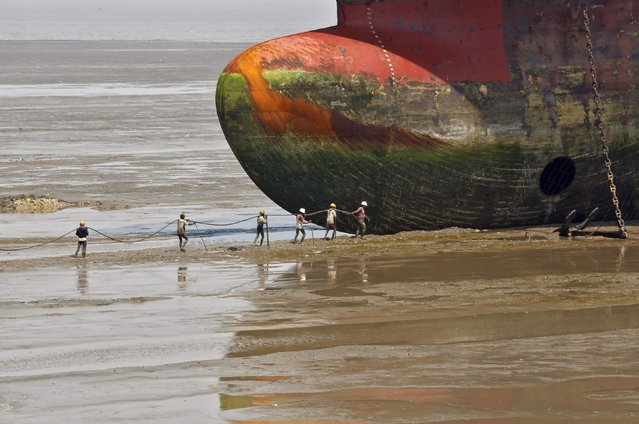
Workers carry a rope line to fasten a decommissioned ship at the Alang shipyard in the western Indian state of Gujarat, March 27, 2015. The European Union plans to impose strict new rules on how companies scrap old tankers and cruise liners, run aground and dismantled on beaches in South Asia. (Photo by Amit Dave/Reuters)

Workers carry a rope line to fasten a decommissioned ship at the Alang shipyard in the western Indian state of Gujarat, March 27, 2015. The European Union plans to impose strict new rules on how companies scrap old tankers and cruise liners, run aground and dismantled on beaches in South Asia. However the practice in India, Bangladesh and Pakistan, hazardous for humans and the environment, will still be hard to stop. European, Turkish and Chinese recyclers are set to benefit from the revamped standards. Depending on raw material prices, ship owners can make up to $500 per tonne of steel from an Indian yard, compared with $300 in China and just $150 in Europe. (Photo by Amit Dave/Reuters)
Details
01 Apr 2015 11:40:00
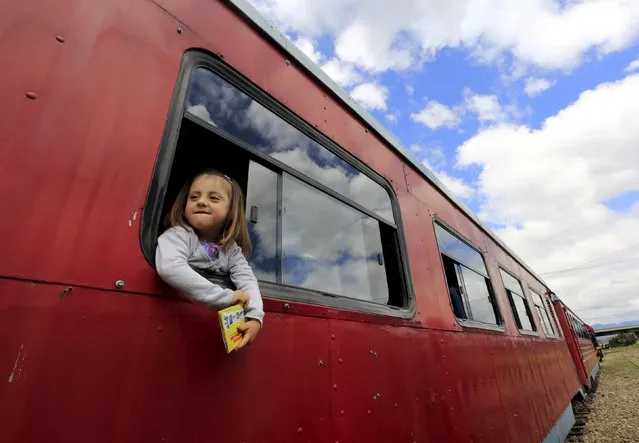
A girl looks out from the window of a “La Sabana” tourist train in La Caro March 1, 2015. (Photo by Jose Miguel Gomez/Reuters)

A girl looks out from the window of a “La Sabana” tourist train in La Caro March 1, 2015. The “La Sabana” tourist train that runs through the capital was founded by Eduardo Rodriguez, a railway engineer. Rodriguez has worked on Colombia's railway system his whole life and now, with an air of nostalgia, transports thousands of tourists in renovated steam locomotives that he fixes in Bogota's Central Station which dates back to 1913. (Photo by Jose Miguel Gomez/Reuters)
Details
23 Apr 2015 11:30:00
Mrs. Marie Graskamp of Milwaukee shows the different positions one might assume when entering the bomb shelter in Milwaukee  September 3, 1958. This circular entrance is about three feet in diameter. This is the entrance (according to the builders) that would connect to the cellar of a home assuming the shelter was in the ground for added protection. (Photo by AP Photo)

Mrs. Marie Graskamp of Milwaukee shows the different positions one might assume when entering the bomb shelter in Milwaukee September 3, 1958. This circular entrance is about three feet in diameter. This is the entrance (according to the builders) that would connect to the cellar of a home assuming the shelter was in the ground for added protection. If a bombing should occur, all members of family would proceed to the cellar and then through the circular port into the shelter. (Photo by AP Photo)
Details
04 Sep 2015 12:44:00
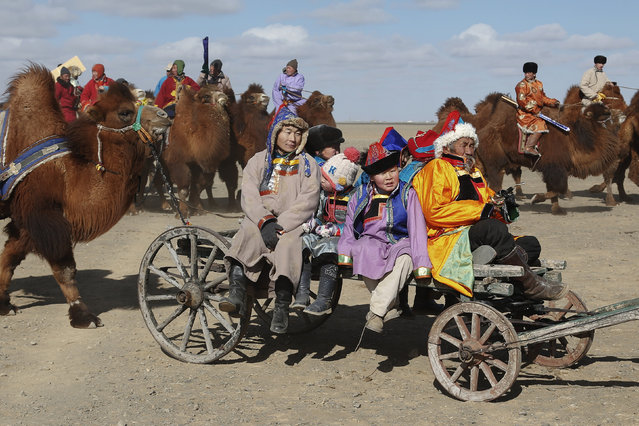
People sit on a cart with a camel tied to it during “Temeenii bayar”, the Camel Festival, in Dalanzadgad, Umnugobi aimag, Mongolia, March 6, 2016. (Photo by B. Rentsendorj/Reuters)

People sit on a cart with a camel tied to it during “Temeenii bayar”, the Camel Festival, in Dalanzadgad, Umnugobi aimag, Mongolia, March 6, 2016. On the steppes of the Gobi Desert, the crowd urges on Bactrian camels laden down with all that's needed to build and live in a traditional Mongolian tent. Guinness World Records classes the 15 km race thatÕs part of the two-day festival as the largest camel race in the world, drawing 1,108 participants. The winning camel romped home in 35 minutes and 12 seconds, according to the records website. (Photo by B. Rentsendorj/Reuters)
Details
30 Mar 2016 11:13:00
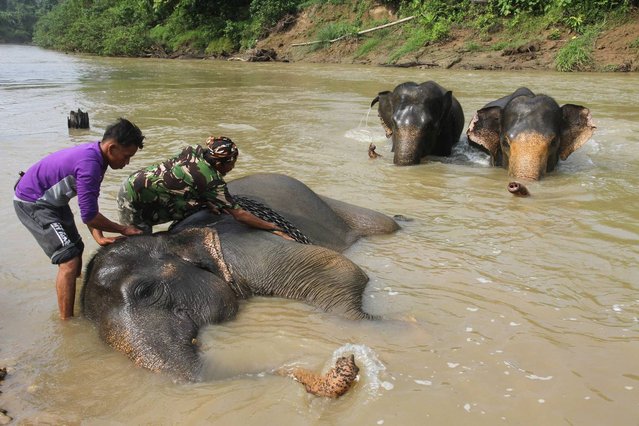
Indonesian mahouts (elephant masters) bathe elephants prior to a daily patrol at a Conservation Respons Unite (CRU) to control elephant-human conflicts in Serbajadi, East Aceh on April 7, 2016. Elephants have joined the front line in the fight against poaching and illegal logging in the dense jungles of Sumatra. Guided by their Indonesian mahouts, they trek alongside rivers, over rough terrain and deep into the rainforest in an area that is home to numerous endangered species, from orangutans to tigers, but which has suffered devastating deforestation in recent years. (Photo by AFP Photo/Januar)

Indonesian mahouts (elephant masters) bathe elephants prior to a daily patrol at a Conservation Respons Unite (CRU) to control elephant-human conflicts in Serbajadi, East Aceh on April 7, 2016. Elephants have joined the front line in the fight against poaching and illegal logging in the dense jungles of Sumatra. Guided by their Indonesian mahouts, they trek alongside rivers, over rough terrain and deep into the rainforest in an area that is home to numerous endangered species, from orangutans to tigers, but which has suffered devastating deforestation in recent years. (Photo by AFP Photo/Januar)
Details
11 Apr 2016 10:24:00