Loading...
Done
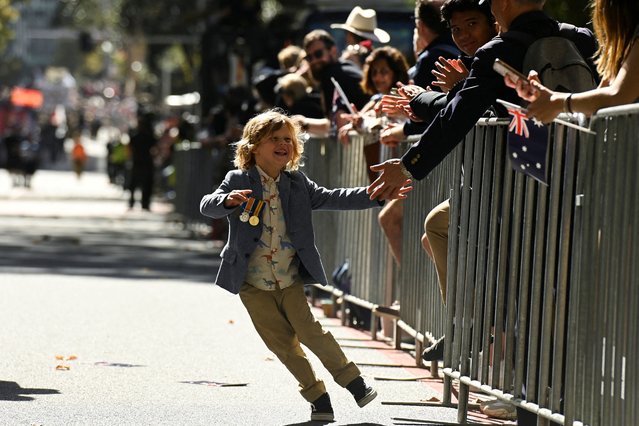
A young marcher high fives the crowd as Australian military personnel, past and present, commemorate ANZAC Day during a parade through the city centre in Sydney, Australia on April 25, 2023. (Photo by Jaimi Joy/Reuters)

A young marcher high fives the crowd as Australian military personnel, past and present, commemorate ANZAC Day during a parade through the city centre in Sydney, Australia on April 25, 2023. (Photo by Jaimi Joy/Reuters)
Details
16 May 2023 03:56:00
A view of the construction site of the Chateau de Guedelon near Treigny in the Burgundy region of France, September 13, 2016. Blacksmiths, stonemasons and quarry men are hard at work in a Burgundy forest building a 13th-century-style castle using the most basic tools and materials, replicating the methods used hundreds of years ago to better understand them. Forgoing all modern technology, workers use hammers to break stones and forge iron, operate wooden wheels to hoist their materials up to where they are needed, and rely on a quarry for stone, clay and sand as they build up a castle from scratch. Construction on Guedelon Castle in central France began in 1997 after an archaeological survey revealed a medieval fortress hidden inside the walls of nearby Chateau de Saint-Fargeau. Those behind the project hope to answer questions about medieval construction and provide lessons on sustainable building. (Photo by Jacky Naegelen/Reuters)

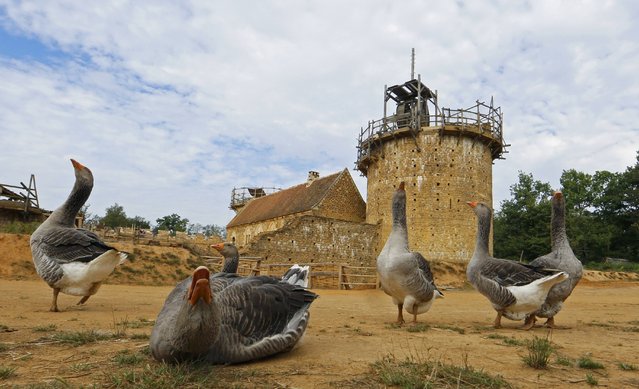
A view of the construction site of the Chateau de Guedelon near Treigny in the Burgundy region of France, September 13, 2016. Blacksmiths, stonemasons and quarry men are hard at work in a Burgundy forest building a 13th-century-style castle using the most basic tools and materials, replicating the methods used hundreds of years ago to better understand them. (Photo by Jacky Naegelen/Reuters)
Details
15 Sep 2016 09:43:00
A demonstrator attends a protest against fare hikes for city buses in Rio de Janeiro January 16, 2015. Amid a marked economic downturn and high inflation, bus fares went up in Sao Paulo, Brazil's largest city, from 3 to 3.50 reais, and in Rio, the former capital, from 3.0 to 3.40 reais. (Photo by Mauro Pimentel/Reuters)

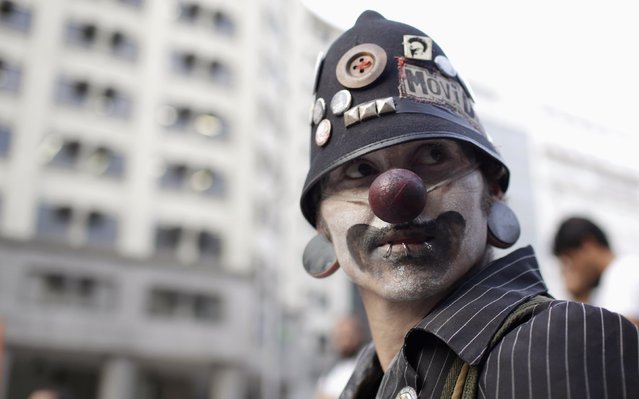
A demonstrator attends a protest against fare hikes for city buses in Rio de Janeiro January 16, 2015. Amid a marked economic downturn and high inflation, bus fares went up in Sao Paulo, Brazil's largest city, from 3 to 3.50 reais, and in Rio, the former capital, from 3.0 to 3.40 reais. (Photo by Mauro Pimentel/Reuters)
Details
18 Jan 2015 13:42:00
Revelers dance during the “Ceu na Terra”, or Heaven on earth, carnival parade in Rio de Janeiro, Brazil, Saturday, February 7, 2015. Rio's over-the-top Carnival is the highlight of the year for many local residents. Hundreds of thousands of merrymakers are beginning to take to the streets in open-air “blocos” parties. (Photo by Felipe Dana/AP Photo)

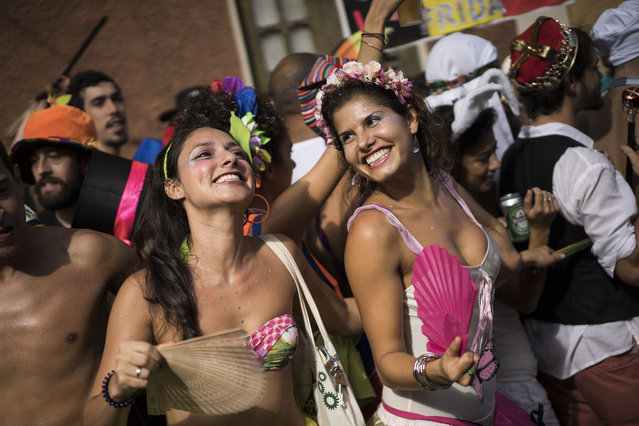
Revelers dance during the “Ceu na Terra”, or Heaven on earth, carnival parade in Rio de Janeiro, Brazil, Saturday, February 7, 2015. Rio's over-the-top Carnival is the highlight of the year for many local residents. Hundreds of thousands of merrymakers are beginning to take to the streets in open-air “blocos” parties. (Photo by Felipe Dana/AP Photo)
Details
10 Feb 2015 12:33:00
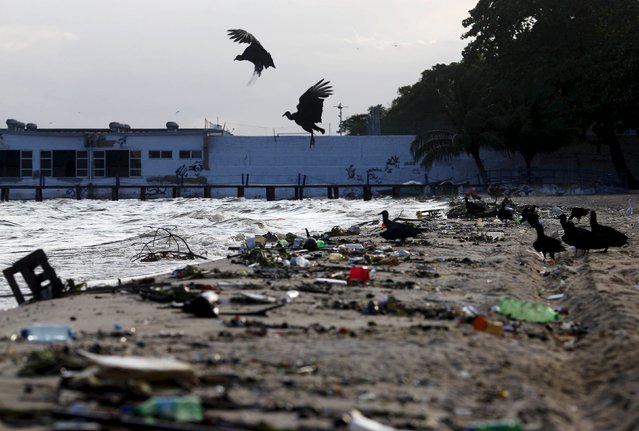
Vultures gather to eat waste in Bica beach, on the banks of the Guanabara Bay, with the Sugar Loaf mountain in background, 500 days ahead the Rio 2016 Olympic Games in Rio de Janeiro March 24, 2015. (Photo by Ricardo Moraes/Reuters)

Vultures gather to eat waste in Bica beach, on the banks of the Guanabara Bay, with the Sugar Loaf mountain in background, 500 days ahead the Rio 2016 Olympic Games in Rio de Janeiro March 24, 2015. As part of its Olympic bid, Rio promised to clean up 80 percent of the bay for the games. But local government officials have already admitted that a cleanup by 2016 is not achievable. Despite millions of dollars of investment over the years, the bay still stinks of sewage. Sailors who visited the city for test events complained of a floating sofa and a dead dog in the water. (Photo by Ricardo Moraes/Reuters)
Details
26 Mar 2015 12:16:00
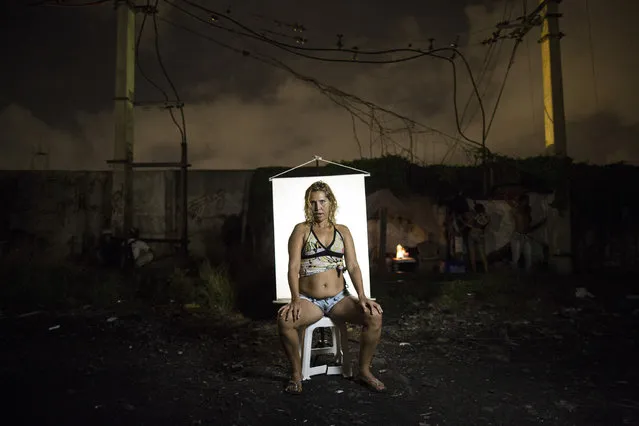
In this March 18, 2015 photo, Andrea, better known as Loira, which is the Portuguese word for 'blonde," poses for a portrait in an open-air crack cocaine market, known as a “cracolandia” or crackland where users can buy crack, and smoke it in plain sight, day or night, in Rio de Janeiro, Brazil. Andrea says she is married and has a home, but she keeps returning to crackland to feed her addiction. (Photo by Felipe Dana/AP Photo)

In this March 18, 2015 photo, Andrea, better known as Loira, which is the Portuguese word for “blonde”, poses for a portrait in an open-air crack cocaine market, known as a “cracolandia” or crackland where users can buy crack, and smoke it in plain sight, day or night, in Rio de Janeiro, Brazil. Andrea says she is married and has a home, but she keeps returning to crackland to feed her addiction. (Photo by Felipe Dana/AP Photo)
Details
09 Apr 2015 13:05:00
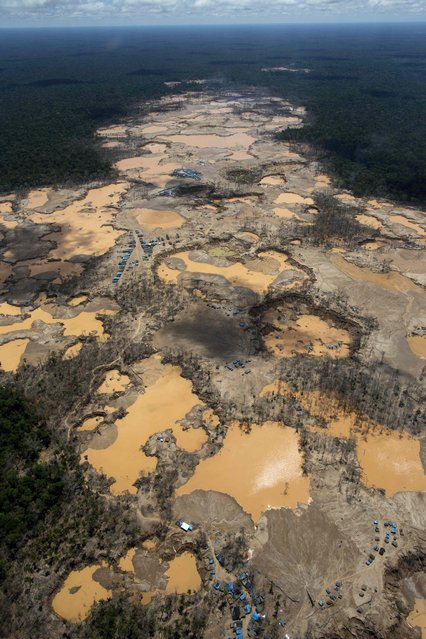
This November 11, 2014 aerial photo, shows a deforested area dotted with blue tarps, marking the area where miners reside, and craters filled with water, caused by illegal gold mining activities, in La Pampa, in Peru's Madre de Dios region. (Photo by Rodrigo Abd/AP Photo)

This November 11, 2014 aerial photo, shows a deforested area dotted with blue tarps, marking the area where miners reside, and craters filled with water, caused by illegal gold mining activities, in La Pampa, in Peru's Madre de Dios region. Less than a month before Peru plays host to global climate talks, the government sent a battalion of police into southeastern jungles to dismantle illegal gold-mining mining camps. Peru's anti-illegal mining czar, retired army Gen. Augusto Soto, marched the men to the wasteland known as La Pampa, where 50,000 hectares of rainforest have been obliterated in the past six years. (Photo by Rodrigo Abd/AP Photo)

Details
21 Nov 2014 12:35:00
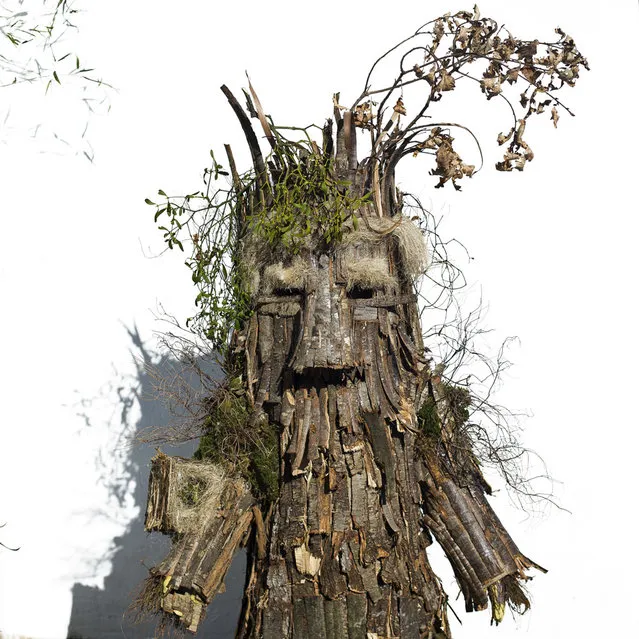
A man dressed as a  “Trapajon”, representing entities of nature, poses for a picture after taking part in the Vijanera Festival in Silio, northern Spain, Sunday, Jan. 6, 2013. The Vijanera masquerade, of pre-Roman origin, is the first carnival of the year in Europe symbolizing the triumph of good over evil and involving the participation of crowds of residents wearing different masks, animal skins and brightly colored clothing with its own complex function and symbolism and becoming the living example of the survival of archaic cults to nature. (Photo by Daniel Ochoa de Olza/AP Photo)

A man dressed as a “Trapajon”, representing entities of nature, poses for a picture after taking part in the Vijanera Festival in Silio, northern Spain, Sunday, Jan. 6, 2013. The Vijanera masquerade, of pre-Roman origin, is the first carnival of the year in Europe symbolizing the triumph of good over evil and involving the participation of crowds of residents wearing different masks, animal skins and brightly colored clothing with its own complex function and symbolism and becoming the living example of the survival of archaic cults to nature. (Photo by Daniel Ochoa de Olza/AP Photo)
Details
19 Jan 2013 13:01:00