Loading...
Done
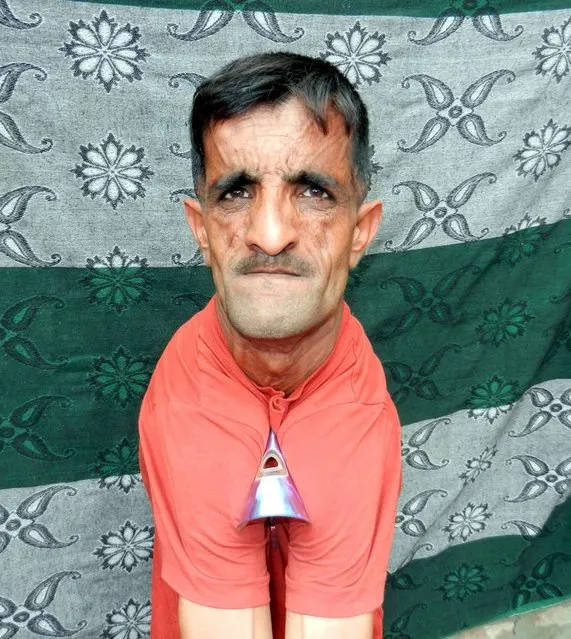
Rammehar Punia A Rubber Man

35-year old farmer Rammehar Punia has been named as ‘Rubber Man’. Thanks to his remarkable ability to make his shoulders meet in front of his chest. He has used his flex!bil!ty to smash the Guinness World record for the number of CD’s broken between the shoulders. He broke 60 CDs in just a minute.
Details
10 Aug 2015 10:45:00
A biker shows his 12-year-old cat “Chiquinho” – which always rides with him on his motorbike – in Rio de Janeiro, Brazil, on June 19, 2016. (Photo by Yasuyoshi Chiba/AFP Photo)

A biker shows his 12-year-old cat “Chiquinho” – which always rides with him on his motorbike – in Rio de Janeiro, Brazil, on June 19, 2016. (Photo by Yasuyoshi Chiba/AFP Photo)
Details
21 Jun 2016 07:35:00
Motorcyclist loading his possessions onto a truck with the help of his friends in Leakey, May 1973. (Photo by Marc St. Gil/NARA via The Atlantic)

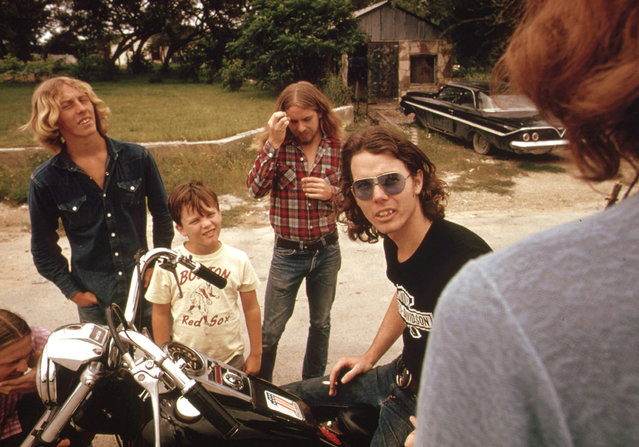
America in the 1970s: Texas. Motorcyclist loading his possessions onto a truck with the help of his friends in Leakey, May 1973. (Photo by Marc St. Gil/NARA via The Atlantic)
Details
01 Aug 2013 08:52:00
Watercolor Painting By Bjorn Bernstrom

The watercolor artist Bjorn Bernstrom is well-known in his native Sweden for his landscape paintings. Yet his style is somewhat different from traditional watercolor methods.
Details
07 Aug 2015 11:16:00
In this July 8, 2019, photo, a monkey pulls on the clothes of Saraswati Dangol as she arrives to feed monkeys in the forest near Pashupatinath temple in Kathmandu, Nepal. For the past four years, Dangol has been bringing the bread every day to feed the monkeys. As soon as they see her with her white sack, they gather around her, some patiently waiting for their turn while others less patiently snatching the bread from her hands. Many of Dangol's regulars are elderly, or are mother or baby monkeys who are unable to fight for their share of food in the wild. (Photo by Niranjan Shrestha/AP Photo)

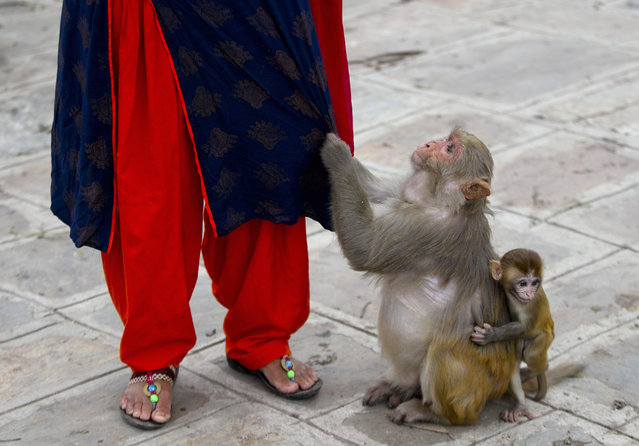
In this July 8, 2019, photo, a monkey pulls on the clothes of Saraswati Dangol as she arrives to feed monkeys in the forest near Pashupatinath temple in Kathmandu, Nepal. For the past four years, Dangol has been bringing the bread every day to feed the monkeys. As soon as they see her with her white sack, they gather around her, some patiently waiting for their turn while others less patiently snatching the bread from her hands. Many of Dangol's regulars are elderly, or are mother or baby monkeys who are unable to fight for their share of food in the wild. (Photo by Niranjan Shrestha/AP Photo)
Details
26 Jul 2019 00:03:00
A protester spits fire during a protest to mark the second anniversary of months of civil unrising against social inequality, in Santiago, on October 18, 2021. The social-justice protests that rocked Chile in October 2019 led ultimately to the decision to create a new constitutional convention to draft a constitution to replace the one written during the dictatorship of Augusto Pinochet (1973-1990). The new 155-member the new body is in charge of writing a new constitution meant to pry power from the hands of the elite and spread it more equitably in the South American nation. (Photo by Martin Bernetti/AFP Photo)

A protester spits fire during a protest to mark the second anniversary of months of civil unrising against social inequality, in Santiago, on October 18, 2021. The social-justice protests that rocked Chile in October 2019 led ultimately to the decision to create a new constitutional convention to draft a constitution to replace the one written during the dictatorship of Augusto Pinochet (1973-1990). The new 155-member the new body is in charge of writing a new constitution meant to pry power from the hands of the elite and spread it more equitably in the South American nation. (Photo by Martin Bernetti/AFP Photo)
Details
20 Oct 2021 09:01:00
The unromantic gypsies. Children boxing in a gypsy camp in Kent, England on July 1, 1951. Like all boys these gypsy lads like to try their hand at boxing. Encouraged by their friends they fight it out on Corke's Meadow. Few Romanies now live a life of wandering romance. Most are like the three hundred squatters of Corke's Meadow, Kent, which is part of a “gypsy problem” that involves about 100,000 today. Of those about 25,000 can be rightly called gypsies, the rest are Mumpers and Posh-rats and Hobos. Corke's Meadow has both kinds. “Picture Post” cameraman Bert Hardy photographs the Corke's Meadow gypsies in their encampment. (Photo by Hulton-Deutsch Collection/Corbis via Getty Images)

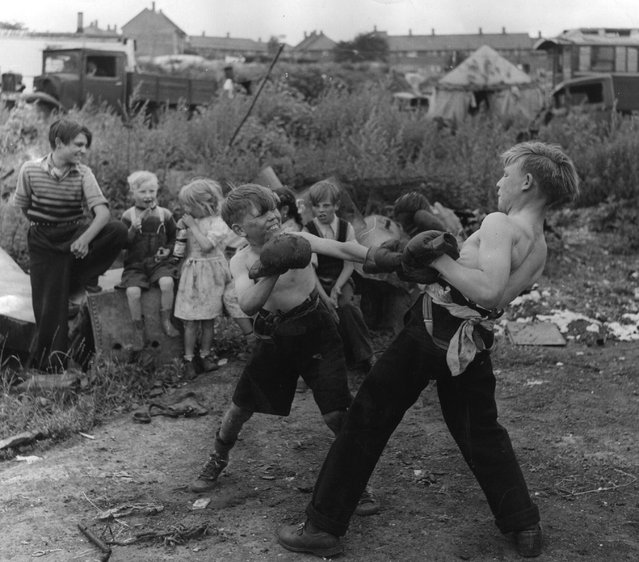
The unromantic gypsies. Children boxing in a gypsy camp in Kent, England on July 1, 1951. Like all boys these gypsy lads like to try their hand at boxing. Encouraged by their friends they fight it out on Corke's Meadow. Few Romanies now live a life of wandering romance. Most are like the three hundred squatters of Corke's Meadow, Kent, which is part of a “gypsy problem” that involves about 100,000 today. Of those about 25,000 can be rightly called gypsies, the rest are Mumpers and Posh-rats and Hobos. Corke's Meadow has both kinds. “Picture Post” cameraman Bert Hardy photographs the Corke's Meadow gypsies in their encampment. (Photo by Hulton-Deutsch Collection/Corbis via Getty Images)
Details
12 Mar 2017 00:01:00
A dhobi, or a washerman washes cloths on the banks of the River Gomti in Lucknow, India, Saturday, September 12, 2020. Dhobis are traditional laundry workers who wash clothes by hand and dry them in the sun, an occupation which has been in existence for generations. Most cities in India have a Dhobi Ghat, or washermen's area, where the city's pile of clothes is laundered. This practice is still popular in India, despite of modern technology. Around 1,000 families work in Lucknow's Dhobi Ghat. However, in light of the novel coronavirus, their wages have decreased drastically. With each family earning around US$100-200 per month. (Photo by Rajesh Kumar Singh/AP Photo)

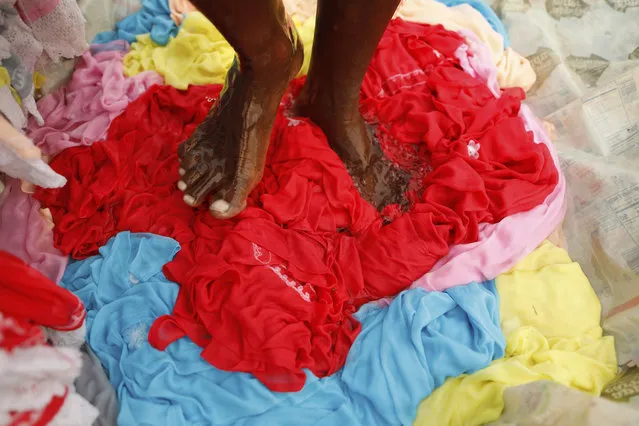
A dhobi, or a washerman washes cloths on the banks of the River Gomti in Lucknow, India, Saturday, September 12, 2020. Dhobis are traditional laundry workers who wash clothes by hand and dry them in the sun, an occupation which has been in existence for generations. Most cities in India have a Dhobi Ghat, or washermen's area, where the city's pile of clothes is laundered. This practice is still popular in India, despite of modern technology. Around 1,000 families work in Lucknow's Dhobi Ghat. However, in light of the novel coronavirus, their wages have decreased drastically. With each family earning around US$100-200 per month. (Photo by Rajesh Kumar Singh/AP Photo)
Details
25 Sep 2020 00:03:00