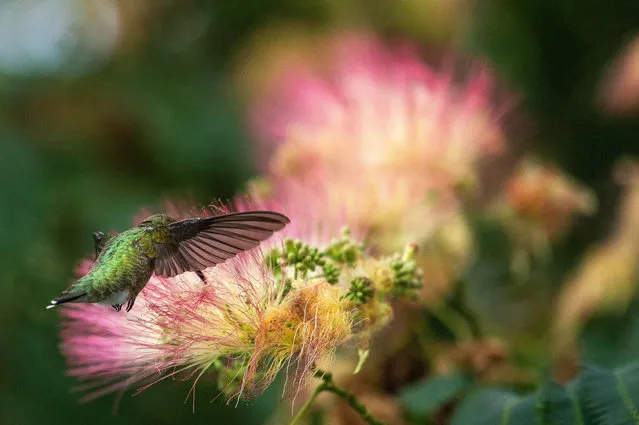
A hummingbird feeds on the nectar from a Mimosa tree in Saugus, Massachusetts on July 30, 2020. (Photo by Joseph Prezioso/ZUMA Wire/Rex Features/Shutterstock)
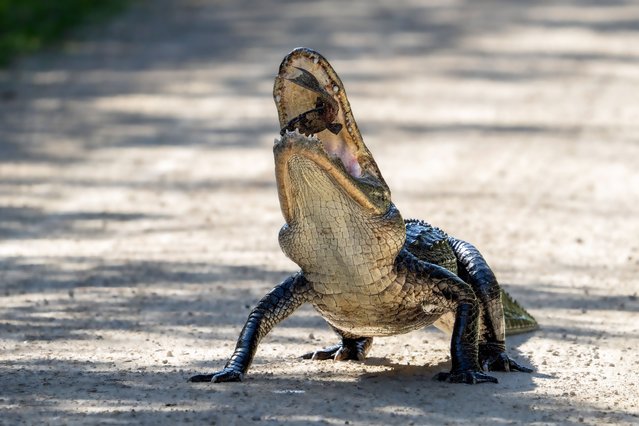
An alligator devours a fish carcass he stole from a raven in Big Cypress National Preserve in Florida on November 24, 2022. The Big Cypress Swamp is a freshwater swampland located near the Everglades National Park. (Photo by Ronen Tivony/SOPA Images/Rex Features/Shutterstock)
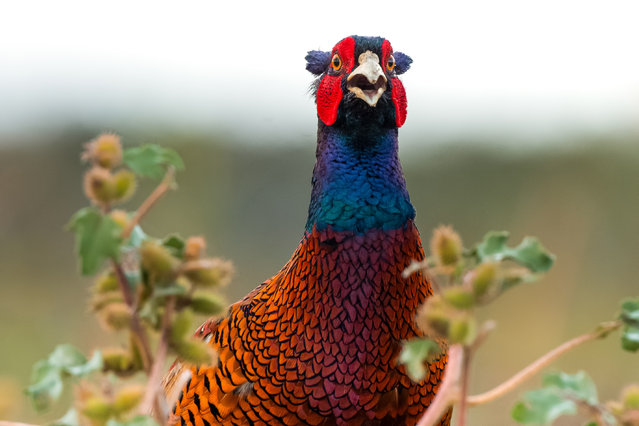
A pheasant is seen among grasses in Bursa, Turkiye on October 07, 2024. Pheasants mostly live in forested areas, thickets and wetlands. Unlike females, male pheasants have a much more remarkable structure with their long tails and feathers in bright and variable colors. Also, they feed on fruits, grains, seeds and invertebrates. (Photo by Alper Tuydes/Anadolu via Getty Images)
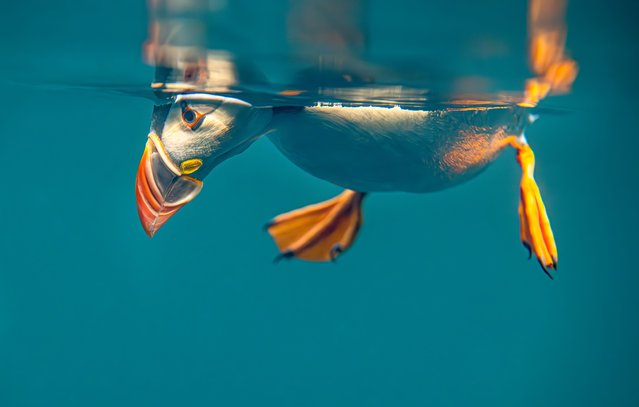
A puffin swims underwater in search for fish off the coast of the Farne Islands in Northumberland, North East England in the last decade of July 2025. (Photo by Brian Matthews/Solent News & Photo Agency)
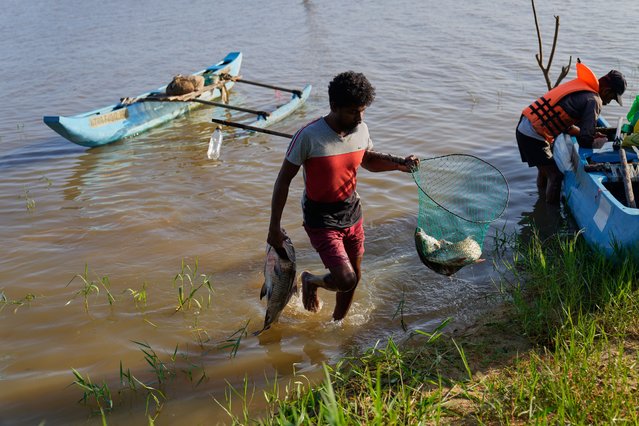
A fisherman brings his catch ashore from the Deduru Oya Reservoir, where giant snakeheads have become an invasive species in Walpaluwa village, Sri Lanka, Thursday, October 30, 2025. (Photo by Eranga Jayawardena/AP Photo)
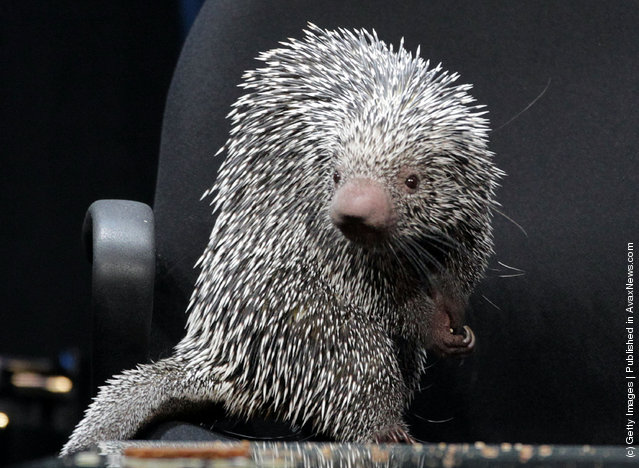
A Porcupine on display during the PBS portion of the 2010 Summer TCA Press Tour at the Beverly Hilton Hotel on August 5, 2010 in Beverly Hills, California. (Photo by Frederick M. Brown/Getty Images)
“The fennec fox is a small nocturnal fox found in the Sahara of North Africa. Its most distinctive feature is unusually large ears. The name “fennec” comes from the Arabic word for fox, and the species name zerda has a Greek origin that refers to its habitat. The fennec is the smallest species of canid in the world; coat, ears and kidney functions have adapted to a high-temperature, low-water, desert environment. In addition, its hearing is sensitive enough to hear prey moving underground”. – Wikipedia
Photo: A Baby Fennec is seen at Sunshine International Aquarium on June 24, 2009 in Tokyo, Japan. The small nocturnal fox babies were born on May 17 2009. (Photo by Junko Kimura/Getty Images)
Model Bianca Gavrilas wears a a hand-embroidered cape made from the silk of the Golden Orb Spider in the V&A Museum's Medieval and Renaissance Gallery on January 23, 2012 in London, England. The cape is one of two golden spider silk textiles that exist in the world, it was made in Madagascar over a period of 8 years and using the silk of silk of 1.2million spiders. (Photo by Oli Scarff/Getty Images)