Loading...
Done
Afghanistan: Dogs of War Part 2

Throughout the course of the long war in Afghanistan, Coalition troops have relied on thousands of military working dogs to help keep them safe, and make their jobs easier. The dogs are trained to detect explosives, to find illegal drugs, to search for missing comrades, or target enemy combatants. Not only are they active on the front lines, but behind the lines they serve as therapy dogs, service dogs, and loyal companions. They also share the same risks as the ground troops, suffering injuries and sometimes death on the battlefields. Gathered here are images of these dogs and their handlers in Afghanistan and back home, from over the past several years, part of the ongoing series here on Afghanistan.
Details
05 Jun 2014 21:10:00
Fighters Holly “The Lotus” Mei (L) and Teri “Feisty Fists” London train for the upcoming 'Lingerie Fighting Championships 22: Costume Brawl I' at DXG Self Defense on October 25, 2016 in Las Vegas, Nevada. The event is scheduled to feature eight bouts at 4 Bears Casino & Lodge on October 29, 2016 in New Town, North Dakota. (Photo by Ethan Miller/Getty Images)

Fighters Holly “The Lotus” Mei (L) and Teri “Feisty Fists” London train for the upcoming 'Lingerie Fighting Championships 22: Costume Brawl I' at DXG Self Defense on October 25, 2016 in Las Vegas, Nevada. The event is scheduled to feature eight bouts at 4 Bears Casino & Lodge on October 29, 2016 in New Town, North Dakota. (Photo by Ethan Miller/Getty Images)
Details
27 Oct 2016 12:15:00
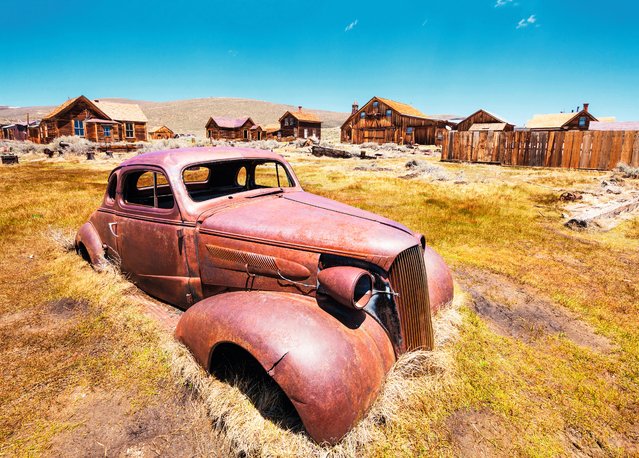
Bodie, Mono County, California. Gold was discovered at Bodie in 1859 (just after the initial California gold rush) and it went from mining camp to boomtown. Its decline began in 1880, when word spread of new boomtowns elsewhere. The Standard Consolidated Mine closed in 1913, and four years later the Bodie Railway was abandoned. By 1940 the population was down to 40. Today, Bodie is maintained in a state of arrested decay as a visitor attraction. (Photo by Alamy Stock Photo)

Kieron Connolly’s new book of photographs of more than 100 once-busy and often elegant buildings gives an idea of how the world might look if humankind disappeared. Here: Bodie, Mono County, California. Gold was discovered at Bodie in 1859 (just after the initial California gold rush) and it went from mining camp to boomtown. Its decline began in 1880, when word spread of new boomtowns elsewhere. The Standard Consolidated Mine closed in 1913, and four years later the Bodie Railway was abandoned. By 1940 the population was down to 40. Today, Bodie is maintained in a state of arrested decay as a visitor attraction. (Photo by Alamy Stock Photo)
Details
07 Sep 2016 09:50:00
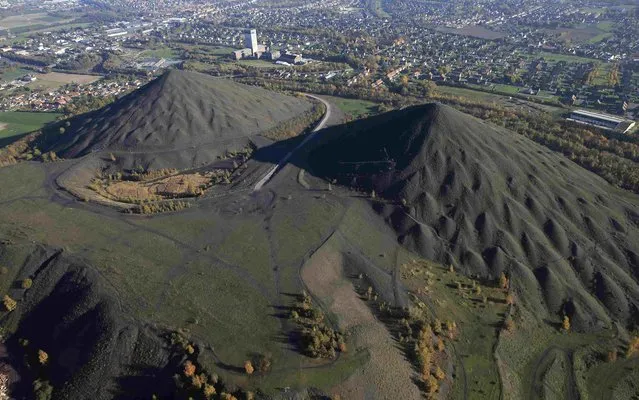
An aerial view shows the 11/19 pit and twin slag heaps at the former coal mine site in Loos-en-Gohelle, northern France, November 1, 2015. Loos-en-Gohelle, a town of 7000 inhabitants in the North of France, marked by the closure of coal mines in 1970, has demonstrated a successful transition from coal to a green economy. (Photo by Pascal Rossignol/Reuters)

An aerial view shows the 11/19 pit and twin slag heaps at the former coal mine site in Loos-en-Gohelle, northern France, November 1, 2015. Loos-en-Gohelle, a town of 7000 inhabitants in the North of France, marked by the closure of coal mines in 1970, has demonstrated a successful transition from coal to a green economy. (Photo by Pascal Rossignol/Reuters)
Details
07 Nov 2015 08:01:00
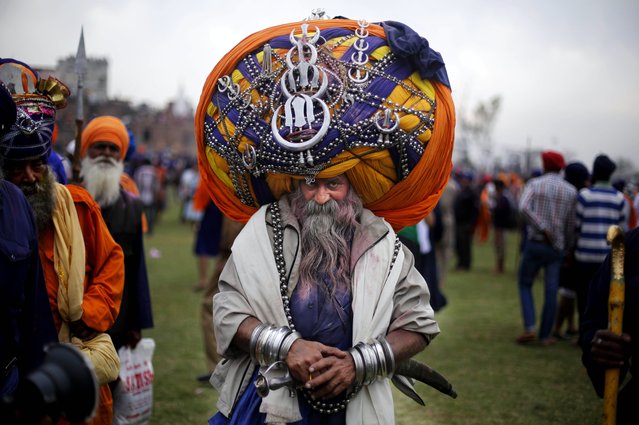
A Sikh warrior, wearing a huge turban attends the annual fair of “Hola Mohalla” in Anandpur Sahib, in the northern Indian state of Punjab, Monday, March 17, 2014. Believers from various parts of northern India collect at the religious fair to celebrate the festival of Holi in a tradition set by the tenth Sikh guru Guru Gobind Singh in the seventeenth century. Nihangs, or Sikh warriors, display their martial skills and attire during the fair, believed to be maintained in the exact tradition as set by the Guru. (Photo by Altaf Qadri/AP Photo)

A Sikh warrior, wearing a huge turban attends the annual fair of “Hola Mohalla” in Anandpur Sahib, in the northern Indian state of Punjab, Monday, March 17, 2014. Believers from various parts of northern India collect at the religious fair to celebrate the festival of Holi in a tradition set by the tenth Sikh guru Guru Gobind Singh in the seventeenth century. Nihangs, or Sikh warriors, display their martial skills and attire during the fair, believed to be maintained in the exact tradition as set by the Guru. (Photo by Altaf Qadri/AP Photo)
Details
22 Mar 2014 13:31:00
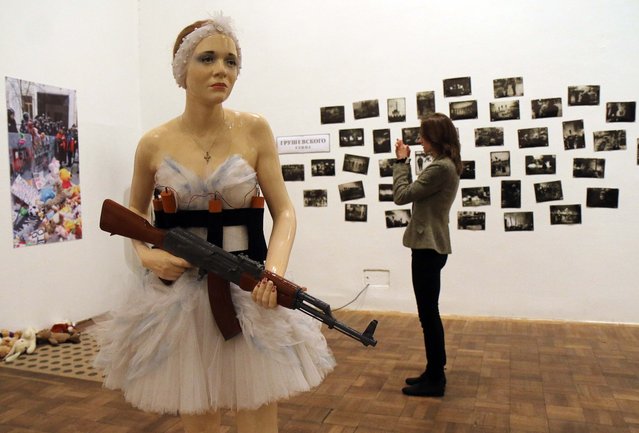
A visitor stands in the exhibition “I Am A Drop In The Ocean” dedicated to the artistic and visual expressions of the protests that shook the Ukraine from November 2013 until February 2014 at the Kuenstlerhaus gallery in Vienna, Austria, Thursday, April 10, 2014. The exhibition opens its doors from April 11 until May 23, 2014. (Photo by Ronald Zak/AP Photo)

A visitor stands in the exhibition “I Am A Drop In The Ocean” dedicated to the artistic and visual expressions of the protests that shook the Ukraine from November 2013 until February 2014 at the Kuenstlerhaus gallery in Vienna, Austria, Thursday, April 10, 2014. The exhibition opens its doors from April 11 until May 23, 2014. (Photo by Ronald Zak/AP Photo)
Details
12 Apr 2014 12:30:00
A woman walks against blowing snow in Evanston, Illinois, on February 8, 2014. (Photo by Nam Y. Huh/Associated Press)

A woman walks against blowing snow in Evanston, Illinois, on February 8, 2014. (Photo by Nam Y. Huh/Associated Press)
Details
15 Feb 2014 12:23:00
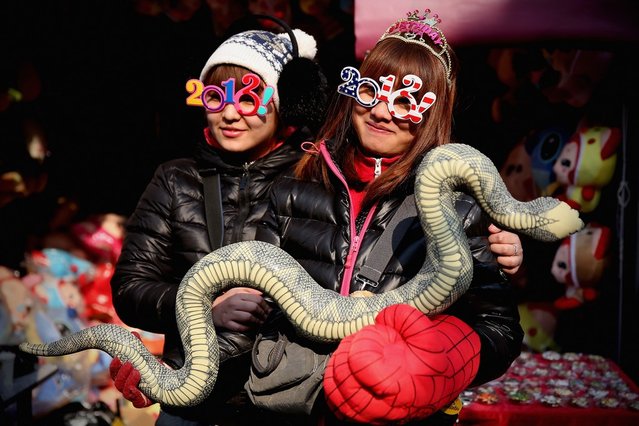
The vendors show the toy of snake at the Spring Festival Temple Fair for celebrating Chinese Lunar New Year of Snake at the Temple of Earth park on February 9, 2013 in Beijing, China. The Chinese Lunar New Year of Snake also known as the Spring Festival, which is based on the Lunisolar Chinese calendar, is celebrated from the first day of the first month of the lunar year and ends with Lantern Festival on the Fifteenth day.  (Photo by Feng Li)

The vendors show the toy of snake at the Spring Festival Temple Fair for celebrating Chinese Lunar New Year of Snake at the Temple of Earth park on February 9, 2013 in Beijing, China. The Chinese Lunar New Year of Snake also known as the Spring Festival, which is based on the Lunisolar Chinese calendar, is celebrated from the first day of the first month of the lunar year and ends with Lantern Festival on the Fifteenth day. (Photo by Feng Li)
Details
10 Feb 2013 13:03:00