Loading...
Done
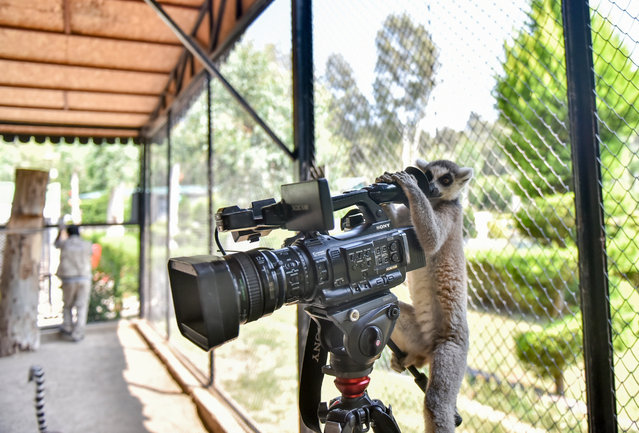
A lemur inspects a camera at Tarsus Nature Park in Mersin, Turkey on July 25, 2021. The population of lemurs, one of the inhabitants of Tarsus Nature Park, increases with new births every year. Lemurs are among the most interesting species in the zoo. (Photo by Serkan Avci/Anadolu Agency via Getty Images)

A lemur inspects a camera at Tarsus Nature Park in Mersin, Turkey on July 25, 2021. The population of lemurs, one of the inhabitants of Tarsus Nature Park, increases with new births every year. Lemurs are among the most interesting species in the zoo. (Photo by Serkan Avci/Anadolu Agency via Getty Images)
Details
15 Aug 2021 07:27:00
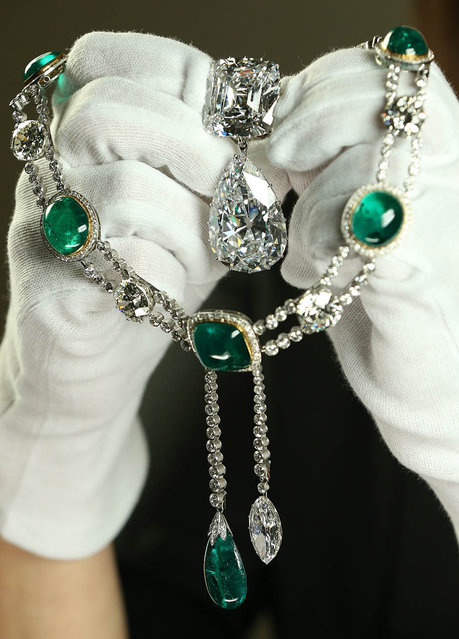
Caroline de Guitaut, Curator of Royal Collections, holds the Cullinan III and IV Broach and the Cullinan VII Delhi Durbar Necklace and Cullinan Pendant at The Queen's Gallery, Buckingham Palace

“A dazzling exhibition featuring jewelry made with the world’s largest diamond will be part of the celebrations marking the 60th anniversary of Queen Elizabeth II’s reign. The jewelry was made with a 3,106-carat diamond discovered in 1905 at the Cullinan Diamond Mine near Pretoria, the capital of South Africa. The diamond was so large that miners initially thought it was a worthless crystal and almost threw it away”... – Vidya Kauri via News.nationalpost.com

Photo: Caroline de Guitaut, Curator of Royal Collections, holds the Cullinan III and IV Broach and the Cullinan VII Delhi Durbar Necklace and Cullinan Pendant at The Queen's Gallery, Buckingham Palace on May 15, 2012 in London, England. (Photo by Peter Macdiarmid)
Details
17 May 2012 10:59:00
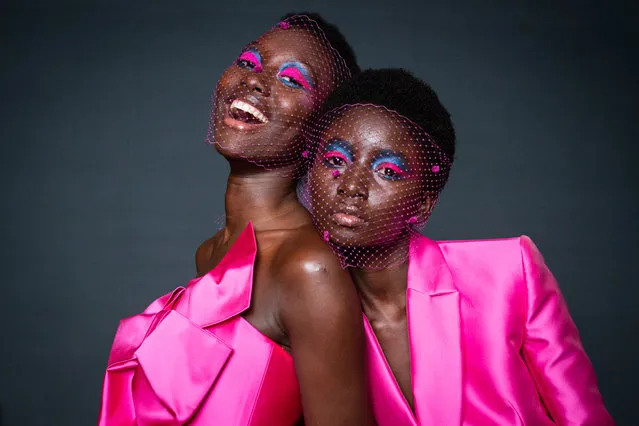
Models are seen at the backstage before the runway at The 2nd Skin Co. show during Mercedes Benz Fashion Week Madrid Spring/Summer 2020 at Ifema on July 09, 2019 in Madrid, Spain. (Photo by Pablo Cuadra/Getty Images)

Models are seen at the backstage before the runway at The 2nd Skin Co. show during Mercedes Benz Fashion Week Madrid Spring/Summer 2020 at Ifema on July 09, 2019 in Madrid, Spain. (Photo by Pablo Cuadra/Getty Images)
Details
11 Jul 2019 00:05:00
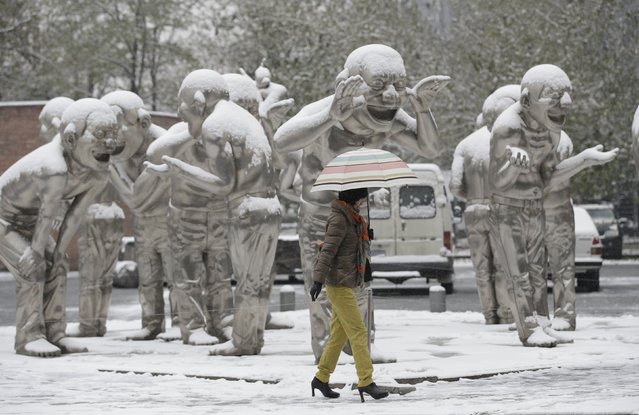
A woman holding an umbrella walks past the sculpture by Chinese artist Yue Minjun beside a road during a snow in Beijing, China, November 22, 2015. (Photo by Jason Lee/Reuters)

A woman holding an umbrella walks past the sculpture by Chinese artist Yue Minjun beside a road during a snow in Beijing, China, November 22, 2015. (Photo by Jason Lee/Reuters)
Details
24 Nov 2015 08:05:00
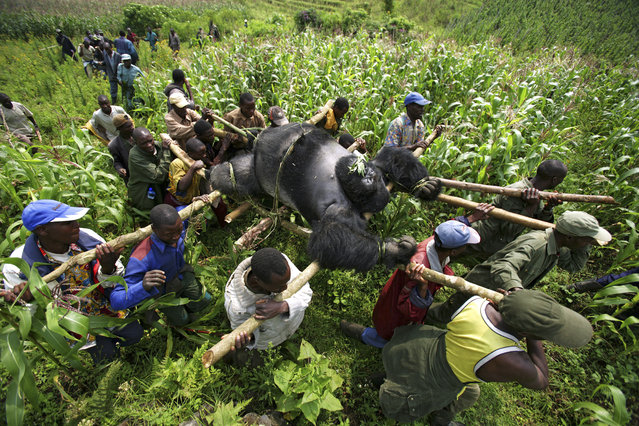
2008 Visa d'or Feature: Brent Stirton. Conservation Rangers from an Anti-Poaching unit work with locals to evacuate the bodies of four Mountain Gorrillas killed in mysterious circumstances in the park,  July 24, 2007, Virunga National Park, Eastern Congo. (Photo by Brent Stirton/Exclusive by Getty Images)

Jean-François Leroy launched Visa Pour l’Image, the international photojournalism festival, in Perpignan in 1989. Before heading up the festival, Leroy was shooting reportage for the agency Sipa Press and also working for Photo-Reporter, Le Photographe, Photo-Revue and Photo Magazine. He is the chairman of the company Images Evidence. Photo: 2008 Visa d'or Feature: Brent Stirton. Conservation Rangers from an Anti-Poaching unit work with locals to evacuate the bodies of four Mountain Gorrillas killed in mysterious circumstances in the park, July 24, 2007, Virunga National Park, Eastern Congo. (Photo by Brent Stirton/Exclusive by Getty Images)
Details
27 Aug 2013 10:42:00
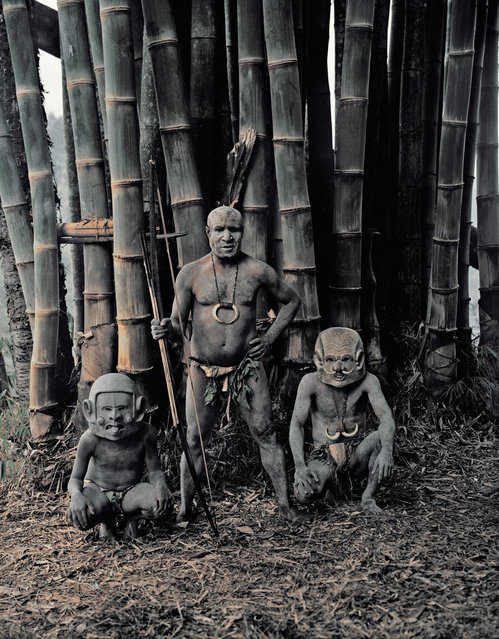
“Asaro from the Eastern Highlands”. The mudmen could not cover their faces with mud because the people of Papua New Guinea thought that the mud from the Asaro river was poisonous. So instead of covering their faces with this alleged poison, they made masks from pebbles that they heated and water from the waterfall, with unusual designs such as long or very short ears either going down to the chin or sticking up at the top, long joined eyebrows attached to the top of the ears, horns and sideways mouths. (Jimmy Nelson)

“Asaro from the Eastern Highlands”. The mudmen could not cover their faces with mud because the people of Papua New Guinea thought that the mud from the Asaro river was poisonous. So instead of covering their faces with this alleged poison, they made masks from pebbles that they heated and water from the waterfall, with unusual designs such as long or very short ears either going down to the chin or sticking up at the top, long joined eyebrows attached to the top of the ears, horns and sideways mouths. (Photo and caption by Jimmy Nelson)
Details
20 Oct 2013 08:54:00
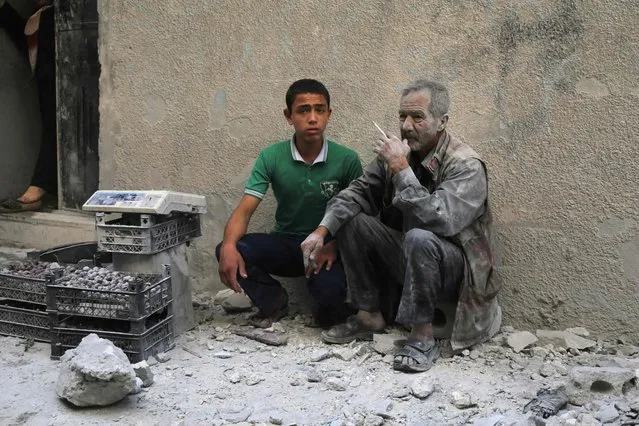
A man covered with dust sits on a street following a reported air strike by Syrian government forces in the rebel-held neighbourhood of Sukkari in the northern city of Aleppo on May 30, 2016. (Photo by Baraa Al-Halabi/AFP Photo)

A man covered with dust sits on a street following a reported air strike by Syrian government forces in the rebel-held neighbourhood of Sukkari in the northern city of Aleppo on May 30, 2016. (Photo by Baraa Al-Halabi/AFP Photo)
Details
01 Jun 2016 12:19:00
A female member of the Ahbab Al-Mustafa Battalion holds a gun as she undergoes military training in Aleppo's Salaheddine district, June 24, 2013. (Photo by Muzaffar Salman/Reuters)

A female member of the Ahbab Al-Mustafa Battalion holds a gun as she undergoes military training in Aleppo's Salaheddine district, June 24, 2013. (Photo by Muzaffar Salman/Reuters)
Details
22 May 2014 03:59:00