Loading...
Done
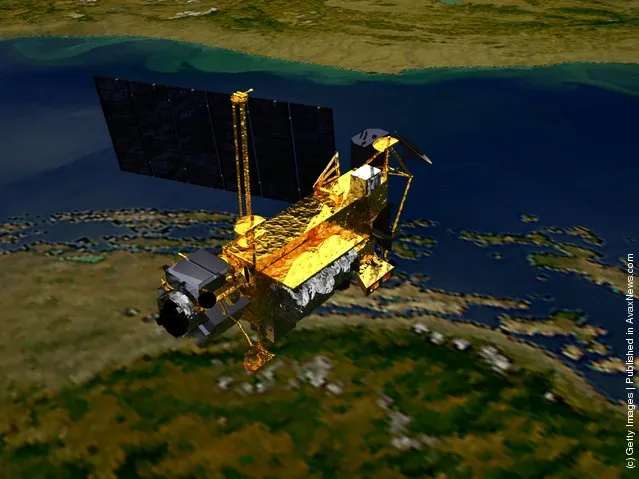
Upper Atmosphere Research Satellite (UARS)

In this artist illustration handout from the National Aeronautics and Space Administration (NASA), the Upper Atmosphere Research Satellite (UARS) is seen. According to NASA, the 12,500 pound satellite will fall from orbit into earth's atmosphere anytime between September 22 through 24. It is estimated that the space craft will break up into about 100 pieces, with an estimated 26 of which could hit the earth over a possible 500 mile debris field. (Illustration by NASA via Getty Images)
Details
21 Sep 2011 10:49:00
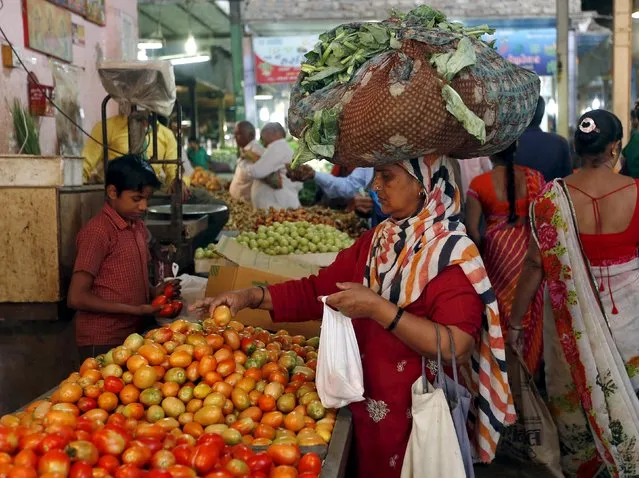
A woman carrying cabbage leaves on her head buys tomato at a market in Ahmedabad, India, November 9, 2015. (Photo by Amit Dave/Reuters)

A woman carrying cabbage leaves on her head buys tomato at a market in Ahmedabad, India, November 9, 2015. India's villages face a sharp spike in food prices in 2016, as a second year of drought drives up the cost of ingredients such as sugar and milk, and poor transport infrastructure stops falling global prices from reaching rural areas. (Photo by Amit Dave/Reuters)
Details
19 Nov 2015 08:02:00
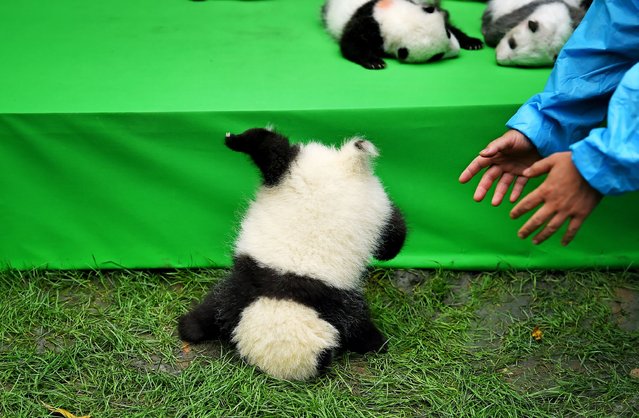
The cute baby panda slipped while being shown off during their first public appearance at the Chengdu Research Base of Giant Panda Breeding in southwestern China's Sichuan province on September 29, 2016. (Photo by Rex Features)

A giant panda cub falls from the stage while 23 giant pandas born in 2016 seen on a display at the Chengdu Research Base of Giant Panda Breeding in Chengdu, Sichuan province, China, September 29, 2016. (Photo by Rex Features)
Details
02 Oct 2016 08:23:00
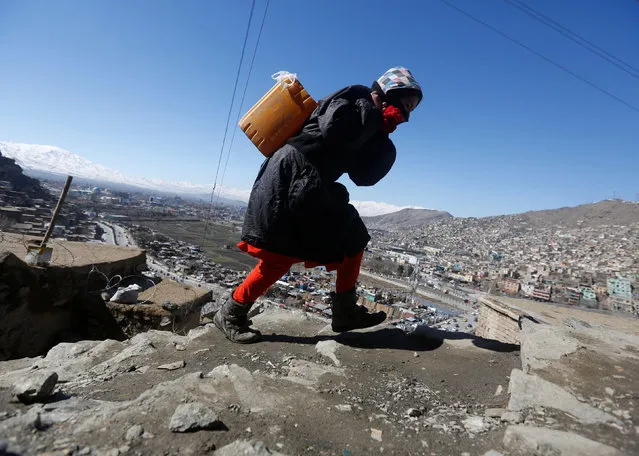
An Afghan girl carries water on her back as she climbs a hill in Kabul, Afghanistan February 20, 2017. (Photo by Omar Sobhani/Reuters)

An Afghan girl carries water on her back as she climbs a hill in Kabul, Afghanistan February 20, 2017. A growing population is straining water supplies in Afghanistan's capital, forcing those who can afford it to dig unregulated wells ever deeper to tap a falling water table. Finding water in arid Afghanistan is virtually always a challenge, but a drop in the groundwater level in Kabul caused by overuse and drought is making it even more difficult for residents, especially the poor. (Photo by Omar Sobhani/Reuters)
Details
02 Mar 2017 00:05:00
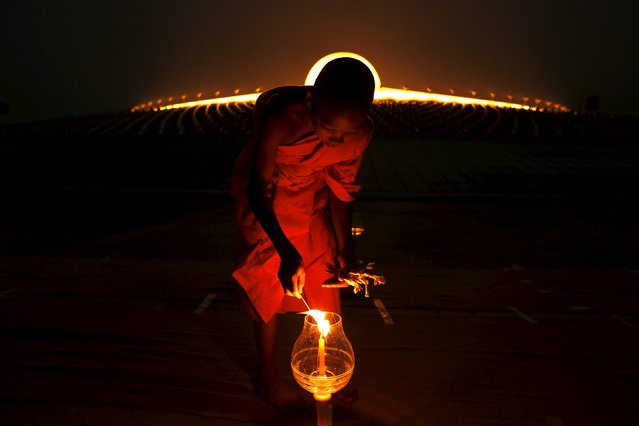
A Buddhist monk lights a candle at Wat Phra Dhammakaya during a ceremony on Makha Bucha Day in Pathum Thani province, north of Bangkok February 22, 2016. (Photo by Jorge Silva/Reuters)

A Buddhist monk lights a candle at Wat Phra Dhammakaya during a ceremony on Makha Bucha Day in Pathum Thani province, north of Bangkok February 22, 2016. Makha Bucha Day honours Buddha and his teachings, and falls on the full moon day of the third lunar month. (Photo by Jorge Silva/Reuters)
Details
23 Feb 2016 11:32:00
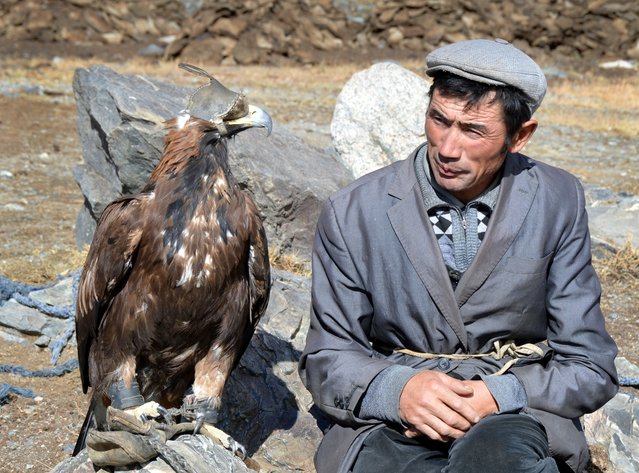
Hunter Berek and his eagle outside his home. (Photo by Brad Ruoho/The Star Tribune)

“I’d come to the Altai Mountains on an Adventure Sherpas tour. Our group of 12 was made up mostly of Minnesotans who’d left warm weather and falling leaves for frosty Mongolia. We’d come to sleep in cozy ger tents, the traditional yurt abode of the Mongolian steppe; sip mare’s milk tea; climb mountain glaciers; ride horses to an ancient battle site, and attend the annual Eagle Hunting Festival in Ölgiy...”. – Kathryn Kysar via The Star Tribune. Here: hunter Berek and his eagle outside his home. (Photo by Brad Ruoho/The Star Tribune)
Details
11 Jan 2015 12:57:00
A woman wearing her traditional headgear attends celebrations to mark the Gudi Padwa festival, the beginning of the New Year for Maharashtrians, in Mumbai, April 6, 2019. (Photo by Francis Mascarenhas/Reuters)

A woman wearing her traditional headgear attends celebrations to mark the Gudi Padwa festival, the beginning of the New Year for Maharashtrians, in Mumbai, April 6, 2019. Gudi Padwa is the Hindu festival that falls on the first day of Chaitra month and marks the beginning of the Lunar Calendar, which dictates the dates for all Hindu festivals, also known as Panchang. (Photo by Francis Mascarenhas/Reuters)
Details
08 Apr 2019 00:07:00
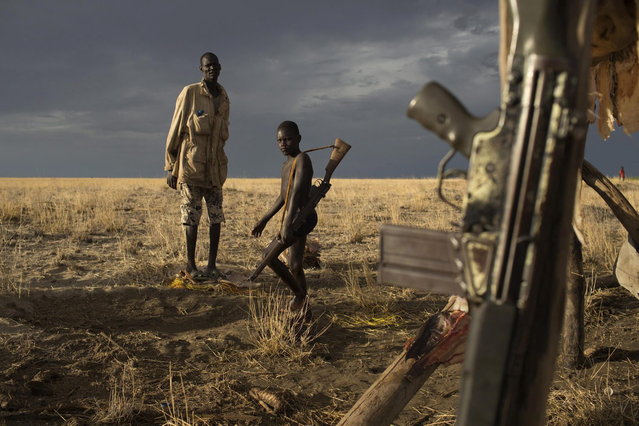
A Turkana man and a boy carrying a gun look on as a G3 battle rifle hangs from a structure used to dry fish at a fishing camp on the shores of Lake Turkana, some kilometres from Todonyang near the Kenya-Ethiopia border in northwestern Kenya October 12, 2013. (Photo by Siegfried Modola/Reuters)

A Turkana man and a boy carrying a gun look on as a G3 battle rifle hangs from a structure used to dry fish at a fishing camp on the shores of Lake Turkana, some kilometres from Todonyang near the Kenya-Ethiopia border in northwestern Kenya October 12, 2013The Turkana are traditionally nomadic pastoralists, but they have seen the pasture that they need to feed their herds suffer from recurring droughts and many have turned to fishing. However, Lake Turkana is overfished, and scarcity of food and pastureland is fuelling long-standing conflict with Ethiopian indigenous Dhaasanac, who have seen grazing grounds squeezed by large-scale government agricultural schemes in southern Ethiopia. The Dhaasanac now venture ever deeper into Kenyan territory in search of fish and grass, clashing with neighbours. Fighting between the communities has a long history, but the conflict has become ever more fatal as automatic weapons from other regional conflicts seep into the area. While the Turkana region is short of basics like grass and ground-water, it contains other resources including oil reserves and massive, newly discovered underground aquifers. (Photo by Siegfried Modola/Reuters)

Details
05 Dec 2013 12:08:00