Loading...
Done
An athlete pulls a 15-tonne truck during a Truck-Pull event marking the upcoming Independence Day in the Belarus capital Minsk, on July 3, 2014. The former Soviet nation celebrates its Independence Day on July 3 in memory of the end of Belarus occupation by Nazi Germany troops during the Red Army main summer offensive in 1944. (Photo by Sergei Gapon/AFP Photo)

An athlete pulls a 15-tonne truck during a Truck-Pull event marking the upcoming Independence Day in the Belarus capital Minsk, on July 3, 2014. The former Soviet nation celebrates its Independence Day on July 3 in memory of the end of Belarus occupation by Nazi Germany troops during the Red Army main summer offensive in 1944. (Photo by Sergei Gapon/AFP Photo)
Details
05 Jul 2014 12:13:00
Afghan men escape increasing summer temperatures by wading in the Qarga reservoir on July 9, 2010 in a suburb of Kabul, Afghanistan. (Photo by Majid Saeedi/Getty Images)

“Life in War” (FotoEvidence Press) by Iranian photographer Majid Saeedi is probably the only book about Afghanistan that doesn’t show images of war. For ten years his camera photographed daily life in the context of war. His photographs reveal the humanity of a people living through decades of war. Here: Afghan men escape increasing summer temperatures by wading in the Qarga reservoir on July 9, 2010 in a suburb of Kabul, Afghanistan. (Photo by Majid Saeedi/Getty Images)
Details
17 Oct 2014 12:07:00


Burning Man 2013. The federal government issued a permit for 68,000 people from all over the world to gather at the sold out festival, which is celebrating its 27th year, to spend a week in the remote desert cut off from much of the outside world to experience art, music and the unique community that develops. (Photo by Neil Girling)
Details
02 Sep 2013 12:03:00
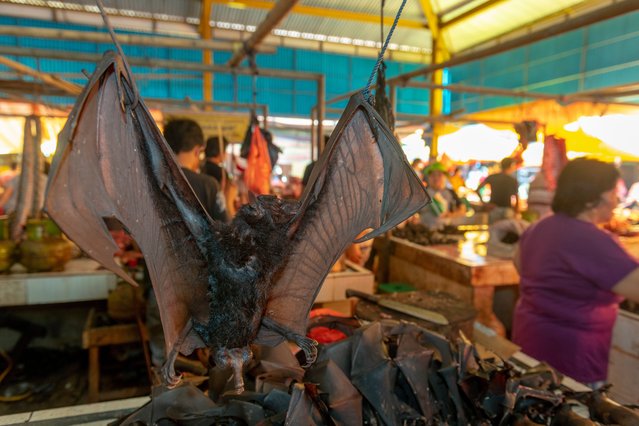
A food market shows off rows upon rows of dead animals, some of which have been beaten to death. Dogs and chickens can be seen lined up with their mouths hanging wide open. Shoppers even pick up some of the dogs and bats as they look for the best on the market. Retired biologist and amateur photographer Alf Jacob Nilsen took the shocking pictures of the market during a visit to Tomohon Village in Northern Sulawei, Indonesia. Pictured: Flying foxes (bats) for sale at the market. (Photo by Alf Jacob Nilsen/Solent News)

A food market shows off rows upon rows of dead animals, some of which have been beaten to death. Dogs and chickens can be seen lined up with their mouths hanging wide open. Shoppers even pick up some of the dogs and bats as they look for the best on the market. Retired biologist and amateur photographer Alf Jacob Nilsen took the shocking pictures of the market during a visit to Tomohon Village in Northern Sulawei, Indonesia. Pictured: Flying foxes (bats) for sale at the market. (Photo by Alf Jacob Nilsen/Solent News)
Details
15 May 2020 00:03:00
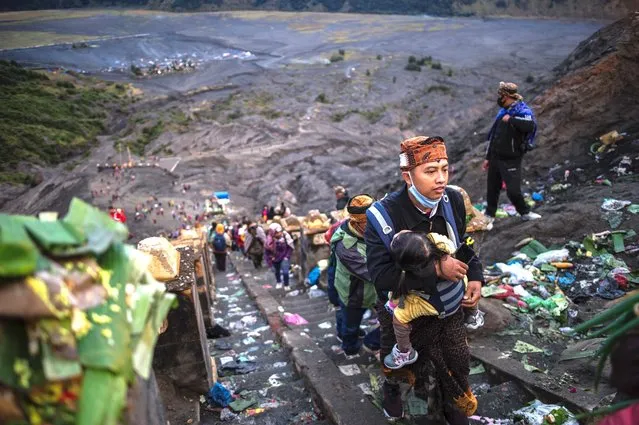
Tengger tribe people make their way to the summit of Mount Bromo volcano to make offerings in Probolinggo, East Java province on July 7, 2020, as part of the Yadnya Kasada Festival. During the annual Yadnya Kasada festival, the Tenggerese climb Mount Bromo, an active volcano, and seek the blessing from the main deity by presenting offerings of rice, fruit, livestock and other items. (Photo by Juni Kriswanto/AFP Photo)

Tengger tribe people make their way to the summit of Mount Bromo volcano to make offerings in Probolinggo, East Java province on July 7, 2020, as part of the Yadnya Kasada Festival. During the annual Yadnya Kasada festival, the Tenggerese climb Mount Bromo, an active volcano, and seek the blessing from the main deity by presenting offerings of rice, fruit, livestock and other items. (Photo by Juni Kriswanto/AFP Photo)
Details
15 Jul 2020 00:05:00
The possible surface of TRAPPIST-1f, one of seven newly discovered planets in the TRAPPIST-1 system that scientists using the Spitzer Space Telescope and ground based telescopes have discovered. (Photo by Reuters/NASA/JPL-Caltech)

The possible surface of TRAPPIST-1f, one of seven newly discovered planets in the TRAPPIST-1 system that scientists using the Spitzer Space Telescope and ground based telescopes have discovered. (Photo by Reuters/NASA/JPL-Caltech)
Details
07 Mar 2017 00:02:00
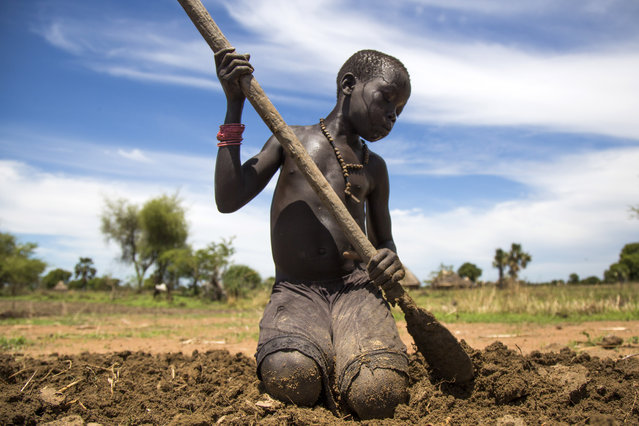
Nyibol Lual, 13 years old, helps her family to prepare the land for cultivation on May 31, 2017, in Panthau, Northern Bahr al Ghazal, South Sudan. The family has a small land where they cultivate sorghum. An estimated 63 per cent of the population in Northern Bahr al Ghazal is experiencing severe food insecurity, according to the latest Integrated Food Security Phase Classification (IPC) report. The situation is particularly bad in Aweil West and Aweil South counties, where the exhaustion of household food stocks and growing dependence on financially inaccessible markets have left the population facing Emergency levels of food insecurity. (Photo by Albert Gonzalez Farran/AFP Photo)

Nyibol Lual, 13 years old, helps her family to prepare the land for cultivation on May 31, 2017, in Panthau, Northern Bahr al Ghazal, South Sudan. The family has a small land where they cultivate sorghum. An estimated 63 per cent of the population in Northern Bahr al Ghazal is experiencing severe food insecurity, according to the latest Integrated Food Security Phase Classification (IPC) report. The situation is particularly bad in Aweil West and Aweil South counties, where the exhaustion of household food stocks and growing dependence on financially inaccessible markets have left the population facing Emergency levels of food insecurity. (Photo by Albert Gonzalez Farran/AFP Photo)
Details
01 Jun 2017 10:10:00
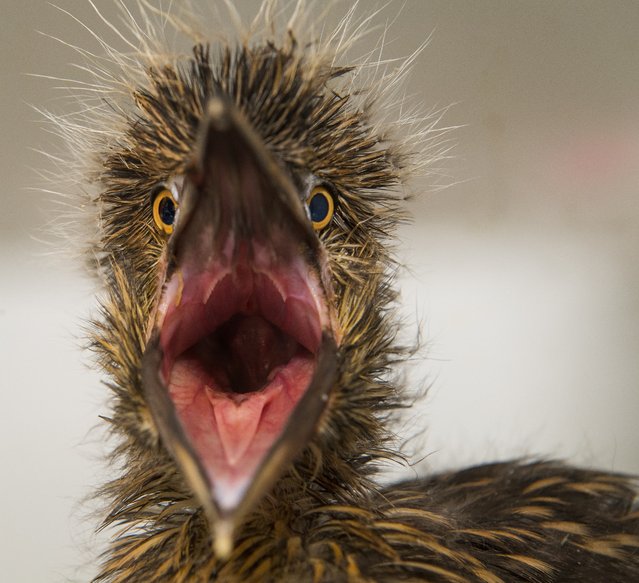
A baby Black-crowned Night Heron squawks in its incubator while being cared for at City Wildlife rescue and rehabilitation center in Washington, DC on May 31, 2017. The heron is one of several that have been brought to CW by the staff at The National Zoo over the past few years. The heron is a native bird and has made an established rookery inside the zoo grounds over a hundred years ago.  Every year at this time, some of the chicks get pushed or fall out of the nest and require human care.  Because the birds are native and not part of the Smithsonian collection, they partnered with CW to rehabilitate the herons for re-release back to the flock inside Zoo. They're reintroduced back to their flock so that they can migrate together in the Fall. The Black-crowned heron usually migrates from the DC area down to southeast North Carolina, some going as far as Jacksonville, FL in winter. The Black-crowned heron is the species of greatest conservation need in the District of Columbia because their numbers are in such rapid decline due to habitat loss. (Photo Linda Davidson/The Washington Post)

A baby Black-crowned Night Heron squawks in its incubator while being cared for at City Wildlife rescue and rehabilitation center in Washington, DC on May 31, 2017. The heron is one of several that have been brought to CW by the staff at The National Zoo over the past few years. (Photo Linda Davidson/The Washington Post)
Details
04 Jun 2017 08:04:00