Samba dancers arrive to perform ahead of the athletics competitions of the 2016 Summer Olympics at the Olympic stadium in Rio de Janeiro, Brazil, Sunday, August 14, 2016. (Photo by Jae C. Hong/AP Photo)
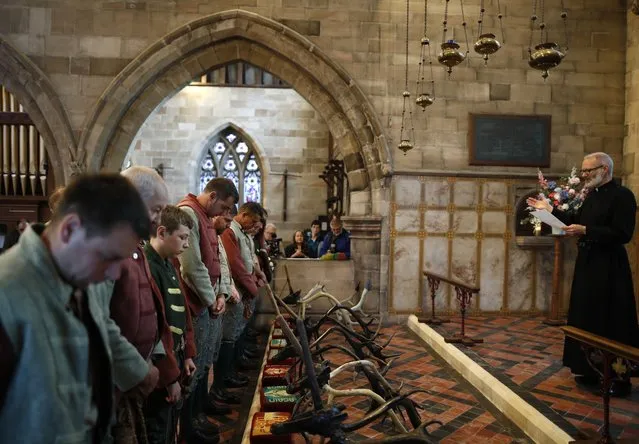
Reverend Simon Davis prays with the dancers before the Abbots Bromley Horn Dance in Abbots Bromley, Britain, September 12, 2016. The Abbots Bromley Horn Dance is an English folk dance dating back to the Middle Ages. (Photo by Darren Staples/Reuters)
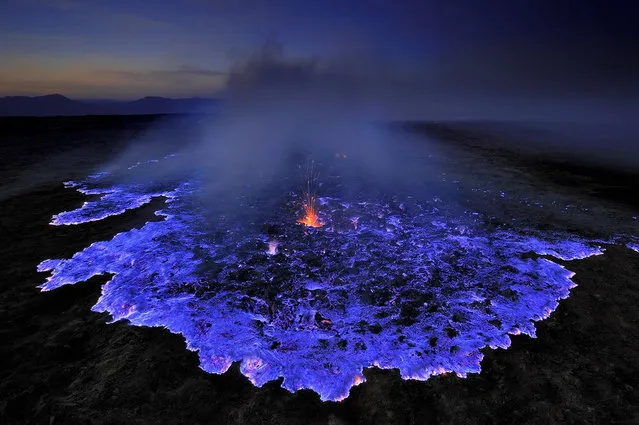
Located in East Java, Indonesia, Kawah Ijen is a volcano is home to the largest acidic crater lake in the world. What turns the waters of the lake in the 1 km caldera its beautiful turquoise color are the highly sulfuric gases emitted from the volcano underneath.
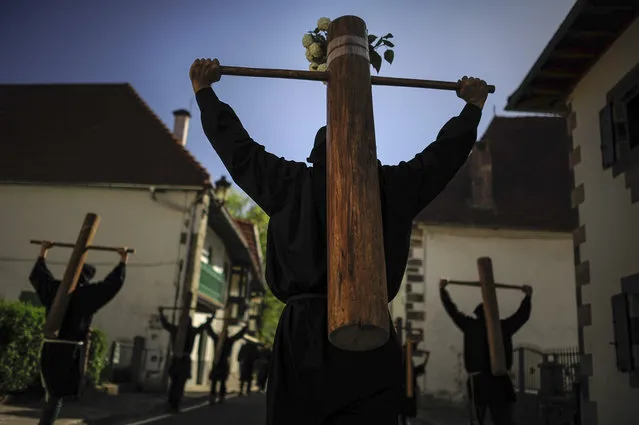
Masked penitents holds their crosses during spring “Romeria Cruceros de Arce”, in Roncesvalles, northern Spain, Sunday, May 10, 2015. Every year on the second Sunday in spring, people with crosses march from their small Pyrenees towns to Roncesvalles Church in tribute of the Virgin. (Photo by Alvaro Barrientos/AP Photo)
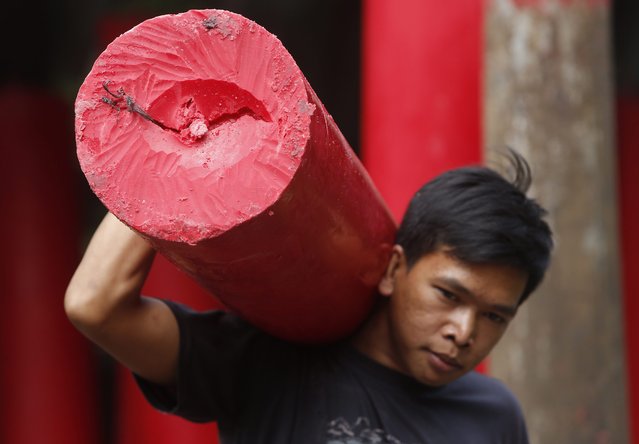
An Indonesian worker carries a giant candle at a traditional Chinese candle maker for the upcoming Lunar New Year in Bogor, Indonesia, 27 January 2015. The Chinese Lunar New Year, known here as Imlek, is only three weeks away. The whole city is getting decked out to celebrate the event on 19 February 2015. (Photo by Adi Weda/EPA)
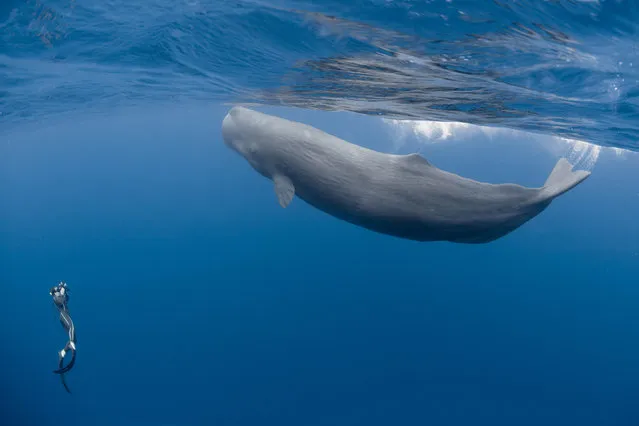
These images show the unique bond a group of free divers formed with gigantic sperm whales. Swimming just inches away from the huge mammals, the divers are dwarfed in size, made to look like specks in comparison. The photos were taken by renowned underwater photographers Alexandre Roubaud and Alexandre Voyer, who are based in Paris but travel the world to capture such stunning imagery. Here: a diver with a sperm whales. (Photo by Alexandre Roubaud/Alexandre Voyer/Caters News)
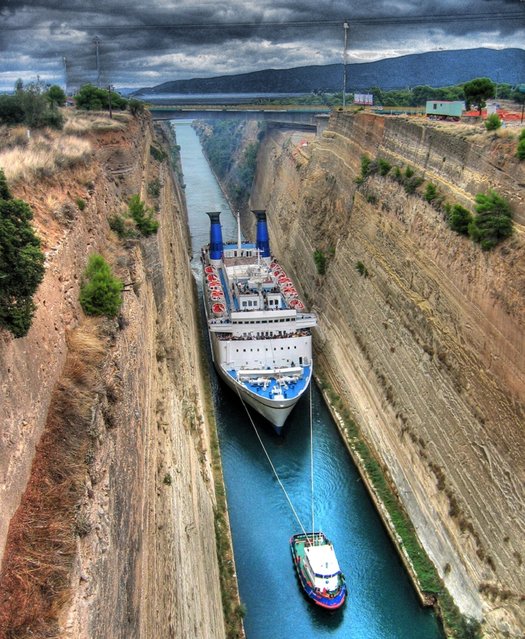
The Corinth Canal is a canal that connects the Gulf of Corinth with the Saronic Gulf in the Aegean Sea. It cuts through the narrow Isthmus of Corinth and separates the Peloponnesian peninsula from the Greek mainland, thus effectively making the former an island. The builders dug the canal through the Isthmus at sea level; no locks are employed. It is 6.4 kilometres (4.0 mi) in length and only 21.3 metres (70 ft) wide at its base, making it unpassable for most modern ships. It now has little economic importance.