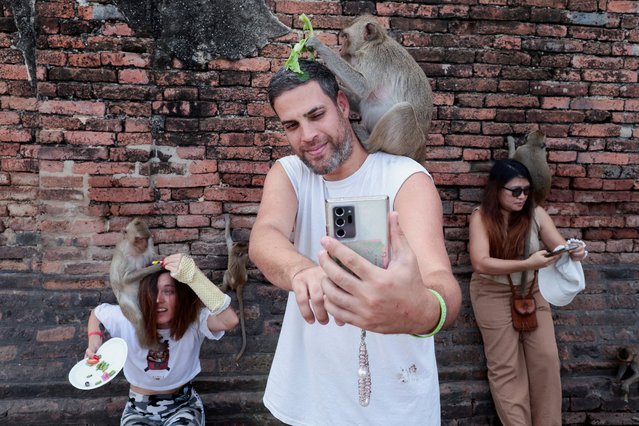
Monkeys climb onto tourists during the annual Monkey Festival, after officials start capturing monkeys, in Lopburi province, Thailand, on November 24, 2024. (Photo by Patipat Janthong/Reuters)
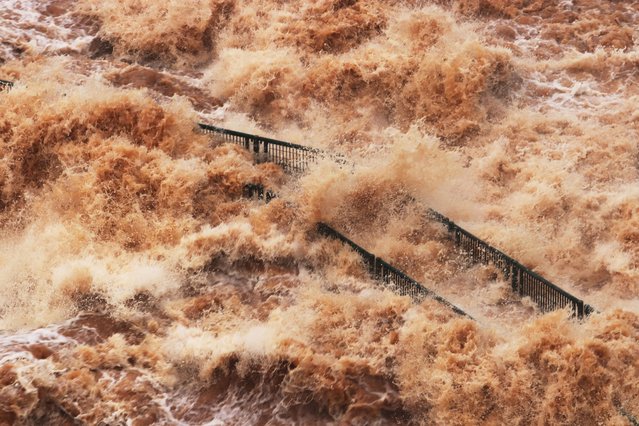
View of the visitor walkway at the Iguazu Falls, which was destroyed by the strong current of the river on the triple border between Brazil, Argentina and Paraguay, on October 30, 2023. The Falls are flowing at over 24 million liters of water per second, according to hydrological monitoring by Companhia Paranaense de Energia (Copel). This is the second highest flow since 1997, when monitoring became automatic and was measured hourly. (Photo by Christian Rizzi/AFP Photo)
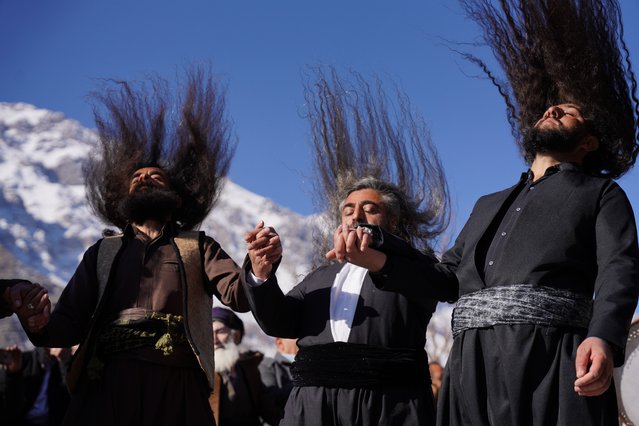
Men, wearing traditional clothes, are seen as “Pir Shaliar” event, which is celebrated twice a year, continues in the Hawraman, Iran on January 30, 2025. At the event, def teams consisting of men and women formed dhikr rings by playing the def on the slopes of the mountain accompanied by hymns. (Photo by Fariq Faraj Mahmood/Anadolu via Getty Images)
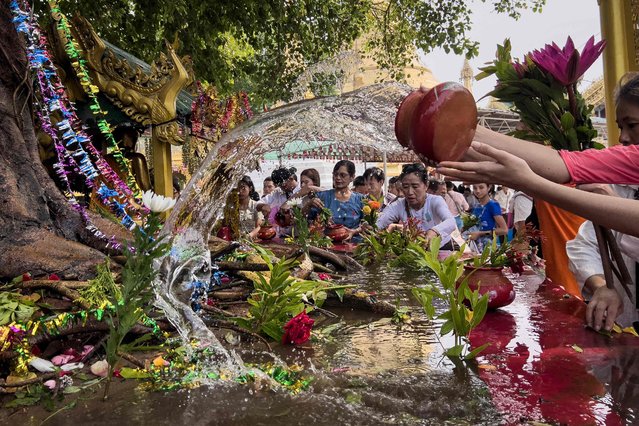
Devotees pour water on a revered Bodhi tree at Shwedagon Pagoda to mark Buddha's Birthday, which falls on the Full Moon Day of Kasone, in Yangon on May 11, 2025. (Photo by Sai Aung Main/AFP Photo)
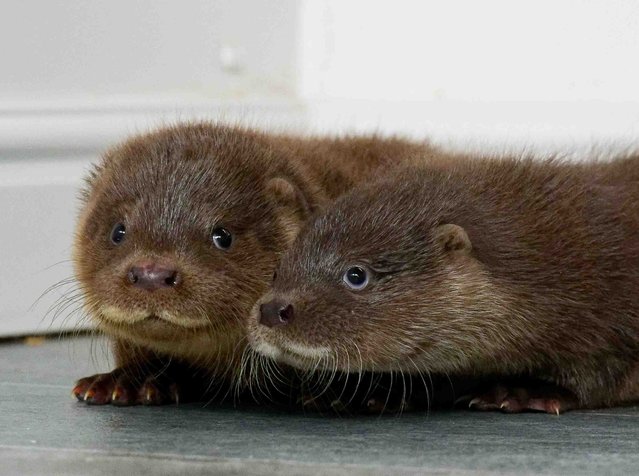
A rescued otter cub named Mingo is receiving specialist care after being found in July 2025 in the flamingo habitat at Colchester Zoo, far from where he should have been. He is being raised with two other cubs at the UK Wild Otter Trust’s centre in Devon, UK. (Photo by UK Wild Otter Trust/Cover Images)
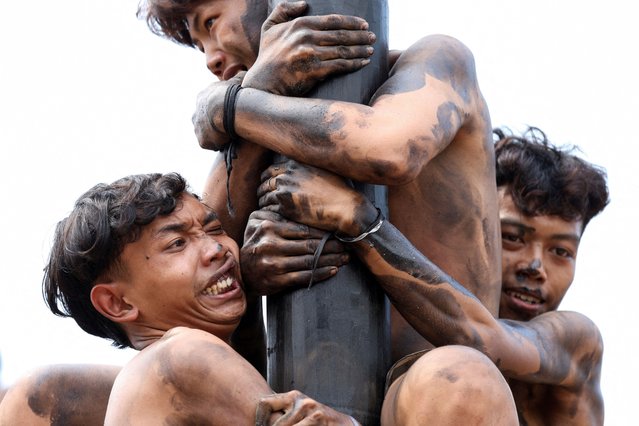
Participants react as they try to reach the top of a greased pole to collect the prizes, during a “Panjat Pinang” competition, that is held to celebrate Indonesia's 79th Independence Day at Ancol in Jakarta, Indonesia, on August 17, 2024. (Photo by Ajeng Dinar Ulfiana/Reuters)
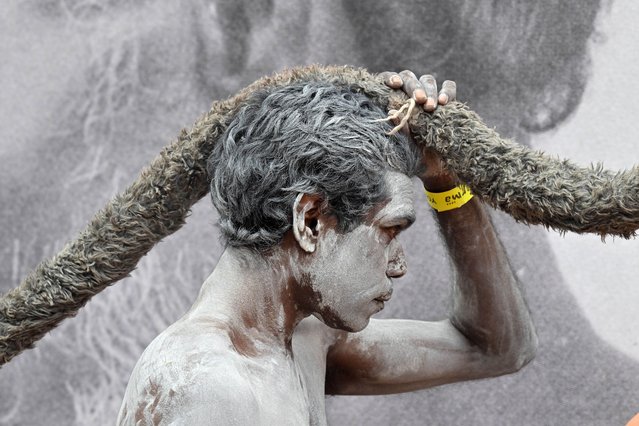
A member of the Gumatj clan performs a ceremonial welcome during the Garma Festival at the Gulkula ceremonial in the Gove Peninsula of the Northern Territory, Australia 03 August 2024. The Garma Festival is Australia’s largest Indigenous gathering, a 4-day celebration of Yolngu life and culture held in remote northeast Arnhem Land. (Photo by Mick Tsikas/EPA)
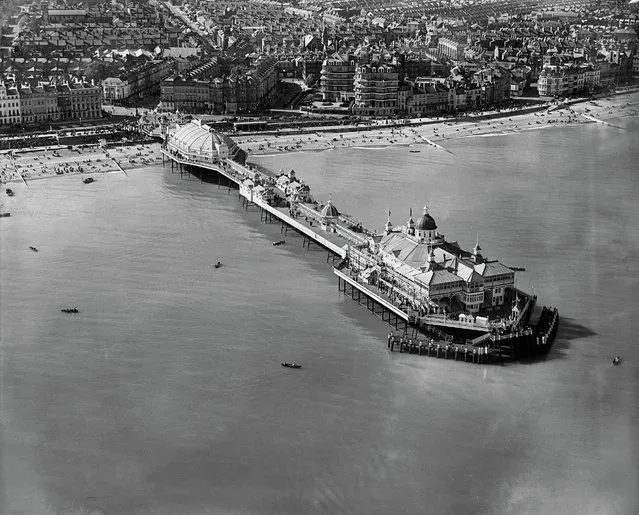
While the lido was described as bringing “modernism to the masses” on the British coast it was just the latest example of a trend that had been developing since Victorian times – transforming seaside towns into resorts for leisure and entertainment. In the latter half of the nineteenth century, the fashion was for local authorities to build great piers stretching from the promenade out into the sea. The Eastbourne Pier, pictured here in May 1931, was erected between 1866 and 1870 to an ingenious design by Eugenius Birch, which saw the structure sitting on special cups allowing the supporting struts to “move” in bad weather. Arranged on the pier's 1,000-foot length were kiosks, a theatre, a ballroom and a camera obscura. 1931. (Photo by Aerofilms Collection via “A History of Britain From Above”)