Loading...
Done
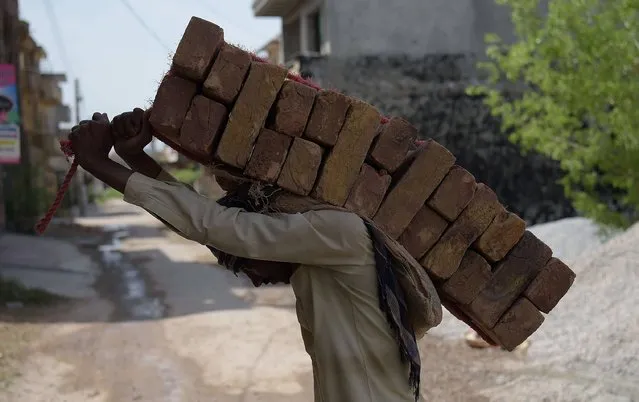
A Pakistani labourer carries bricks on his back at a construction site at a residential area in Islamabad on March 29, 2017. (Photo by Aamir Qureshi/AFP Photo)

A Pakistani labourer carries bricks on his back at a construction site at a residential area in Islamabad on March 29, 2017. (Photo by Aamir Qureshi/AFP Photo)
Details
30 Mar 2017 10:57:00
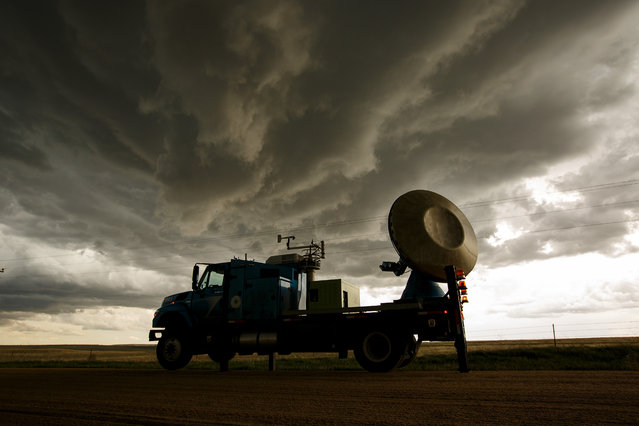
The Doppler on Wheels (DOW) vehicle scans a supercell thunderstorm during a tornado research mission, May 8, 2017 in Elbert County near Agate, Colorado. Doppler on Wheels (DOW) is a mobile doppler radar mounted on a truck that brings instruments directly into storms, allowing scientists to scan storms and tornadoes and make 3-D maps of wind and debris. (Photo by Drew Angerer/Getty Images)

The Doppler on Wheels (DOW) vehicle scans a supercell thunderstorm during a tornado research mission, May 8, 2017 in Elbert County near Agate, Colorado. Doppler on Wheels (DOW) is a mobile doppler radar mounted on a truck that brings instruments directly into storms, allowing scientists to scan storms and tornadoes and make 3-D maps of wind and debris. (Photo by Drew Angerer/Getty Images)
Details
18 May 2017 08:54:00
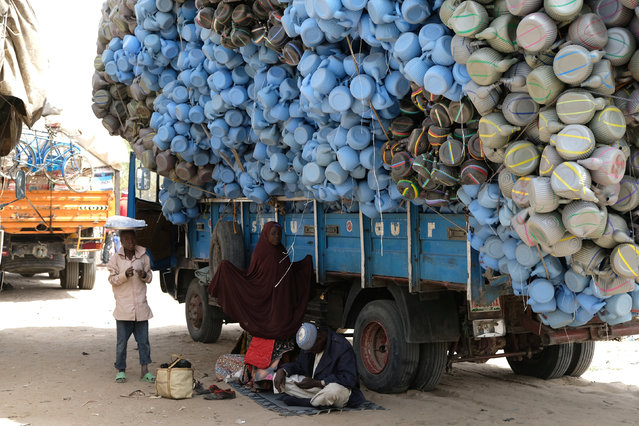
A family of refugees shelters under a truck carrying plastic lota, kettles used to perform Muslim ablutions in Muna Garage, Maiduguri, Nigeria February 16, 2017. (Photo by Paul Carsten/Reuters)

A family of refugees shelters under a truck carrying plastic lota, kettles used to perform Muslim ablutions in Muna Garage, Maiduguri, Nigeria February 16, 2017. (Photo by Paul Carsten/Reuters)
Details
25 May 2017 08:38:00
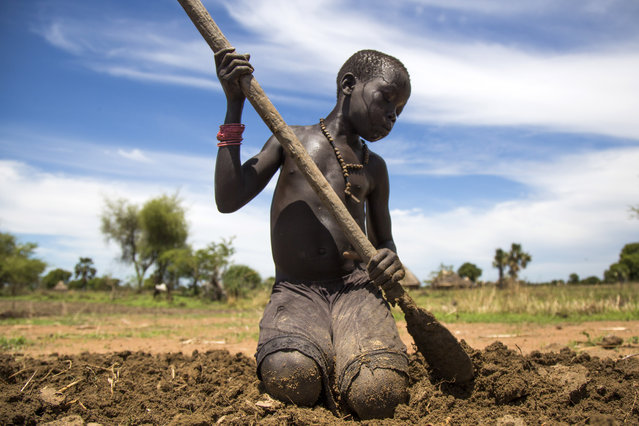
Nyibol Lual, 13 years old, helps her family to prepare the land for cultivation on May 31, 2017, in Panthau, Northern Bahr al Ghazal, South Sudan. The family has a small land where they cultivate sorghum. An estimated 63 per cent of the population in Northern Bahr al Ghazal is experiencing severe food insecurity, according to the latest Integrated Food Security Phase Classification (IPC) report. The situation is particularly bad in Aweil West and Aweil South counties, where the exhaustion of household food stocks and growing dependence on financially inaccessible markets have left the population facing Emergency levels of food insecurity. (Photo by Albert Gonzalez Farran/AFP Photo)

Nyibol Lual, 13 years old, helps her family to prepare the land for cultivation on May 31, 2017, in Panthau, Northern Bahr al Ghazal, South Sudan. The family has a small land where they cultivate sorghum. An estimated 63 per cent of the population in Northern Bahr al Ghazal is experiencing severe food insecurity, according to the latest Integrated Food Security Phase Classification (IPC) report. The situation is particularly bad in Aweil West and Aweil South counties, where the exhaustion of household food stocks and growing dependence on financially inaccessible markets have left the population facing Emergency levels of food insecurity. (Photo by Albert Gonzalez Farran/AFP Photo)
Details
01 Jun 2017 10:10:00
People take part in a protest outside the Department for Education, London, Sunday August 16, 2020, in response to the A-level results. The British government has been urged to “get a grip” over how grades are being awarded to school students, who were unable to take exams earlier this summer because of the coronavirus pandemic. The latest confusion emerged late Saturday when England’s exam regulator launched a review on its own just-published guidance on how students can appeal grades awarded under a complicated system. (Photo by London News Pictures/The Sun)

People take part in a protest outside the Department for Education, London, Sunday August 16, 2020, in response to the A-level results. The British government has been urged to “get a grip” over how grades are being awarded to school students, who were unable to take exams earlier this summer because of the coronavirus pandemic. The latest confusion emerged late Saturday when England’s exam regulator launched a review on its own just-published guidance on how students can appeal grades awarded under a complicated system. (Photo by London News Pictures/The Sun)
Details
18 Aug 2020 00:07:00
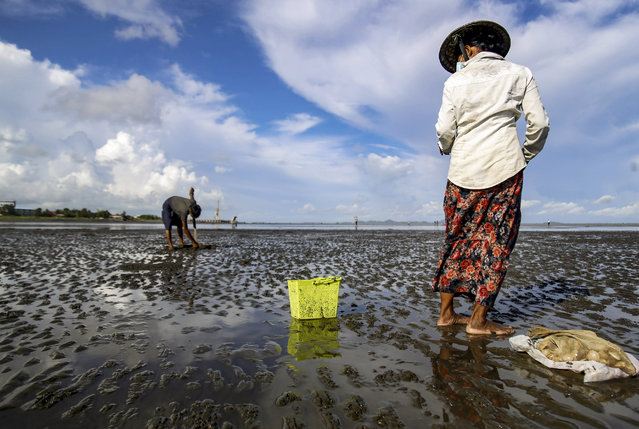
People search for shells on a beach in Sittwe, Rakhine State, Myanmar, 17 September 2020. International Coastal Cleanup Day is observed annually on the third Saturday of September and will occur on 19 September this year. The day was established to encourage global efforts to clean up garbage on beaches and coastal areas and raise awareness on protecting the world's oceans and waterways. According to a report released by the US-based nonprofit environmental advocacy group Ocean Conservancy on 08 September 2020, plastic food packaging topped the list of most common items found in beach trash. Close to five million food wrappers were collected in a single day during the International Coastal Cleanup Day in 2019. An approximate 11 million metric tons of plastic enters the ocean every year according to a 2016 analysis, affecting more than 800 marine species and causing contamination to human food chains and drinking water. (Photo by Nyunt Win/EPA/EFE/Rex Features/Shutterstock)

People search for shells on a beach in Sittwe, Rakhine State, Myanmar, 17 September 2020. International Coastal Cleanup Day is observed annually on the third Saturday of September and will occur on 19 September this year. (Photo by Nyunt Win/EPA/EFE/Rex Features/Shutterstock)
Details
24 Oct 2020 00:05:00
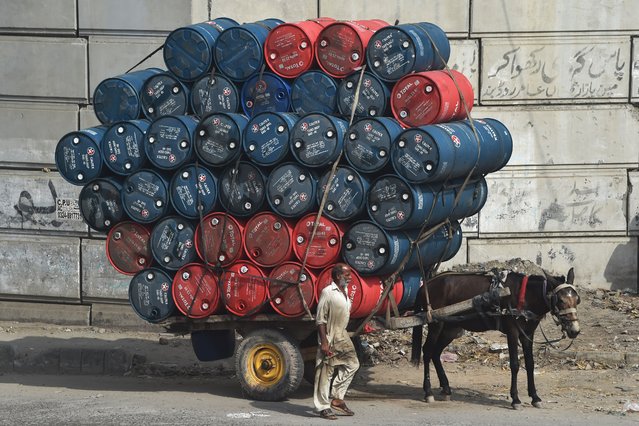
A man stands next to a horsecart laden with oil drums on a street in Lahore on September 27, 2020. (Photo by Arif Ali/AFP Photo)

A man stands next to a horsecart laden with oil drums on a street in Lahore on September 27, 2020. (Photo by Arif Ali/AFP Photo)
Details
27 Oct 2020 00:05:00
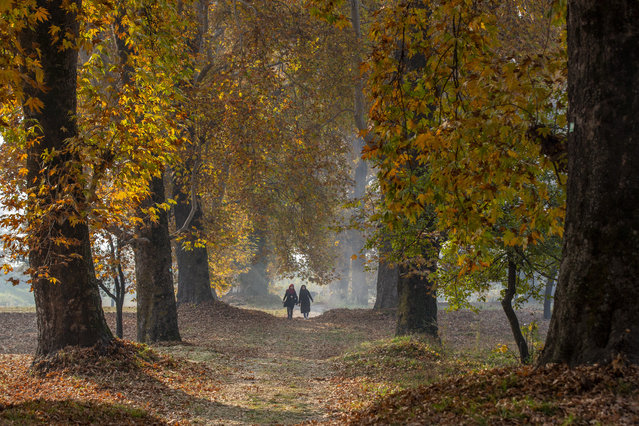
Kashmiri women walk in a garden covered with fallen Chinar leaves on the outskirts of Srinagar, Indian controlled Kashmir, Wednesday, November 4, 2020. Kashmiris collect fallen leaves in autumn to make charcoal for use during winters. (Photo by Dar Yasin/AP Photo)

Kashmiri women walk in a garden covered with fallen Chinar leaves on the outskirts of Srinagar, Indian controlled Kashmir, Wednesday, November 4, 2020. Kashmiris collect fallen leaves in autumn to make charcoal for use during winters. (Photo by Dar Yasin/AP Photo)
Details
11 Nov 2020 00:01:00