A participant prepares for the Red Bull Air Race World Championships in Abu Dhabi, United Arab Emirates on February 6, 2017. (Photo by Red Bull Content Pool/SIPA Press/Rex Features/Shutterstock)
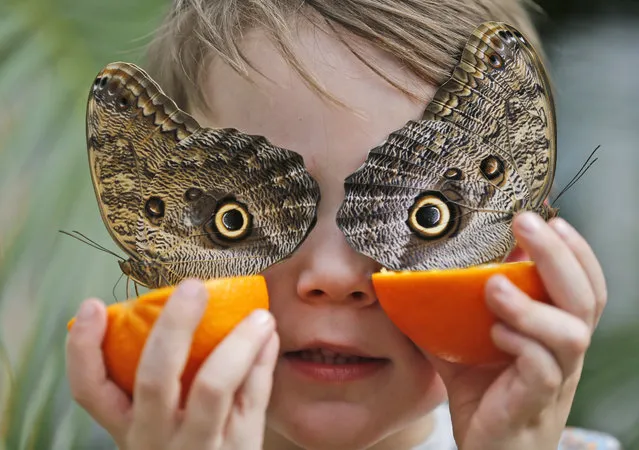
Five year old George holds an orange to feed the Owl butterflies at the Natural History Museum in London, Thursday, March 30, 2017. Hundreds of tropical butterflies were released to launch the Natural History Museum's Sensational Butterflies exhibition, starting for the public on March 31, 2017. (Photo by Frank Augstein/AP Photo)
A woman walks past graffiti in Beirut, Lebanon, Wednesday, May 4, 2016. Graffiti artists have been trying to re-engage disillusioned youth in a debate about the country's latest wave of political turmoil. (Photo by Hassan Ammar/AP Photo)
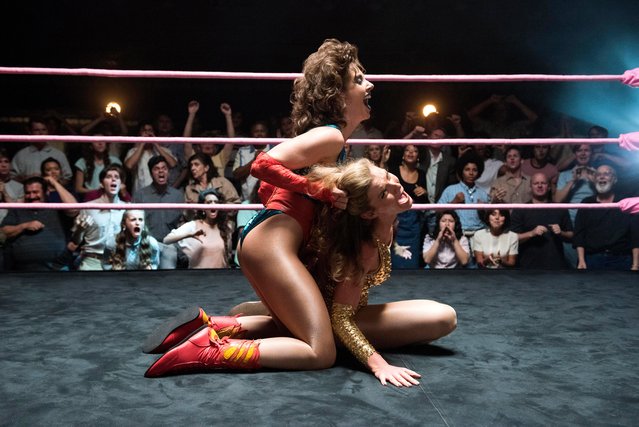
Alison Brie and Betty Gilpin host in the Netflix comedy-drama“Glow” Season 1 TV Series, 2017. (Photo by Erica Parise/Netflix/Kobal/Rex Features/Shutterstock)
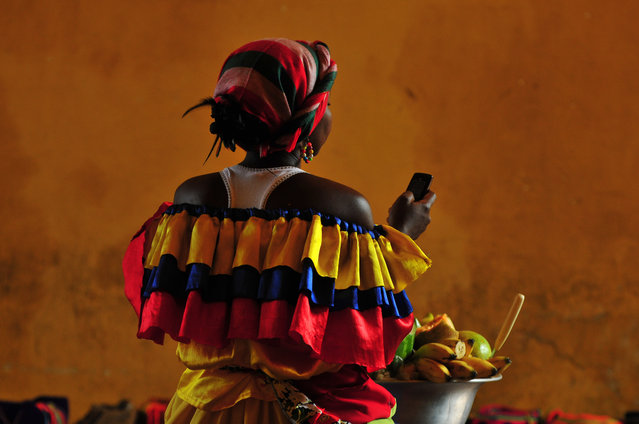
Winner. “I took this picture of a woman in traditional clothing in Cartagena, Colombia”. PAUL GOLDSTEIN, JUDGE: “The blaze of colour from every angle, the boldness of the picture, taken from behind, which gives it so much more allure and frankly a superb get up. Did I mention the colours? Oh, and that looks suspiciously like a Nokia”. (Photo by Stanislav Shmelev/The Guardian)
“This Way Up”. Photographic section portfolio, first prize. A Chinook CH-47 weapon systems operator prepares his aircraft during a training exercise in June 2018. (Photo bu SAC Ed Wright/RAF)
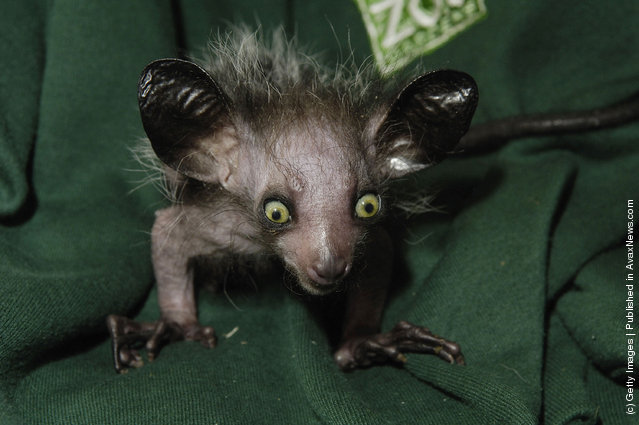
“The aye-aye (Daubentonia madagascariensis) is a lemur, a strepsirrhine primate native to Madagascar that combines rodent-like teeth and a special thin middle finger to fill the same ecological niche as a woodpecker. It is the world's largest nocturnal primate, and is characterized by its unusual method of finding food; it taps on trees to find grubs, then gnaws holes in the wood and inserts its narrow middle finger to pull the grubs out. The only other animal species known to find food in this way is the striped possum. From an ecological point of view the aye-aye fills the niche of a woodpecker as it is capable of penetrating wood to extract the invertebrates within”. – Wikipedia
Photo: In this handout image from Bristol Zoo is seen the first captive bred aye-aye in the UK named “Kintana” (meaning star in Malagasy) April 15, 2005 at Bristol Zoo Gardens, England. The zoo announced today only the second baby aye-aye to be hand-reared in the world (the first was in Jersey Zoo) and has now made his first public appearance since his birth on 11 February 2005. (Photo by Rob Cousins/Bristol Zoo via Getty Images)