Loading...
Done
Models dressed as showgirls participates in a fashion show in front of the Welcome to Fabulous Las Vegas sign on the Las Vegas Strip to kick off the pro-mask wearing campaign “Mask Up for Nevada” put on by Experience Strategy Associates amid the spread of the coronavirus on June 25, 2020 in Las Vegas, Nevada. On Wednesday, Nevada Gov. Steve Sisolak signed a directive requiring people to wear face coverings in public places throughout the state beginning on June 26 in response to a four-week upward trend of new daily COVID-19 cases. (Photo by David Becker/Zuma Press)

Models dressed as showgirls participates in a fashion show in front of the Welcome to Fabulous Las Vegas sign on the Las Vegas Strip to kick off the pro-mask wearing campaign “Mask Up for Nevada” put on by Experience Strategy Associates amid the spread of the coronavirus on June 25, 2020 in Las Vegas, Nevada. On Wednesday, Nevada Gov. Steve Sisolak signed a directive requiring people to wear face coverings in public places throughout the state beginning on June 26 in response to a four-week upward trend of new daily COVID-19 cases. (Photo by David Becker/Zuma Press)
Details
28 Jun 2020 00:07:00
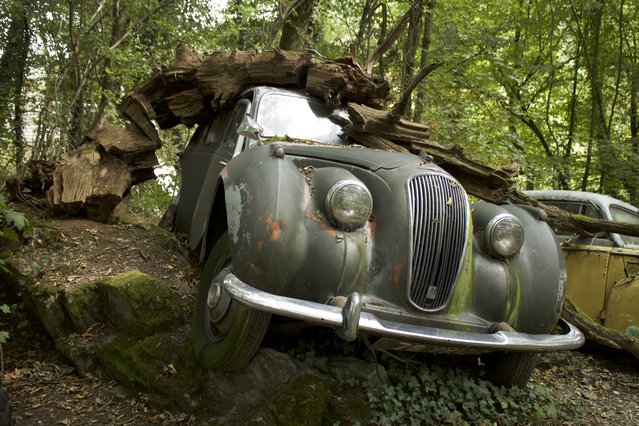
Michael Fröhlich's Jowett Javelin rotting car in his forest sculpture park in Neandertal Germany, September 11, 2016. An eccentric artist has collected fifty vintage cars and left them to rot in a forest – and now they're worth over $1 million. Former racing driver Michael Fröhlich, from Dusseldorf, Germany, has purposely crashed the cars into trees, buried them in mud and parked them on cliff faces in his estate's garden in the middle of the German Neanderthal. His collections includes a Jaguar XK120 worth $170,000, a Porsche 356 racer and a Buick worth $17,000. Perhaps his most interesting collectable is a Rolls Royce, with a purposefully misspelt “Buckingham Palace” – replacing the B with an F – emblazoned on the side with a replica of the Queen Elizabeth at the wheel. (Photo by Christoph Hagen/Barcroft Images)

Michael Fröhlich's Jowett Javelin rotting car in his forest sculpture park in Neandertal Germany, September 11, 2016. An eccentric artist has collected fifty vintage cars and left them to rot in a forest – and now they're worth over $1 million. Former racing driver Michael Fröhlich, from Dusseldorf, Germany, has purposely crashed the cars into trees, buried them in mud and parked them on cliff faces in his estate's garden in the middle of the German Neanderthal. His collections includes a Jaguar XK120 worth $170,000, a Porsche 356 racer and a Buick worth $17,000. (Photo by Christoph Hagen/Barcroft Images)
Details
24 Sep 2016 10:56:00
“Sorpresa” the clown poses for a picture during a march commemorating Peruvian clown day in Lima Peru, Monday, May 25, 2015. (Photo by Rodrigo Abd/AP Photo)

“Sorpresa” the clown poses for a picture during a march commemorating Peruvian clown day in Lima Peru, Monday, May 25, 2015. Hundreds of professional clowns dressed in colorful costumes, wigs and face paint marched through the streets of Lima to celebrate Peruvian Clown Day. (Photo by Rodrigo Abd/AP Photo)
Details
27 May 2015 00:08:00
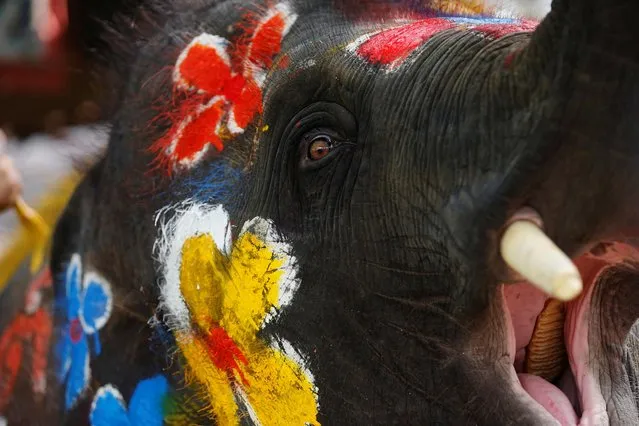
An elephant calf yawns as mahouts paint elephants ahead of celebrations for the water festival of Songkran in Ayutthaya, Thailand on April 11, 2019. (Photo by Soe Zeya Tun/Reuters)

An elephant calf yawns as mahouts paint elephants ahead of celebrations for the water festival of Songkran in Ayutthaya, Thailand on April 11, 2019. The annual elephant Songkran event is held to promote the tourism industry. Songkran Festival is held also to mark the Thai traditional New Year falling annually on 13 April, and it is celebrated with people splashing water and putting powder on each other faces as a symbolic sign of cleansing and washing away the sins from the past year. (Photo by Soe Zeya Tun/Reuters)
Details
13 Apr 2019 00:05:00
Beauty is everything for this belle of the ball. (Photo by Jeff Hong)

An animation artist has thrown a group of Disney characters into the real world – and it's not pretty. Jeff Hong, from New York, has taken the childhood favourites and turned their lives upside down. In a series of nightmarish pictures on his Tumblr, the cartoons who once lived happily ever after are now facing up to reality. And judging from these images they're not adjusting well. Photo: Beauty is everything for this belle of the ball. (Photo by Jeff Hong)
Details
22 May 2014 07:48:00
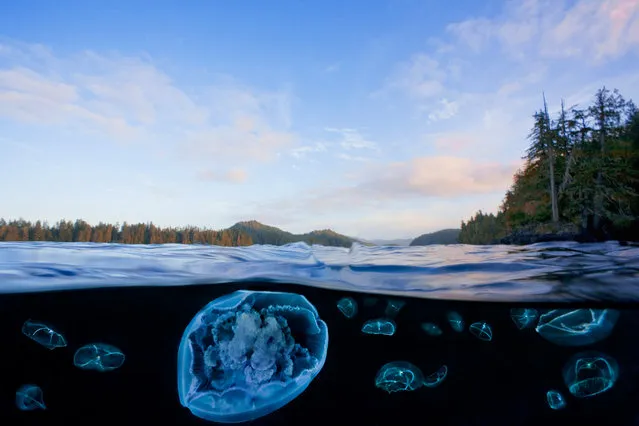
Moon jellyfish and cross jellies. (Photo by David Hall)

David Hall’s photographs of scenery and creatures off the coast of Canada in the Pacific Northwest portray serenity under the water, which belie the extreme challenges he faces to get his images. For each shoot, Hall wears a dry suit, a neoprene body suit that covers all of his body but his head and traps air inside to keep him warm. Water temperature in Canada’s British Columbia typically ranges between 45 and 50 degrees Fahrenheit. Photo: Moon jellyfish and cross jellies. (Photo by David Hall)
Details
16 Sep 2014 12:57:00
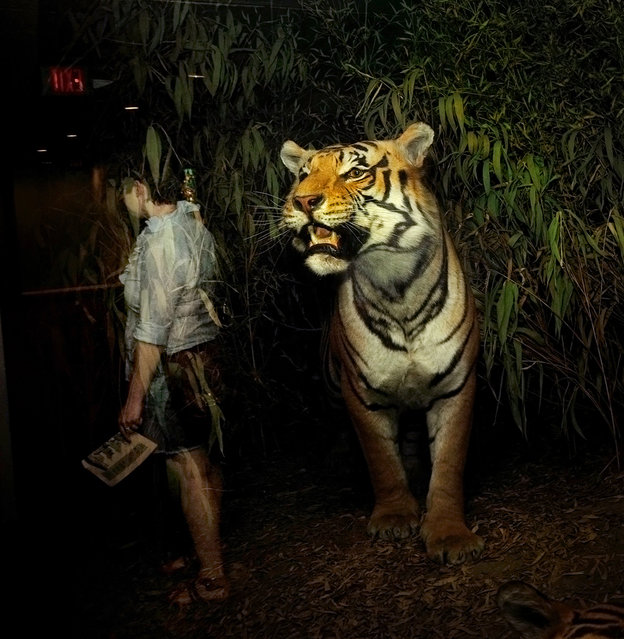
“Natural History”: Tiger. (Photo by Traer Scott)

“Natural History” is a series of completely candid single exposure images that merge the living and the dead to create allegorical narratives of our troubled co-existence with nature. Ghost-like reflections of modern visitors viewing wildlife dioramas are juxtaposed against the antique taxidermied subjects housed behind thick glass, their faces molded into permanent expressions of fear, aggression or fleeting passivity. After decades of over-hunting, climate change, poaching and destruction of habitat, many of these long dead diorama specimens now represent endangered or completely extinct species”. – Traer Scott. (Photo by Traer Scott)
Details
27 Oct 2014 11:39:00
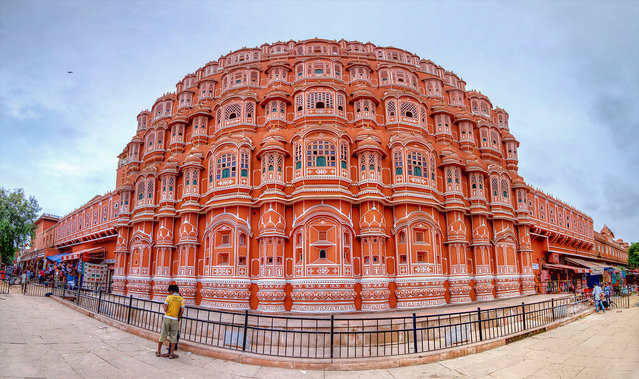
Hawa Mahal India

Hawa Mahal, which translates as the Palace of Winds, was built in 1799 by Maharaja Sawai Pratap Singh. The design of the palace was created by Shreyansh Jain to resemble the crown of Krishna. The design of this unique five-story building is akin to a honeycomb. The main purpose of this building was to allow royal ladies to watch the street below while remaining unseen, since during those times they had a strict code of dressing, which meant covering their faces. The palace was designed to produce the Venturi effect, which created natural air conditioning and kept the interior relatively cool during hot summers.
Details
22 Nov 2014 13:22:00