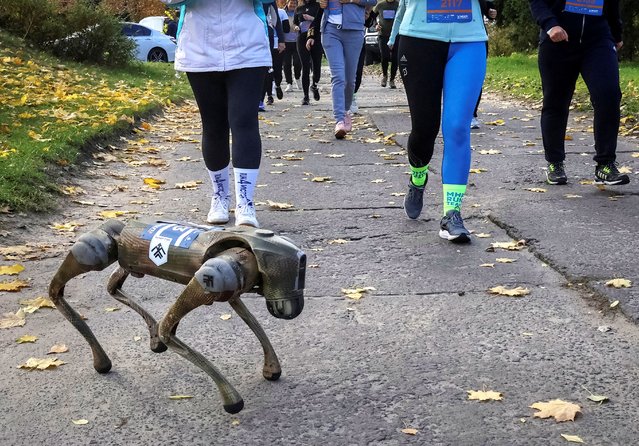
A robotic dog of the National Guard of Ukraine takes part in the Run4Victory charity marathon, amid Russia's attack on Ukraine, in Kyiv, Ukraine on October 27, 2024. (Photo by Oleksandr Klymenko/Reuters)
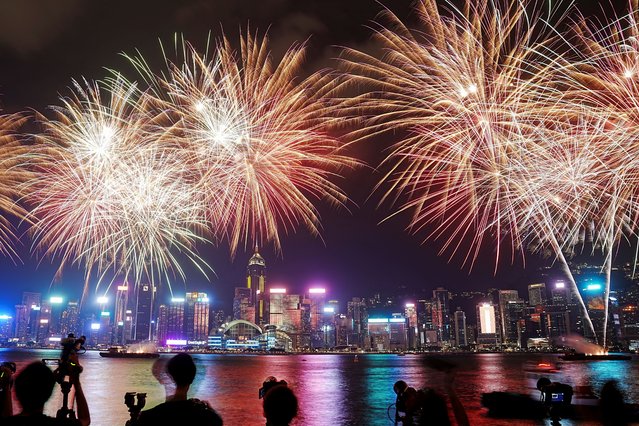
Fireworks light up over Victoria Harbour to celebrate the 75th anniversary of China's National Day, in Hong Kong, China on October 1, 2024. (Photo by Lam Yik/Reuters)
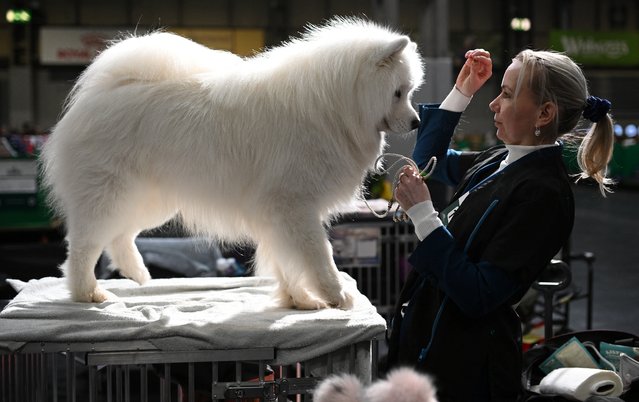
A Samoyed is groomed before being judged on the final day of the Crufts dog show at the National Exhibition Centre in Birmingham, central England, on March 9, 2025. (Photo by Oli Scarff/AFP Photo)
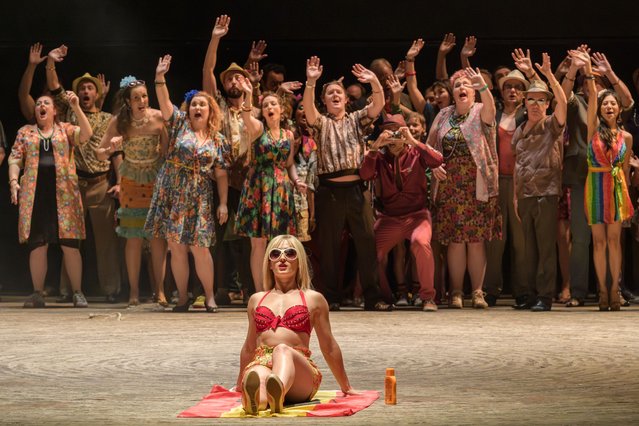
English National Opera presents Georges Bizet's “Carmen” at the London Coliseum in London on October 6, 2025. (Photo by Jane Hobson/Rex Features/Shutterstock)
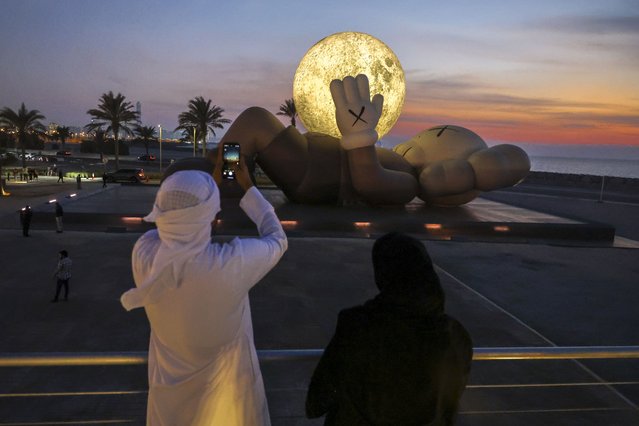
Manar Abu Dhabi presents its second public light art exhibition on November 17, 2025. Organized by the Department of Culture and Tourism. KAWS, located at Souq Al Mina, Abu Dhabi. (Photo by Victor Besa/The National)
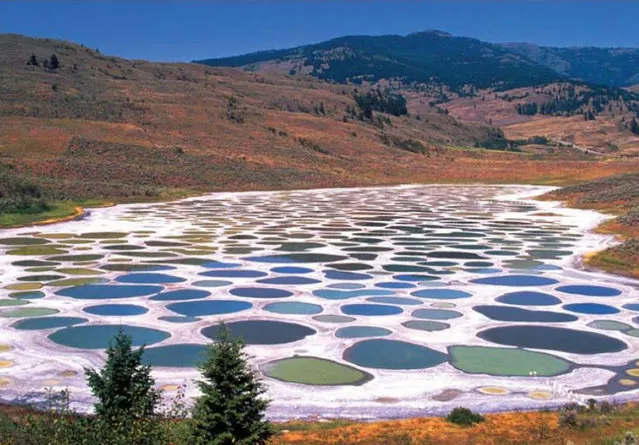
Originally known to the First Nations of the Okanagan Valley as Khiluk, which was- and remains today revered as a sacred site producing therapeutic waters. During World War I the minerals of Spotted Lake were used in manufacturing ammunition. Later the area came under the control of the Ernest Smith Family, for a term of about 40 years. In 1979 Smith attempted to create interest in a spa at the lake. The First Nations responded with an effort to buy the lake; in October 2001 they finally struck a deal. First Nations arranged the purchase of 22 hectares of land for a total of $720,000, and contributed about 20% of the cost. The Indian Affairs Department paid the remainder.
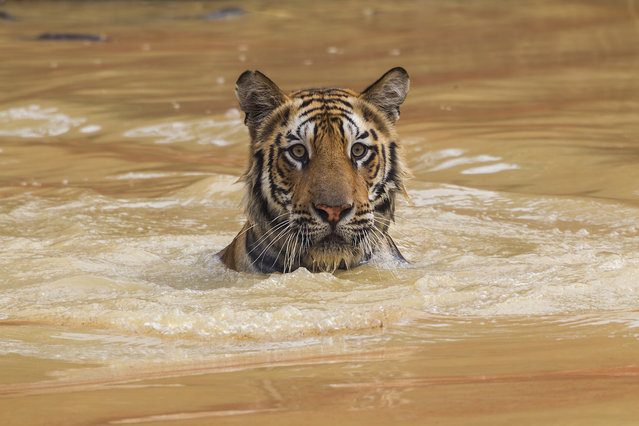
National Geographic photographer Steve Winter has spent most of his adult life shooting wild cats. Photo: A 14-month-old cub, cooling off in a pond, is riveted by a deer that appeared near the shore. Tigers are powerful swimmers; they can easily cross rivers four to five miles wide and have been known to swim distances of up to 18 miles. (Photo by Steve Winter/National Geographic)
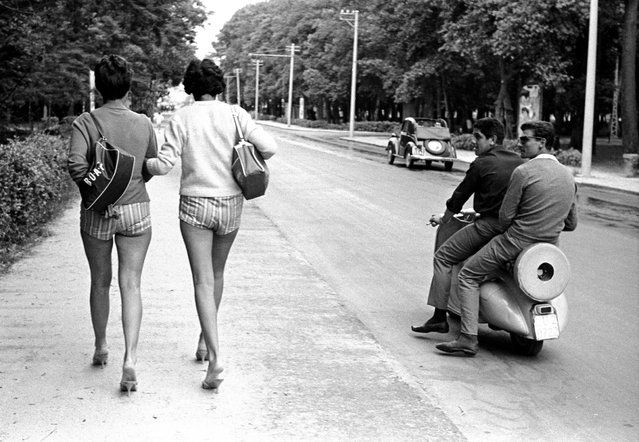
The “Paolo Di Paolo: Lost World” exhibition presents more than 250 largely unseen images from the photographer’s archive. Di Paolo chronicled life in his country as an economic boom followed the destruction of the second world war. Although those were the years of la dolce vita he was an anti-paparazzo – he shunned the salacious and respected his subjects. The exhibition is at MAXXI, the National Museum of 21st Century Arts in Rome until 30 June. Here: Viareggio in 1959. (Photo by Paolo Di Paolo/National Museum of 21st Century Arts)