Loading...
Done
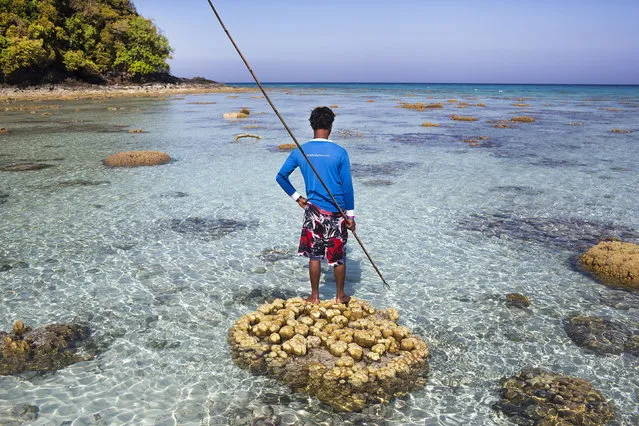
Hook, an indigenous Moken man, holds a three-pronged throwing spear and searches for fish in the waters of Ko Surin National Park. March 1, 2013 – Ko Surin, Thailand. (Photo by Taylor Weidman/zReportage via ZUMA Press)

“For centuries, the Moken sea nomads have traveled the islands between Thailand and Myanmar fishing and foraging for food on the sea floor. Throughout the Mergui Archipelago, Moken migrate in flotillas of Kabangs (traditional boat of the Moken people), stopping at different islands and beaches. Expert freedivers, the Moken have adapted physically to an aquatic life, developing unique characteristics that let them see better and hold their breath longer while underwater”. – Taylor Weidman. Photo: Hook, an indigenous Moken man, holds a three-pronged throwing spear and searches for fish in the waters of Ko Surin National Park. March 1, 2013 – Ko Surin, Thailand. (Photo by Taylor Weidman/zReportage via ZUMA Press)
Details
24 Mar 2014 06:45:00
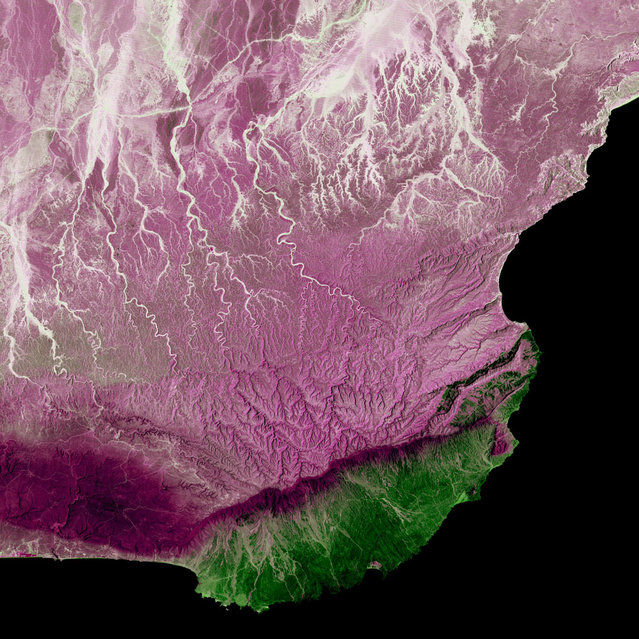
Dhofar Region, Oman. Much of Oman is desert, but the Arabian Sea coast in the Dhofar region represents a startling difference in climate. This coastal region catches the monsoon rains, or khareef, during the summer months. Drenching rains fall primarily on the mountainous ridge that separates the lush, fertile areas along the coast from the arid interior, recharging streams, waterfalls and springs that provide plentiful water supplies in the fertile lowlands for the remainder of the year. Image taken by Landsat 5 on April 2, 2005. (Photo by USGS/NASA)

Dhofar Region, Oman. Much of Oman is desert, but the Arabian Sea coast in the Dhofar region represents a startling difference in climate. This coastal region catches the monsoon rains, or khareef, during the summer months. Drenching rains fall primarily on the mountainous ridge that separates the lush, fertile areas along the coast from the arid interior, recharging streams, waterfalls and springs that provide plentiful water supplies in the fertile lowlands for the remainder of the year. Image taken by Landsat 5 on April 2, 2005. (Photo by USGS/NASA)
Details
25 Dec 2012 11:13:00
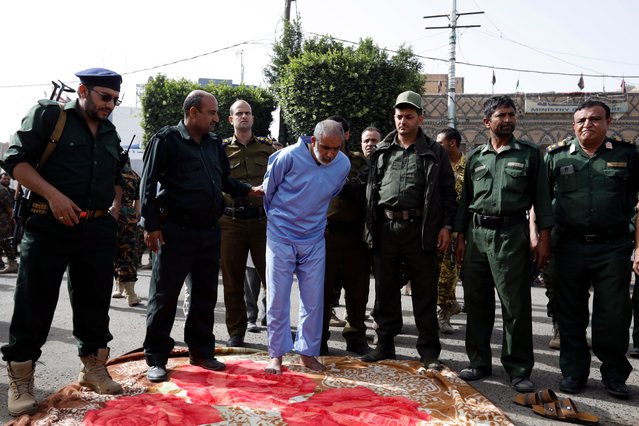
Ali al-Naami, convicted of murdering his three daughters, is placed on a carpet to be executed at a public square in Sana'a, Yemen, 16 June 2021. Defendant Ali al-Naami, 40, convicted of killing his daughters Rahaf, 7, Raghad, 12, and Malak, 14, in June 2019, was executed by an executioner in front of hundreds of spectators in a public square in Sana'a. He had admitted to strangling them and drowning them in a water tank after the mother left the house due to domestic disputes with him. (Photo by Yahya Arhab/EPA/EFE)

Ali al-Naami, convicted of murdering his three daughters, is placed on a carpet to be executed at a public square in Sana'a, Yemen, 16 June 2021. Defendant Ali al-Naami, 40, convicted of killing his daughters Rahaf, 7, Raghad, 12, and Malak, 14, in June 2019, was executed by an executioner in front of hundreds of spectators in a public square in Sana'a. He had admitted to strangling them and drowning them in a water tank after the mother left the house due to domestic disputes with him. (Photo by Yahya Arhab/EPA/EFE)
Details
20 Jun 2021 08:10:00
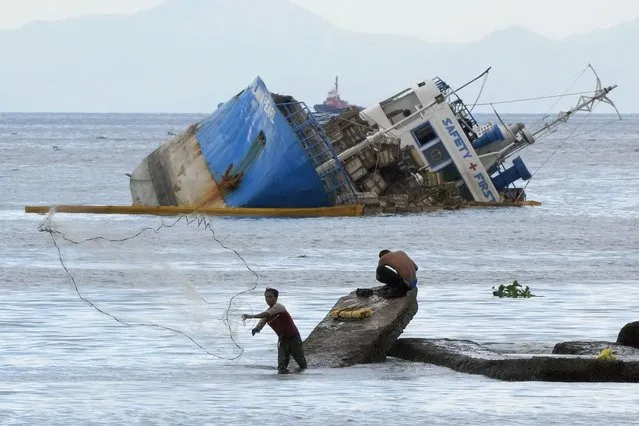
A fisherman throws his net beside a half-submerged M/V Palawan Pearl after it collided with a Cyprus-flagged BKM 104 dredger in Manila bay, Philippines on Thursday, July 8, 2021. A Philippine cargo vessel and a Cyprus-flagged dredger collided in a Manila Bay anchorage area early Thursday, resulting in no injuries but causing the cargo vessel to list and lie half-submerged in the busy waters. (Photo by Aaron Favila/AP Photo)

A fisherman throws his net beside a half-submerged M/V Palawan Pearl after it collided with a Cyprus-flagged BKM 104 dredger in Manila bay, Philippines on Thursday, July 8, 2021. A Philippine cargo vessel and a Cyprus-flagged dredger collided in a Manila Bay anchorage area early Thursday, resulting in no injuries but causing the cargo vessel to list and lie half-submerged in the busy waters. (Photo by Aaron Favila/AP Photo)
Details
25 Sep 2021 07:51:00
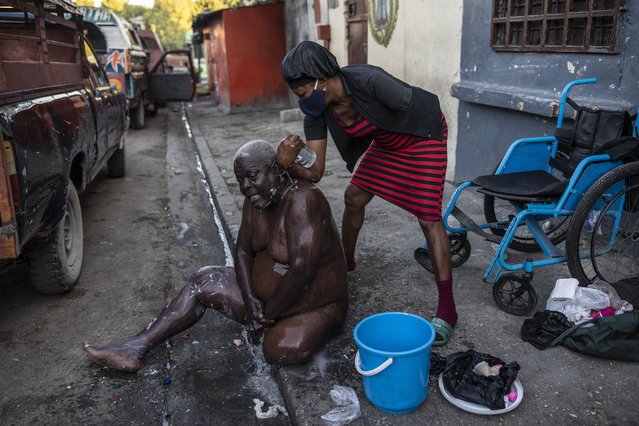
Marie Joseph bathes her friend Jean Robert outside a shelter for the internally displaced where they live due to police violence in Port-au-Prince, Haiti, Thursday, September 16, 2021. Most of the population of Port-au-Prince has no access to basic public services, no drinking water, electricity or garbage collection. (Photo by Rodrigo Abd/AP Photo)

Marie Joseph bathes her friend Jean Robert outside a shelter for the internally displaced where they live due to police violence in Port-au-Prince, Haiti, Thursday, September 16, 2021. Most of the population of Port-au-Prince has no access to basic public services, no drinking water, electricity or garbage collection. (Photo by Rodrigo Abd/AP Photo)
Details
26 Oct 2021 08:34:00
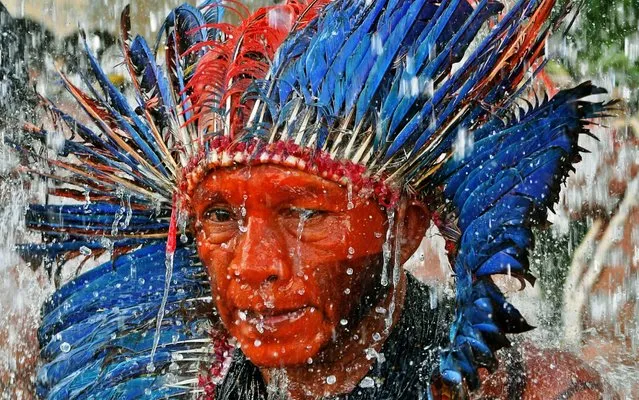
An Indigenous man stands under a water fountain outside a government building in Brasilia, on April 26, 2019, during the last day of a protest camp. Approximately 4,000 indigenous people from different tribes are taking part in protests during the Indigenous National Mobilization (MNI) week, a mobilization which seeks to tackle territorial rights' negotiations with the government. (Photo by Carl De Souza/AFP Photo)

An Indigenous man stands under a water fountain outside a government building in Brasilia, on April 26, 2019, during the last day of a protest camp. Approximately 4,000 indigenous people from different tribes are taking part in protests during the Indigenous National Mobilization (MNI) week, a mobilization which seeks to tackle territorial rights' negotiations with the government. (Photo by Carl De Souza/AFP Photo)
Details
29 Apr 2019 00:07:00
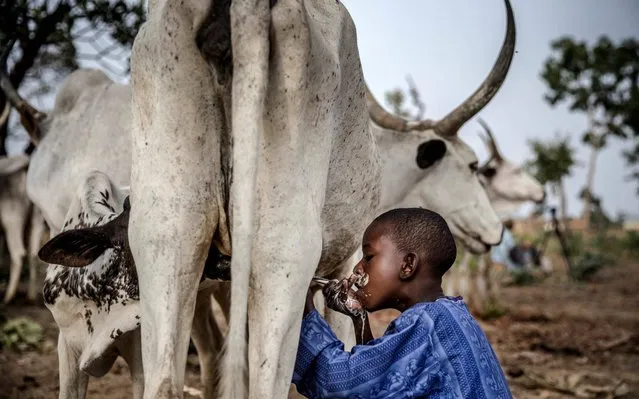
8-year-old Fulani boy Suleiman Yusuf drinks milk from a cow belonging to his father cattle near his family's house at Kachia Grazing Reserve, Kaduna State, Nigeria, on April 16, 2019. Kachia Grazing Reserve is an area set aside for the use of Fulani pastoralist and it is intended to be the foci of livestock development. The purpose for the grazing reserves is the settlement of nomadic pastoralists and inducement to sedentarisation through the provision of land for grazing and permanent water as way to avoid conflict. (Photo by Luis Tato/AFP Photo)

8-year-old Fulani boy Suleiman Yusuf drinks milk from a cow belonging to his father cattle near his family's house at Kachia Grazing Reserve, Kaduna State, Nigeria, on April 16, 2019. Kachia Grazing Reserve is an area set aside for the use of Fulani pastoralist and it is intended to be the foci of livestock development. The purpose for the grazing reserves is the settlement of nomadic pastoralists and inducement to sedentarisation through the provision of land for grazing and permanent water as way to avoid conflict. (Photo by Luis Tato/AFP Photo)
Details
10 Jul 2019 00:01:00
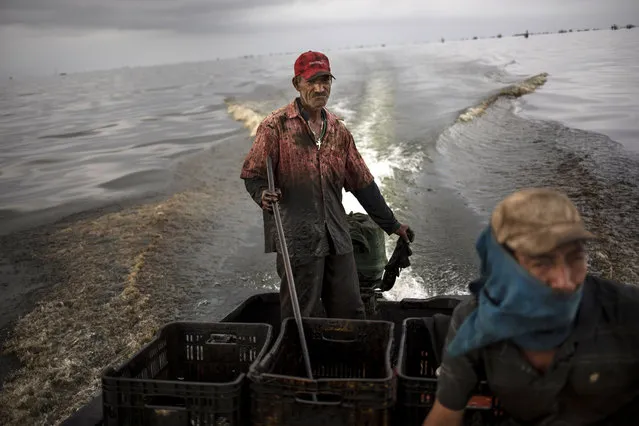
Fisherman Jose Miguel Perez, whose nickname is “Taliban”, navigates the oil infested waters of Lake Maracaibo, near Cabimas, Venezuela, May 21, 2019. Nobody lives as closely with the environmental fallout of Venezuela's collapsing oil industry as the fishermen who scratch out an existence on the blackened, sticky shores of Lake Maracaibo. (Photo by Rodrigo Abd/AP Photo)

Fisherman Jose Miguel Perez, whose nickname is “Taliban”, navigates the oil infested waters of Lake Maracaibo, near Cabimas, Venezuela, May 21, 2019. Nobody lives as closely with the environmental fallout of Venezuela's collapsing oil industry as the fishermen who scratch out an existence on the blackened, sticky shores of Lake Maracaibo. (Photo by Rodrigo Abd/AP Photo)
Details
26 Nov 2019 00:03:00