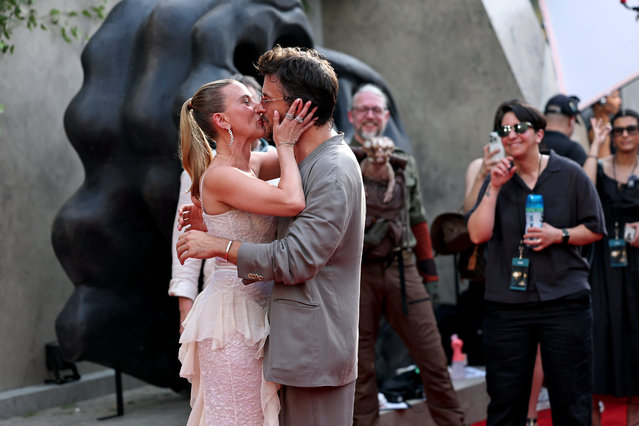
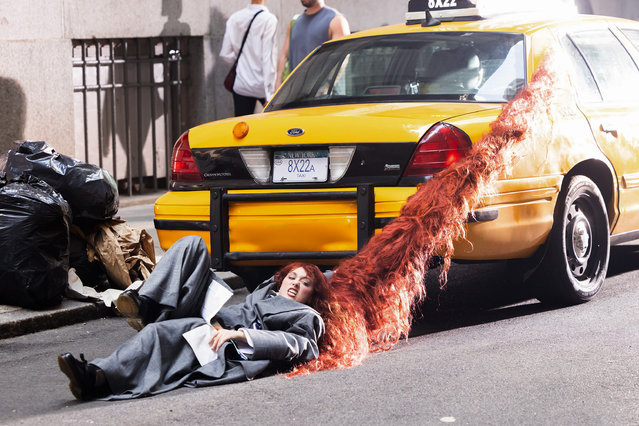
Scarlett Johansson and Jonathan Bailey attend the “Jurassic World Rebirth” New York Premiere at Lincoln Center on June 23, 2025 in New York City. (Photo by Jamie McCarthy/Getty Images)
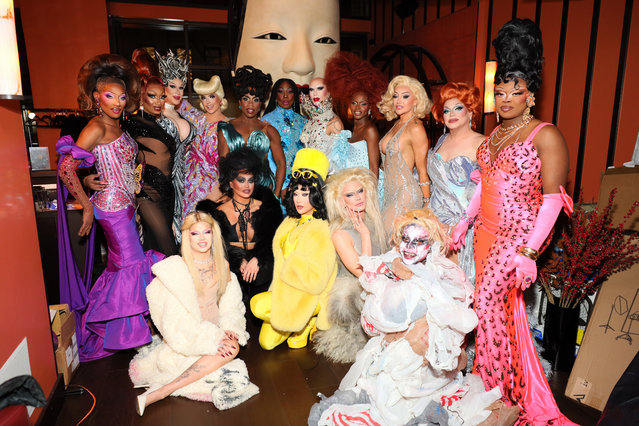
The queens pose for a photo together during RuPaul's Drag Race S18 Premiere Event at Aqua New York on December 09, 2025 in New York City. (Photo by Santiago Felipe/Getty Images for MTV)
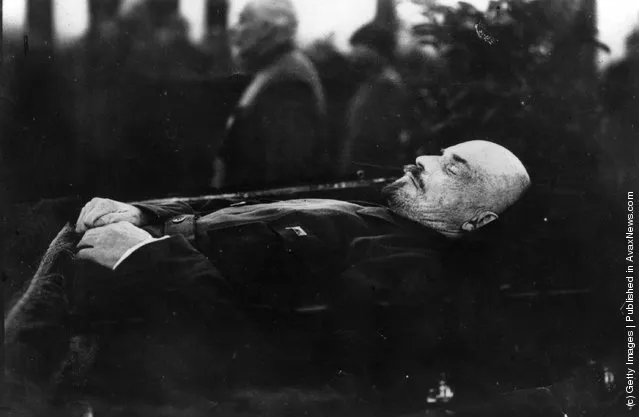
Photo: Vladimir Ilyich Lenin (1870 – 1924) lying in state in the Kremlin. (Photo by Hulton Archive/Getty Images). 1924
Important! For the same article in Russian language click here.
Something quite intriguing is happening within Russian-speaking internet during the last few – should you type a fully academic inquiry (at least, according to Russian academic requirements) in national search engines for "Lenin's mausoleum" – the first thing you get (even in top 10 searches) is website pages talking about black magic and occult. Website authors view this construction differently, but unconditionally agree on one thing: the mausoleum of the "leader of the world proletariat” – the essence of a magical artifact, a sort of “energy vampire”. It was built with a certain purpose: to drain the energy out of miserable Soviet citizens on one hand; and to poison the anthroposphere of one-sixth part of the earth with its vibes (the exact territory that was occupied by the former Soviet Union), depriving the Russian people of will to resist on the other hand. Complete nonsense? No doubt. Nevertheless, an intriguing one. Well, probably because some oddities do exist in mausoleum's history. These oddities are the thing we are going to discuss this time. First, let me refresh you memory on the subject.
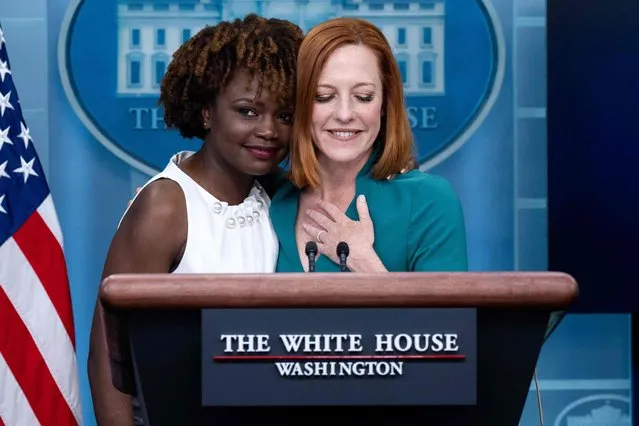
White House Press Secretary Jen Psaki (R) is hugged by current Principal Deputy Press Secretary Karine Jean-Pierre during a press briefing in the Brady Press Briefing Room of the White House in Washington, DC, May 5, 2022, after it was announced Psaki would step down from her role next week and be replaced by Jean-Pierre. (Photo by Saul Loeb/AFP Photo)
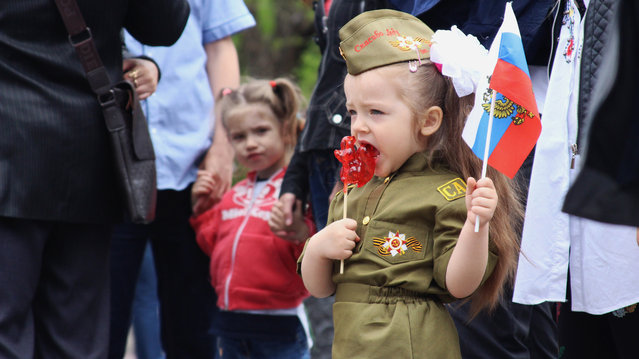
Children carrying guns and flags or wearing Soviet-style uniforms have become a common sight at Victory Day parades and other events in Russian-controlled Crimea. Russian and Ukrainian human rights activists have warned that such displays point to a growing trend of promoting Russian patriotism among kids on the Crimean peninsula, annexed from Ukraine in 2014. Here: A young Crimean girl wears military-type clothes during a Victory Day celebration in Sevastopol on May 9, 2018. (Photo by Oleksandra Surgan/Radio Free Europe/Radio Liberty)
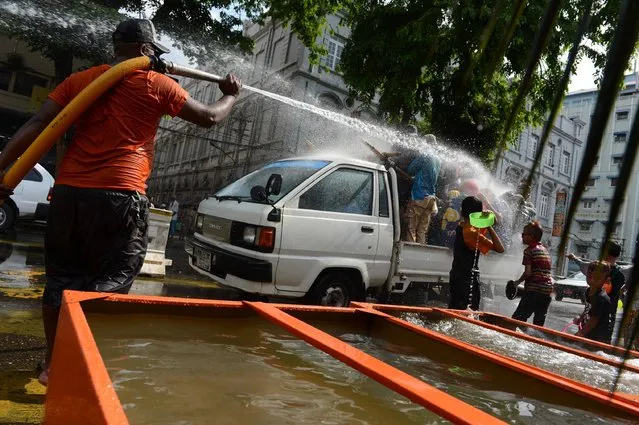
Myanmar revellers take part in celebrations on the fifth and last day marking Thingyan, a water festival which brings in the country's new year, in Yangon on April 16, 2016. The Buddhist festival of water pouring symbolizes spiritual cleansing and begin the new year free from worldly impurities with celebrants devoting the four days of Thingyan in merry making of water dousing until the eve of new year. (Photo by Romeo Gacad/AFP Photo)