Loading...
Done
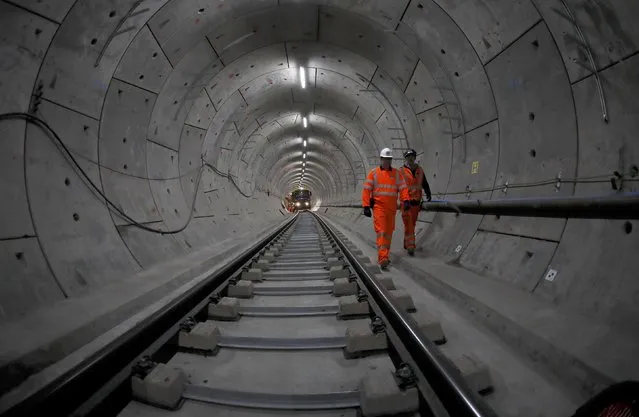
Workers lay railway track in a tunnel of the Crossrail project in Stepney, east London, Britain, November 16, 2016. (Photo by Stefan Wermuth/Reuters)

Workers lay railway track in a tunnel of the Crossrail project in Stepney, east London, Britain, November 16, 2016. Crossrail, which is Europe's largest construction project, is a railway link which will connect outlying areas to the east and west of London with tunnels under the centre of the capital. (Photo by Stefan Wermuth/Reuters)
Details
17 Nov 2016 11:14:00


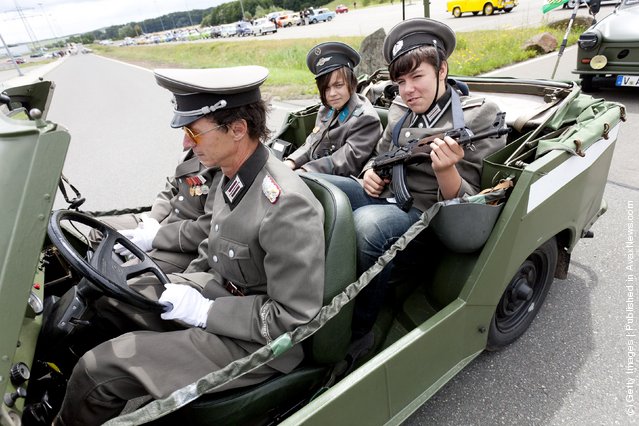
“The Trabant is a car that was produced by former East German auto maker VEB Sachsenring Automobilwerke Zwickau in Zwickau, Sachsen. It was the most common vehicle in East Germany, and was also exported to countries both inside and outside the communist bloc. The main selling points was that it had room for four adults and luggage in a compact, light and durable shell and that it was fast (when introduced) and durable. With its mediocre performance, smoky two-stroke engine, and production shortages, the Trabant is often cited as an example of the disadvantages of centralized planning; on the other hand, it is regarded with derisive affection as a symbol of the failed former East Germany and of the fall of communism (in former West Germany, as many East Germans streamed into West Berlin and West Germany in their Trabants after the opening of the Berlin Wall in 1989). It was in production without any significant changes for nearly 30 years with 3,096,099 Trabants produced in total”. – Wikipedia

Photo: Enthusiasts weared in uniforms of the former eastern german army trive in a military Trabant car as fans and owners of East German-era Trabant cars gather at the 2011 International Trabantfahrer Treffen (International Trabant Drivers Meeting) on June 26, 2011 in Zwickau, Germany. The Trabant, also known as the Trabi, was among the main cars produced in communist East Germany and built by VEB Sachsenring Automobilwerke in Zwickau for 30 years until 1989. Today the car has cult status for many followers and one company, IndiKar, is even seeking to revive the brand in a modern, electric version. (Photo by Carsten Koall/Getty Images)

Details
27 Jun 2011 12:21:00
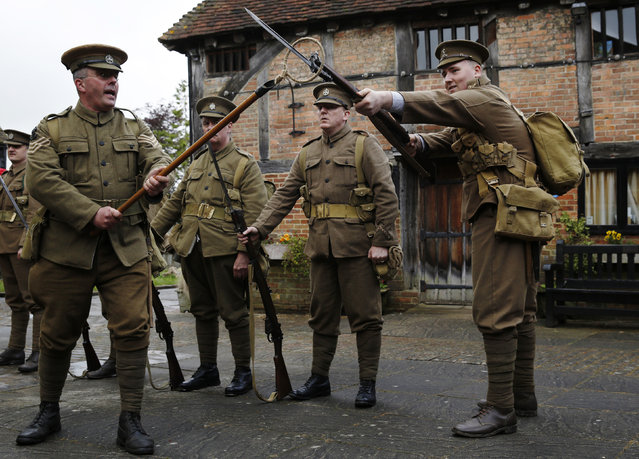
Factory landlord Lawrence Taylor (L), portraying a Colour Sergeant from the King's Royal Rifle Corps, part of the Rifles Living History Society, performs a drill with Connor Young (R) of the Queen's Own Royal West Kent Regiment Living History Group as they recreate the life of a First World War soldier at the Eden Valley Museum in Edenbridge in southeast England May 10, 2014. (Photo by Luke MacGregor/Reuters)

Factory landlord Lawrence Taylor (L), portraying a Colour Sergeant from the King's Royal Rifle Corps, part of the Rifles Living History Society, performs a drill with Connor Young (R) of the Queen's Own Royal West Kent Regiment Living History Group as they recreate the life of a First World War soldier at the Eden Valley Museum in Edenbridge in southeast England May 10, 2014. Lawrence has always had an interest in military history and specifically “The Rifles” – his veteran father's WWII regiment. When he became a re-enactor he chose not to re-enact WWII as many of the veterans are still alive, and he felt uncomfortable as he remembers his father would have flashbacks and nightmares about the war. United by a fascination with military history and a fondness for dressing up, groups such as the Rifles Living History Society and the Queen's Own Royal West Kent Regiment Living History Group get together to recreate aspects of life during the First World War. Reuters photographer Luke MacGregor photographed members of the groups, both as they took part in living history events and at their day jobs. (Photo by Luke MacGregor/Reuters)
Details
26 Aug 2014 10:12:00
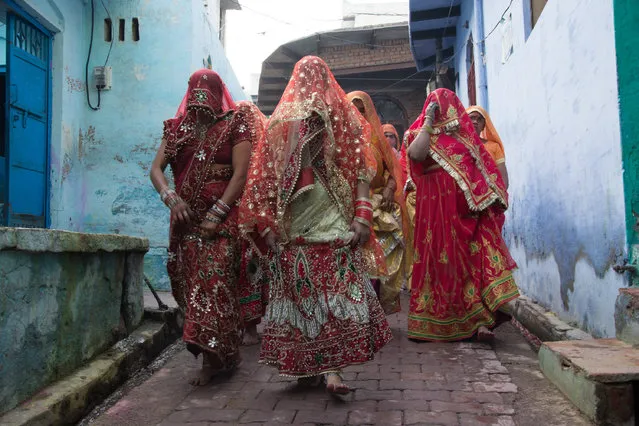
Indian women beat men with stick (Lathi) during celebration of Lathmar Holi in Nandgaon village of Mathura district in Uttar Pradesh, India on February 25, 2018. (Photo by Javed Sultan/Anadolu Agency/Getty Images)

Indian women beat men with stick (Lathi) during celebration of Lathmar Holi in Nandgaon village of Mathura district in Uttar Pradesh, India on February 25, 2018. Holi is observed in India at the end of the winter season on the last full moon of the lunar month. (Photo by Javed Sultan/Anadolu Agency/Getty Images)
Details
28 Feb 2018 00:05:00
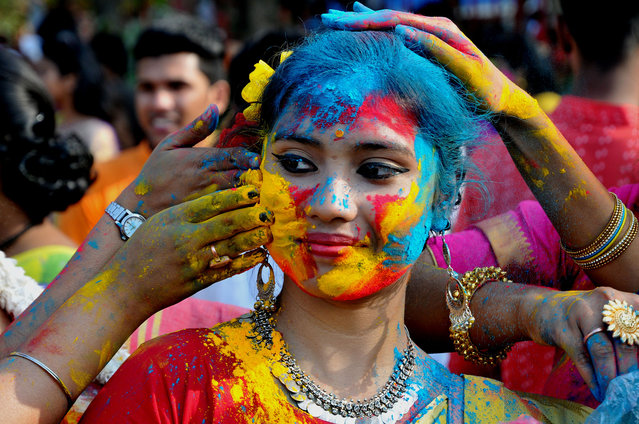
Student Rabindra Bharati University celebrates the Holi festival, Color Festival on February 26, 2018 in Kolkata, India. (Photo by Debajyoti Chakraborty/NurPhoto via Getty Images)

Student Rabindra Bharati University celebrates the Holi festival, Color Festival on February 26, 2018 in Kolkata, India. Holi, the popular Hindu spring festival of colours is observed in India at the end of the winter season on the last full moon of the lunar month, and will be celebrated on March 1 this year. (Photo by Debajyoti Chakraborty/NurPhoto via Getty Images)
Details
03 Mar 2018 00:05:00
The trip to get to the reef takes eight hours by car and boat, and there is no luxury hotel at the other end. (Photo by Alex Suh/Caters News Agency)

A photographer with a passion for wild animals was able to get up close and personal with one of nature’s deadliest creatures. Alex Suh has traveled to Mexico’s Banco Chinchorro reef twice in the past three years to get into the waters and capture the crocodiles in their natural habitat after an invitation from Yucatan Dive Trek. (Photo by Alex Suh/Caters News Agency)
Details
24 Aug 2018 00:01:00
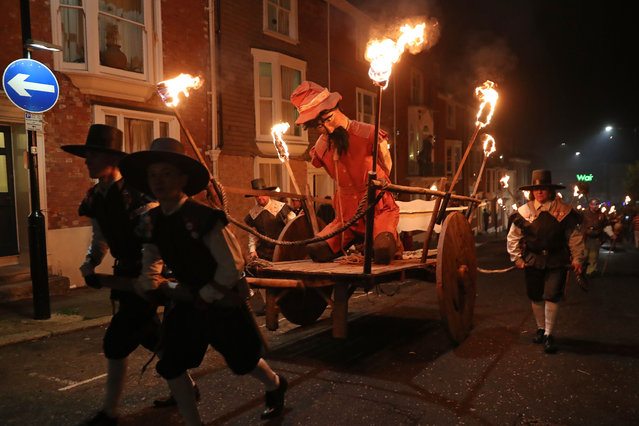
A guy is paraded through the streets of Lewes in East Sussex, southern England, on November 5, 2018, during the traditional Bonfire Night celebrations. (Photo by Daniel Leal-Olivas/AFP Photo)

A guy is paraded through the streets of Lewes in East Sussex, southern England, on November 5, 2018, during the traditional Bonfire Night celebrations. Thousands of people attend the annual parade through the narrow streets until the evening comes to an end with the burning of an effigy or “guy”, usually representing Guy Fawkes, who died in 1605 after an unsuccessful attempt to blow up The Houses of Parliament. (Photo by Daniel Leal-Olivas/AFP Photo)
Details
07 Nov 2018 00:03:00
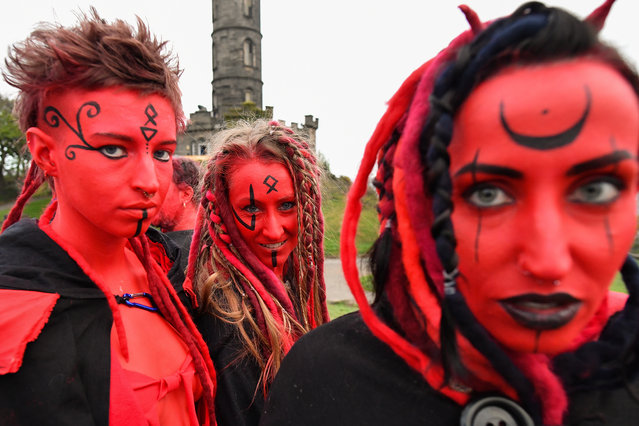
Beltane Fire Society performers celebrate the coming of summer by participating in the Beltane Fire Festival on Calton Hill April 30, 2019 in Edinburgh, Scotland. (Photo by Jeff J. Mitchell/Getty Images)

Beltane Fire Society performers celebrate the coming of summer by participating in the Beltane Fire Festival on Calton Hill April 30, 2019 in Edinburgh, Scotland. The event celebrates the ending of winter and is a revival of the ancient Celtic and Pagan festival of Beltane, the Gaelic name for the month of May. This years festival was highlighting climate change, with the central character The May Queen being seen to express her rage at the damage done to Earth. (Photo by Jeff J. Mitchell/Getty Images)
Details
03 May 2019 00:03:00