Anthony Joshua, right, punches Jake Paul during their heavyweight boxing match, Friday, December 19, 2025, in Miami, Fla. (Photo by Lynne Sladky/AP Photo)
A woman drives a scooter with her dog in Hanoi on December 10, 2021, as Vietnamese officials in the central city of Hoi An announced it was set to be the country's first dog and cat meat free city. (Photo by Nhac Nguyen/AFP Photo)
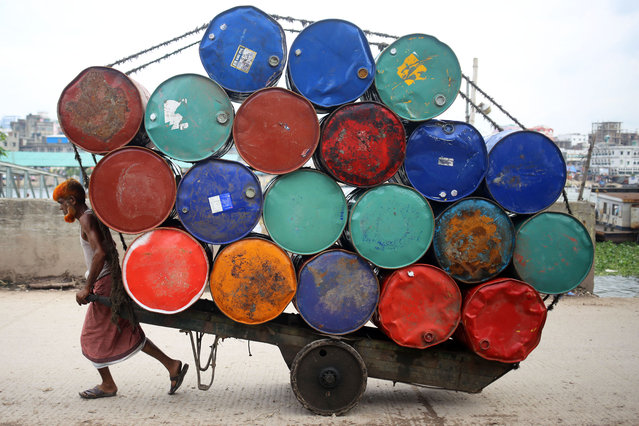
A laborer is transporting used oil durms by a hand-pulled vehicle near Buriganga River in Dhaka on June 12, 2021. (Photo by Md Rakibul Hasan/ZUMA Wire/Rex Features/Shutterstock)
A bystander walks past a fresco by street artist Seth depicting a girl with a Ukrainian flag walking on tanks in Paris on March 01, 2022. (Photo by Joel Saget/AFP Photo)
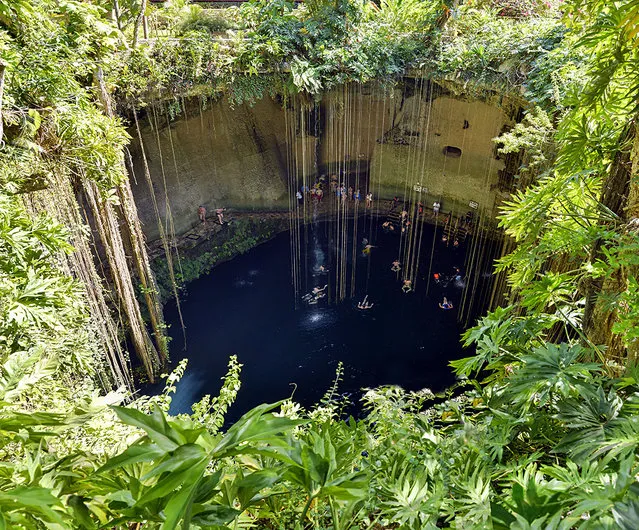
A cenote is a natural phenomenon, a sinkhole in the Earth’s surface. The Yucatan Peninsula in Mexico has an estimated 7,000 cenotes because it is primarily made up of porous limestone. For millions of years, rainfall slowly ate away at the limestone and a huge system of underground caves and caverns was formed. Many filled with water from rain or from the underground water table. When the roof of a water filled cave collapses, a cenote is born. The water found in a cenote may be fresh water, salt water, or both. Structurally it may be completely open, like a lake, almost completely closed with just a small opening at the top, or somewhere in between.
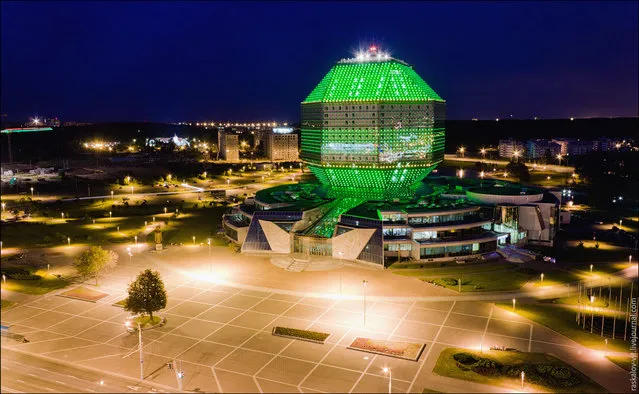
The earliest historic references to Minsk date to the 11th century 1067, when it was noted as a provincial city within the principality of Polotsk. The settlement developed on the rivers. In 1242, Minsk became a part of the Grand Duchy of Lithuania. It received town privileges in 1499.
A model showcases “The Bride” by Stephane Rolland on the catwalk as part of Women's Fashion Week Haute Couture program at Marina Bay Sands on October 30, 2011 in Singapore. (Photo by Chris McGrath/Getty Images)