A woman reacts with Samoyed puppies as she performs yoga on International Yoga Day, in Bangkok, Thailand, on June 21, 2025. (Photo by Chalinee Thirasupa/Reuters)
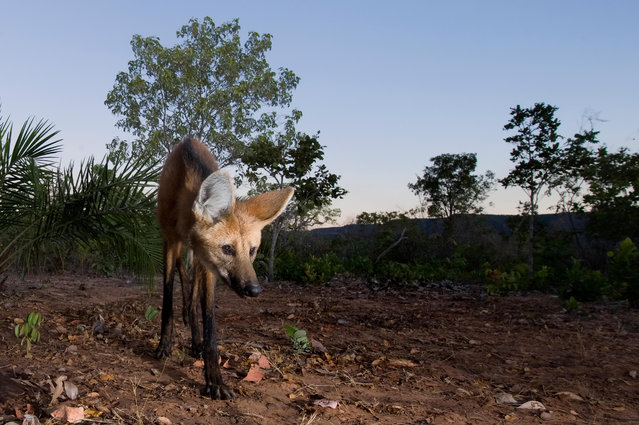
Global wildlife populations will decline by 67% by 2020 unless urgent action is taken to reduce human impact on species and ecosystems, warns the biennial Living Planet Index report from WWF (World Wide Fund for Nature) and ZSL (Zoological Society of London). From elephants to eels, here are some of the wildlife populations most affected by human activity. Here: The maned wolf is among the large mammals in the Brazilian Cerrado that are threatened by the increasing conversion of grasslands into farmland for grazing and growing crops. (Photo by Ben Cranke/Nature Picture Library/Alamy Stock Photo)
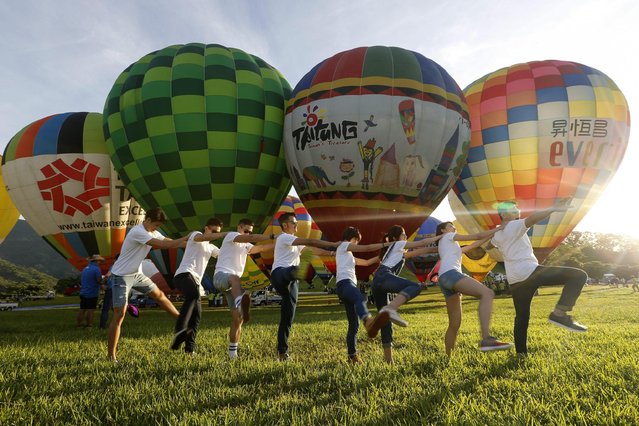
Visitors play in front of hot air balloons during the 2016 International Hot Air Balloon Festival in Taitung, southeast of Taiwan, 01 July 2016. Thirty-one hot-air balloon teams from 14 countries join the six days of competition during the festival, which will run from 01 July to 07 August 2016. (Photo by Ritchie B. Tongo/EPA)
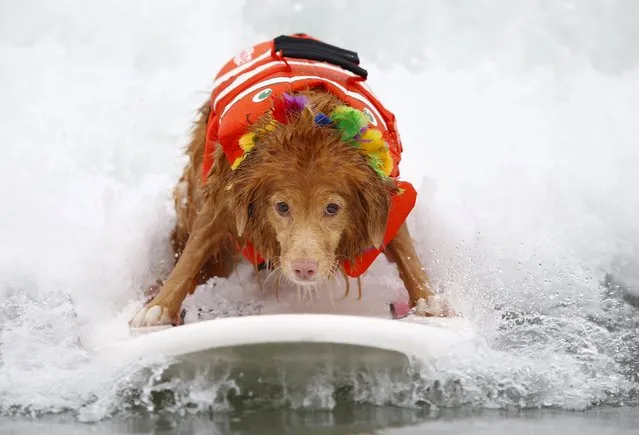
Nova Scotia Duck Tolling retriever Torrey competes in the 10th annual Petco Unleashed surfing dog contest at Imperial Beach, California August 1, 2015. Proceeds raised at the event go to benefit the San Diego Humane Society. (Photo by Mike Blake/Reuters)
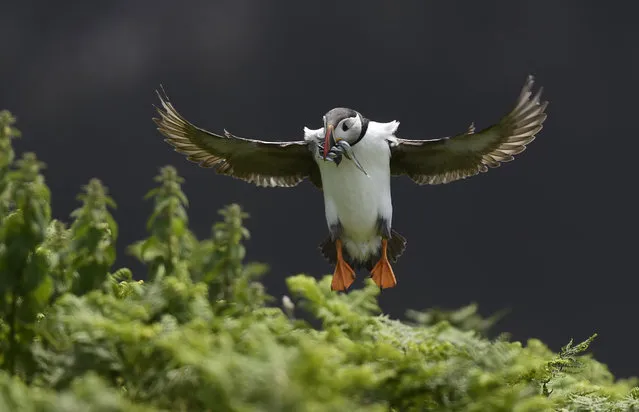
A Puffin jumps into its burrow with a mouthful of sea eels to feed its chick on Skomer Island, Pembrokeshire in Wales, Britain June 21, 2016. (Photo by Rebecca Naden/Reuters)
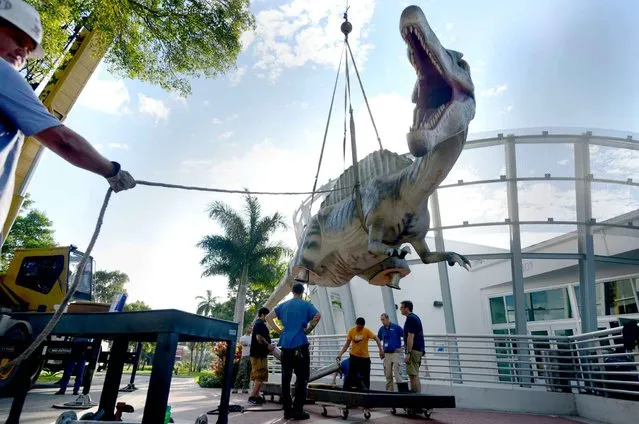
Workers from the South Florida Science Center and Aquarium and Imagine Exhibitions put together an animatronic spinosaurus outside the science center in West Palm Beach, Fla., Tuesday, October 27, 2015. The giant spinosaurus is part of the Dinosaurs Around the World exhibit, set to open on November 1. (Photo by Maria Lorenzino/South Florida Sun-Sentinel via AP Photo)
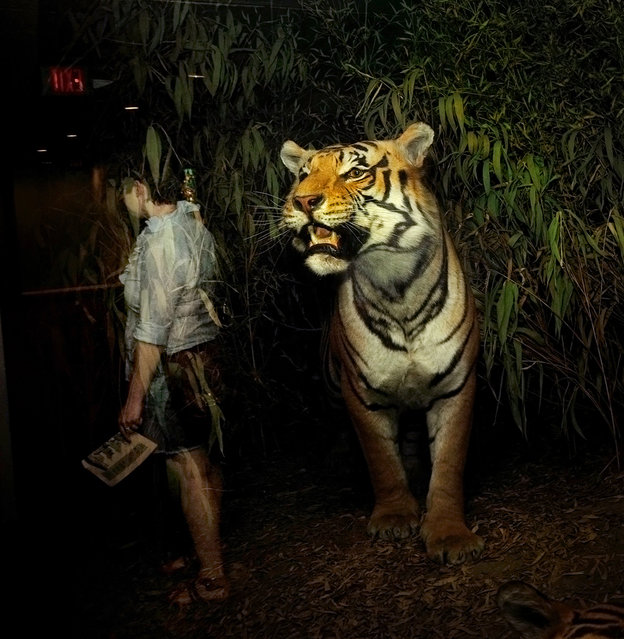
“Natural History” is a series of completely candid single exposure images that merge the living and the dead to create allegorical narratives of our troubled co-existence with nature. Ghost-like reflections of modern visitors viewing wildlife dioramas are juxtaposed against the antique taxidermied subjects housed behind thick glass, their faces molded into permanent expressions of fear, aggression or fleeting passivity. After decades of over-hunting, climate change, poaching and destruction of habitat, many of these long dead diorama specimens now represent endangered or completely extinct species”. – Traer Scott. (Photo by Traer Scott)
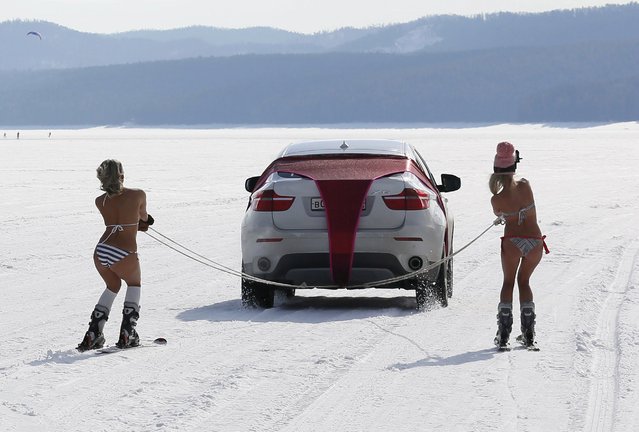
Bikini-clad women ski as they are led by a car during a performance on the frozen Yenisei River outside Krasnoyarsk, Siberia, Russia, March 20, 2016. The performance, entitled “Siberian Spring's Strings” and created with the participation of artist Vasily Slonov, marked the day of spring equinox (vernal equinox), according to organizers. (Photo by Ilya Naymushin/Reuters)