A runner taking part in the 38th Annual Empire State Building Run-Up is pictured arriving on the 86th floor in the Manhattan borough of New York February 4, 2015. (Photo by Carlo Allegri/Reuters)
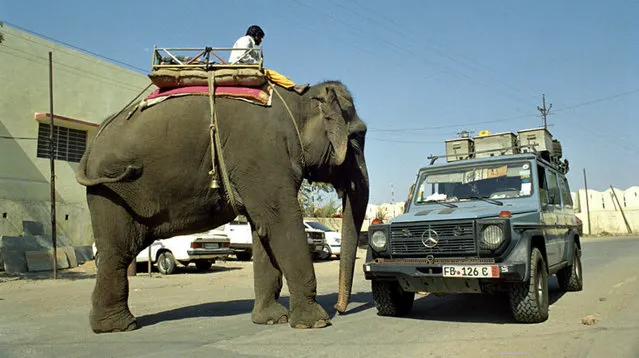
Gunther Holtorf, a 75-year-old former airline CEO who has driven more than 900,000 kilometers over the past two decades, doesn't care if you remember his travels. But you better respect Otto, his G Wagon that will be placed in a museum if it makes it through this final leg.
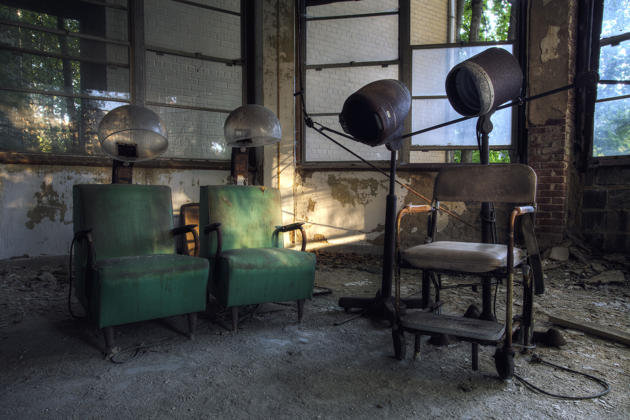
“These creepy pictures of abandoned asylums, prisons and schools give a sense of what life was like in institutions of 20th century America. Photographer Daniel Barter, 30, captured on film bowling alleys, theatres and hairdressing salons all completely intact. The Londoner was on travelling through Americas north eastern states when he had the chance to explore the derelict public buildings left untouched since their last inhabitants shut the doors”. – Caters News. Photo: Salon equipment inside a sanatorium in New York. (Photo by Daniel Barter/Caters News)
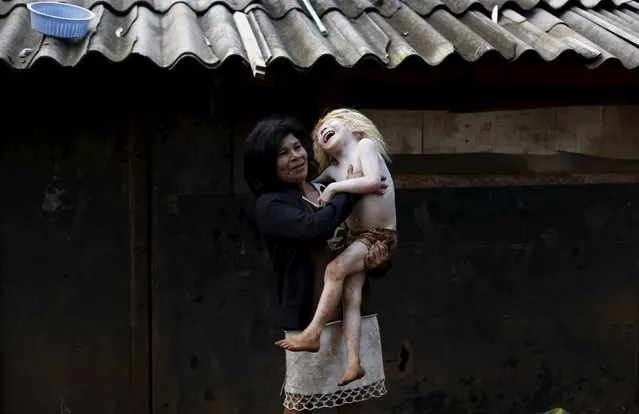
A Guarani Indian woman jokes with her son in the village of Pyau at Jaragua district, in Sao Paulo April 27, 2015. The National Indian Foundation (FUNAI) has recognised 521 hectares of this area as indigenous territory, making it the smallest indigenous reserve in Brazil. Members of the Guarani community have now established a new village outside the demarcation and are being threatened with an eviction through a court order. (Photo by Nacho Doce/Reuters)
The People of Mah Meri tribe at home at Pulau Carey village on December 03, 2016 in Selangor, Malaysia. The Mah Meri people are one 18 tribes of Orang Asal (indigenous people) living in west Malaysia. The Mah Meri are know for thei wood carvings and also for the richness of their songs and dances. (Photo by Yuli Seperi/Sijori Images/Barcroft India)
A woman wearing a swim suit skis during the Naked Pig Skiing Carnival at the Yabuli Ski Resort on March 24, 2018 in Harbin of Heilongjiang Province, northeast China. (Photo by Tao Zhang/Getty Images)
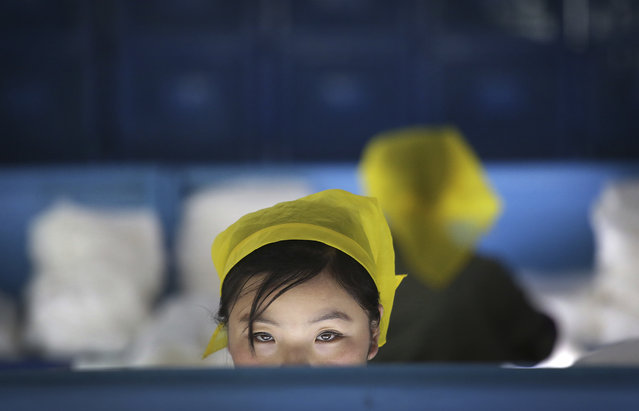
In this Friday, January 6, 2017, photo, a North Korean woman working at the Kim Jong Suk Silk Mill looks up from her workstation in Pyongyang, North Korea. The silk mill, named after North Korean leader Kim Jong Un's grandmother, is where 1,600 workers – mostly women – sort and process silkworms to produce silk thread that officials at the Pyongyang factory say is made into roughly 200 tons of silk a year. (Photo by Wong Maye-E/AP Photo)