Loading...
Done
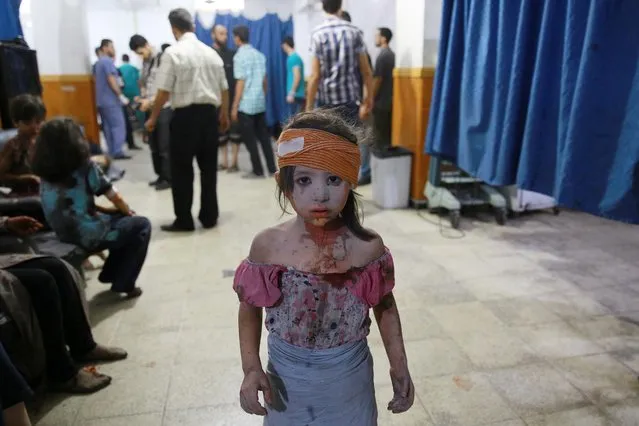
A wounded Syrian girl looks on at a make shift hospital in the rebel-held area of Douma, east of the capital Damascus, following shelling and air raids by Syrian government forces on August 22, 2015. (Photo by Abd Doumany/AFP Photo)

A wounded Syrian girl looks on at a make shift hospital in the rebel-held area of Douma, east of the capital Damascus, following shelling and air raids by Syrian government forces on August 22, 2015. At least 20 civilians and wounded or trapped 200 in Douma, a monitoring group said, just six days after regime air strikes killed more than 100 people and sparked international condemnation of one of the bloodiest government attacks in Syria's war. (Photo by Abd Doumany/AFP Photo)
Details
25 Aug 2015 10:52:00
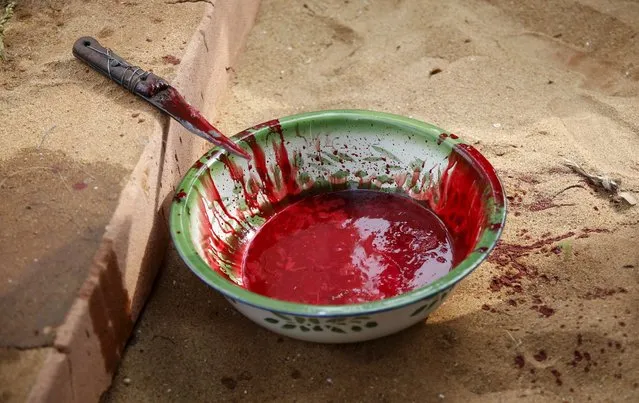
A knife is seen beside a bowl containing blood after a ram was killed as a sacrifice in front of a shrine at the annual voodoo festival in Ouidah, Benin, January 10, 2016. (Photo by Akintunde Akinleye/Reuters)

A knife is seen beside a bowl containing blood after a ram was killed as a sacrifice in front of a shrine at the annual voodoo festival in Ouidah, Benin, January 10, 2016. In Ouidah, a small town and former slave port in the West African country of Benin, the annual voodoo festival gathers visitors from far and wide. It's a week that brings together priests and dignitaries, rich and poor, locals and visitors from as far afield as the Caribbean and France. The festival commemorates the estimated 60 million people who lost their homelands and their freedom during the African slave trade. (Photo by Akintunde Akinleye/Reuters)
Details
23 Jan 2016 12:55:00
Larissa Neto, a muse of the Unidos da Tijuca Samba School, poses as she wears a carnival dress in Sao Goncalo near Rio de Janeiro, Brazil, February 3, 2016. (Photo by Ricardo Moraes/Reuters)

Larissa Neto, a muse of the Unidos da Tijuca Samba School, poses as she wears a carnival dress in Sao Goncalo near Rio de Janeiro, Brazil, February 3, 2016. Rio de Janeiro's carnival parades are known the world over for the glitz and glamour, high-tech allegorical floats and shimmering bodies, which battle it out each year for the championship title. Each school is fronted by the Queen of the Drums, who dances alongside the raging percussion, and her court of sparkling, sculpted dancers known as “muses”. (Photo by Ricardo Moraes/Reuters)
Details
05 Feb 2016 10:52:00
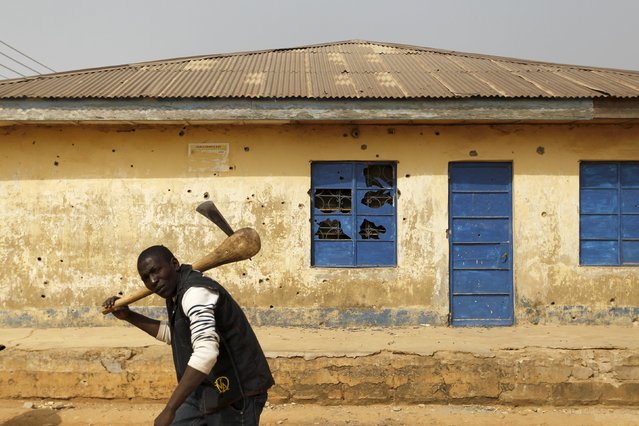
A man carrying an axe walks past a house marked with bullet holes in Gyallesu district after recent clashes between Shi'ites and the army in Zaria, Kaduna state, Nigeria, February 3, 2016. (Photo by Afolabi Sotunde/Reuters)

A man carrying an axe walks past a house marked with bullet holes in Gyallesu district after recent clashes between Shi'ites and the army in Zaria, Kaduna state, Nigeria, February 3, 2016. Sectarian tensions are rising in Nigeria's Muslim north, where hundreds of Shi'ites were killed in clashes with the army in the town of Zaria in December, according to Shi'ites and rights groups. Following the clashes, bulldozers sent by the state levelled Shi'ite shrines, a cemetery and offices in the deeply divided town. The region is already grappling with an insurgency waged by the jihadist Boko Haram group. (Photo by Afolabi Sotunde/Reuters)
Details
12 Feb 2016 12:52:00
A girl paddles on her stand-up board on the waters of Guanabara bay at Bica beach in Rio de Janeiro Brazil, January 10, 2016. (Photo by Ricardo Moraes/Reuters)

A girl paddles on her stand-up board on the waters of Guanabara bay at Bica beach in Rio de Janeiro Brazil, January 10, 2016. Few features capture the beauty, or the problems, of one of the world's most dramatic urban landscapes like Guanabara Bay - the finger-like inlet that forms the shoreline and harbor for Rio de Janeiro. The bay, which carves into southeast Brazil from the Atlantic Ocean, literally gave Rio its name when Portuguese mariners mistook it for a “rio”, or “river”. Four centuries later, the bay is preparing to welcome another sort of seafarer – Olympic sailors, who will navigate the bay when the 2016 Rio Olympics kick off in August. (Photo by Ricardo Moraes/Reuters)
Details
28 Apr 2016 12:13:00
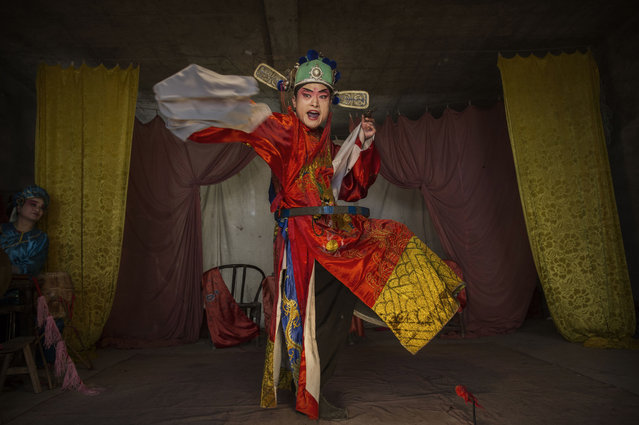
Sichuan Opera performer Wu Yonghong, 26 years, of the Jinyuan Opera Company performs for villagers at the Dongyue Temple on May 2, 2016 in Cangshan, Sichuan province, China. Sichuan opera is a vibrant, centuries-old tradition that showcases the joys and challenges of daily life in rural China with tales of love, tradition, and family honor. As the traditional audience grows older, the opera as a form of art and recreation is struggling to endure as newer spectators within younger generations are leaving the countryside for China's cities to seek employment. (Photo by Kevin Frayer/Getty Images)

Sichuan Opera performer Wu Yonghong, 26 years, of the Jinyuan Opera Company performs for villagers at the Dongyue Temple on May 2, 2016 in Cangshan, Sichuan province, China. Sichuan opera is a vibrant, centuries-old tradition that showcases the joys and challenges of daily life in rural China with tales of love, tradition, and family honor. Photo by Kevin Frayer/Getty Images)
Details
07 May 2016 13:14:00
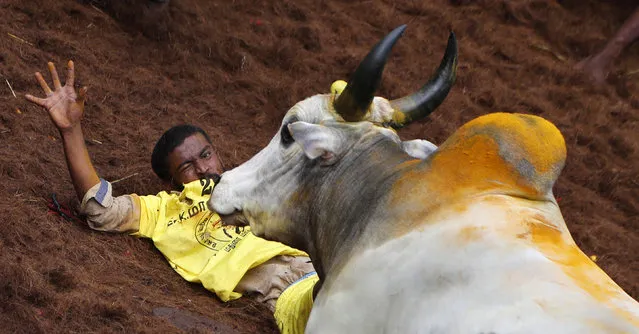
In this Thursday, January 17, 2019, photo, an Indian tamer reacts as a bull charges towards him during a traditional bull-taming festival called Jallikattu, in the village of Allanganallur, near Madurai, Tamil Nadu state, India. (Photo by Aijaz Rahi/AP Photo)

In this Thursday, January 17, 2019, photo, an Indian tamer reacts as a bull charges towards him during a traditional bull-taming festival called Jallikattu, in the village of Allanganallur, near Madurai, Tamil Nadu state, India. Jallikattu involves releasing a bull into a crowd of people who are expected to hang on to the animal's hump for a stipulated distance or hold on to the hump for a minimum of three jumps made by the bull. The sport, performed during the four-day “Pongal” or winter harvest festival, is hugely popular in Tamil Nadu. (Photo by Aijaz Rahi/AP Photo)
Details
21 Jan 2019 00:01:00
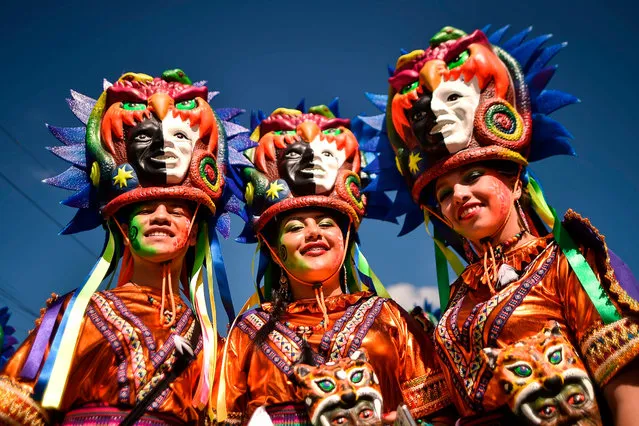
Revellers take part in the “Canto a la Tierra” parade on January 3, 2018, during the Carnival of Blacks and Whites in Pasto, Colombia, the largest festivity in the south- western region of the country. (Photo by Luis Robayo/AFP Photo)

Revellers take part in the “Canto a la Tierra” parade on January 3, 2018, during the Carnival of Blacks and Whites in Pasto, Colombia, the largest festivity in the south- western region of the country. More than 10,000 people among artists, craftsmen and revellers take part in the Blacks and Whites Carnival, which has its origins in the mix of the multiple Andean, Amazonian and Pacific cultural expressions. It is celebrated every year from January 2 to 6 in the city of Pasto and is part of UNESCO's Intangible Cultural Heritage of Humanity since 2009. (Photo by Luis Robayo/AFP Photo)
Details
10 Jan 2018 06:51:00