Loading...
Done
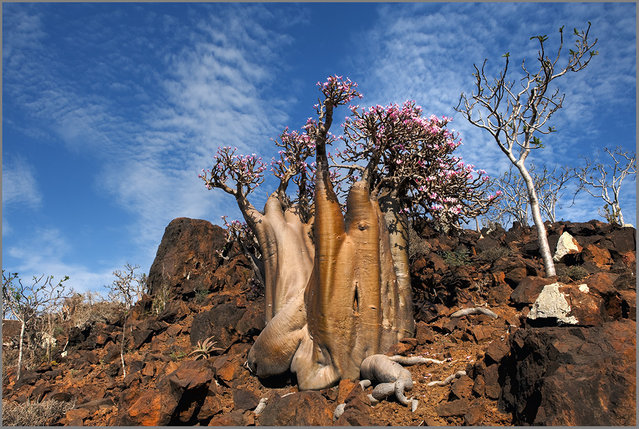
The Wonder Land of Socotra, Yemen

The largest island, also called Socotra, is about 95% of the landmass of the archipelago. It lies some 240 kilometres (150 mi) east of the Horn of Africa and 380 kilometres (240 mi) south of the Arabian Peninsula. The island is very isolated and through the process of speciation, a third of its plant life is found nowhere else on the planet. It has been described as the most alien-looking place on Earth. The island measures 132 kilometres (82 mi) in length and 49.7 kilometres (30.9 mi) in width.
Details
25 Sep 2013 09:11:00
Key Monastery illuminated on a mountain in the Spiti Valley, Himachal Pradesh, northern India with an amazing nights sky illuminated beyond. (Photo by Grey Chow/Caters News Agency)

The Tibetan night sky was captured in these beautiful images showing the stunning buildings and statues in the Himalayan mountains. Grey Chow, 33, traveled for two hours to get to the Spiti Valley to capture the starry backdrop along the isolated, deserted roads. The senior project engineer was able to take amazingly clear images thanks to the limited amount of pollution at the 4,500-foot (1371m) altitude. (Photo by Grey Chow/Caters News Agency)
Details
06 Aug 2018 00:05:00
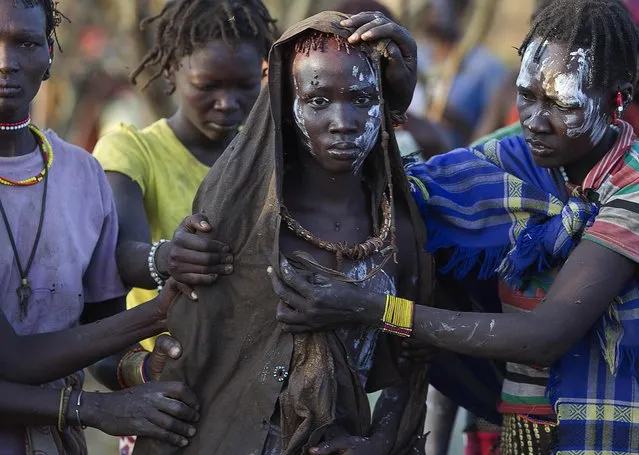
A Pokot girl, covered in animal skins, walks to a place where she will rest after being circumcised in a tribal ritual in a village about 80 kilometres from the town of Marigat in Baringo County, October 16, 2014. (Photo by Siegfried Modola/Reuters)

Reuters photographer Siegfried Modola gained access to a circumcision ceremony in rural Kenya for young girls of the Pokot tribe, in Baringo County. Here: a Pokot girl, covered in animal skins, walks to a place where she will rest after being circumcised in a tribal ritual in a village about 80 kilometres from the town of Marigat in Baringo County, October 16, 2014. (Photo by Siegfried Modola/Reuters)
Details
13 Nov 2014 14:12:00
A patient solves a rubik's cube at a temporary hospital converted from “Wuhan Livingroom” in central China's Hubei Province on February 10, 2020. In face of the outbreak of the novel coronavirus pneumonia epidemic, Wuhan authorities have transformed public venues such as exhibition centers and gymnasiums into temporary hospitals. The hospitals have a large capacity of treating patients with mild symptoms and play an important role in isolating the source of infection and cutting off the routes of infection during epidemic prevention. The first batch of patients was hospitalized on Feb. 5. (Photo by Chine Nouvelle/SIPA Press/Rex Features/Shutterstock)

A patient solves a rubik's cube at a temporary hospital converted from “Wuhan Livingroom” in central China's Hubei Province on February 10, 2020. In face of the outbreak of the novel coronavirus pneumonia epidemic, Wuhan authorities have transformed public venues such as exhibition centers and gymnasiums into temporary hospitals. The hospitals have a large capacity of treating patients with mild symptoms and play an important role in isolating the source of infection and cutting off the routes of infection during epidemic prevention. The first batch of patients was hospitalized on Feb. 5. (Photo by Chine Nouvelle/SIPA Press/Rex Features/Shutterstock)
Details
17 Feb 2020 00:07:00
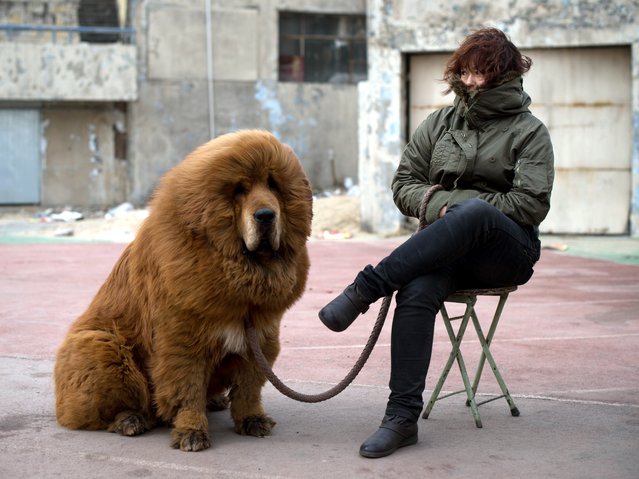
A Tibetan mastiff dog is displayed for sale at a mastiff show in Baoding, Hebei province, south of Beijing on March 9, 2013. Fetching prices up to around 750,000 USD, mastiffs have become a prized status-symbol amongst China's wealthy, with rich buyers across the country sending prices skyrocketing. Owners say the mastiffs, descendents of dogs used for hunting by nomadic tribes in central Asia and Tibet are fiercely loyal and protective. (Photo by Ed Jones/AFP Photo)

A Tibetan mastiff dog is displayed for sale at a mastiff show in Baoding, Hebei province, south of Beijing on March 9, 2013. Fetching prices up to around 750,000 USD, mastiffs have become a prized status-symbol amongst China's wealthy, with rich buyers across the country sending prices skyrocketing. Owners say the mastiffs, descendents of dogs used for hunting by nomadic tribes in central Asia and Tibet are fiercely loyal and protective. Breeders still travel to the Himalayan plateau to collect young puppies, although many are unable to adjust to the low altitudes and die during the journey. (Photo by Ed Jones/AFP Photo)
Details
02 May 2014 09:40:00
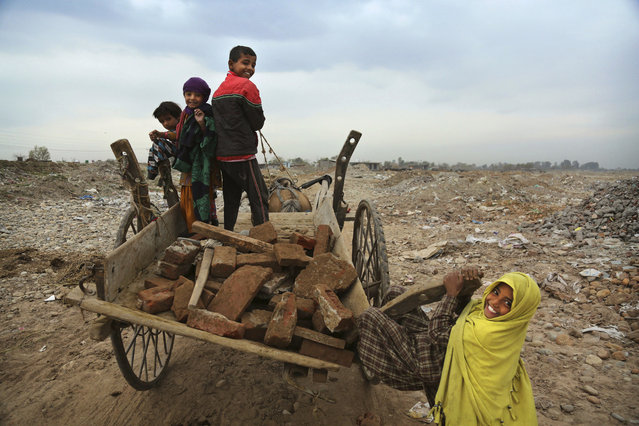
An Indian nomadic Gujjar girl hangs on to a horse cart after collecting bricks from debris on the outskirts of Jammu, India, Tuesday, March 7, 2017. The Gujjar tribal communities are considered by some to be economically and socially backward and the lack of care by the state government has led to resentment amongst the community. The tribe moves to the plains from the hills to escape the cold winters. (Photo by Channi Anand/AP Photo)

An Indian nomadic Gujjar girl hangs on to a horse cart after collecting bricks from debris on the outskirts of Jammu, India, Tuesday, March 7, 2017. The Gujjar tribal communities are considered by some to be economically and socially backward and the lack of care by the state government has led to resentment amongst the community. The tribe moves to the plains from the hills to escape the cold winters. (Photo by Channi Anand/AP Photo)
Details
09 Jun 2017 06:36:00
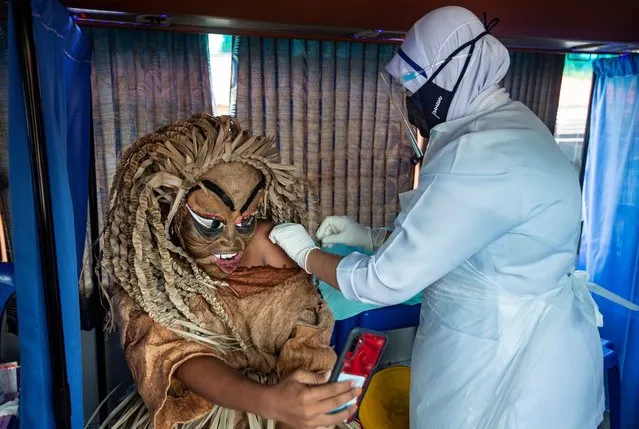
An indigenous man of Mahmeri tribe wearing a costume of Puteri Gunung Ledang character receives a dose of the vaccine against Covid-19 in Banting, near Kuala Lumpur, Malaysia,15 August 2021. Malaysia recorded another 20,670 new Covid-19 cases on 14 August, bringing the cumulative total to 1,384,353 cases. (Photo by Ahmad Yusni/EPA/EFE)

An indigenous man of Mahmeri tribe wearing a costume of Puteri Gunung Ledang character receives a dose of the vaccine against Covid-19 in Banting, near Kuala Lumpur, Malaysia,15 August 2021. Malaysia recorded another 20,670 new Covid-19 cases on 14 August, bringing the cumulative total to 1,384,353 cases. (Photo by Ahmad Yusni/EPA/EFE)
Details
03 Sep 2021 08:25:00
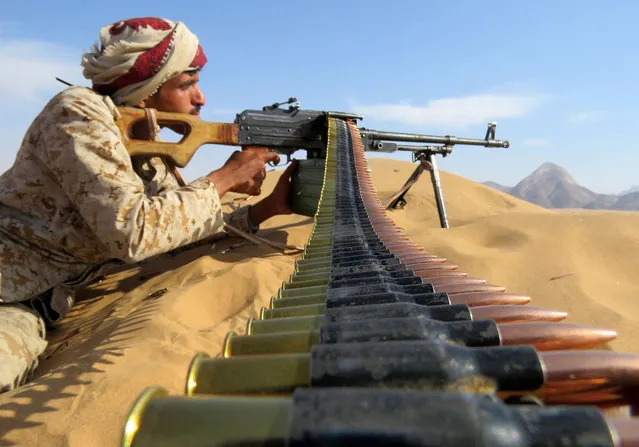
A Yemeni pro-government fighter is pictured during fighting with Huthi rebels on the south frontline of Marib, the last remaining government stronghold in northern Yemen, on November 10, 2021. A Yemeni military official said that 28 fighters from the pro-government Obaida tribe and seven government forces were killed in clashes with rebels south of Marib over the previous 24 hours. (Photo by AFP Photo/Stringer)

A Yemeni pro-government fighter is pictured during fighting with Huthi rebels on the south frontline of Marib, the last remaining government stronghold in northern Yemen, on November 10, 2021. A Yemeni military official said that 28 fighters from the pro-government Obaida tribe and seven government forces were killed in clashes with rebels south of Marib over the previous 24 hours. (Photo by AFP Photo/Stringer)
Details
04 Dec 2021 07:56:00