Loading...
Done
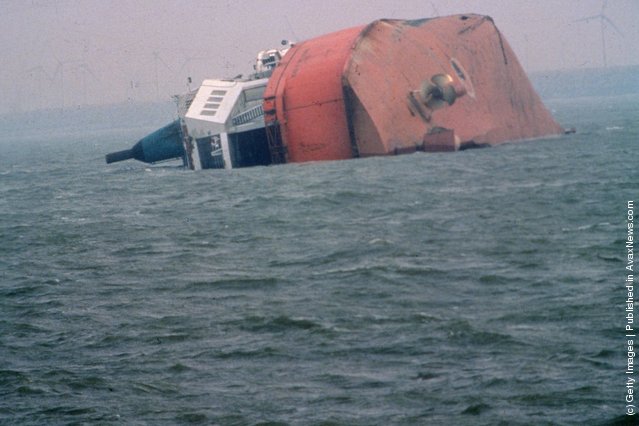
The wreck of the Herald of Free Enterprise, which capsized near Zeebrugge on the 6th of March 1987

“MS Herald of Free Enterprise was a roll-on roll-off (RORO) car and passenger ferry owned by Townsend Thoresen. She was one of three ships commissioned by the company to operate on the Dover–Calais route across the English Channel. The ferry capsized on the night of 6 March 1987, moments after leaving the Belgian port of Zeebrugge, killing 193 passengers and crew. This was the deadliest maritime disaster involving a British ship in peacetime since the sinking of the Iolaire in 1919”. – Wikipedia

Photo: The wreck of the Herald of Free Enterprise, which capsized near Zeebrugge on the 6th of March 1987. (Photo by Hulton Archive/Getty Images). 1987
Details
06 Mar 2012 13:26:00
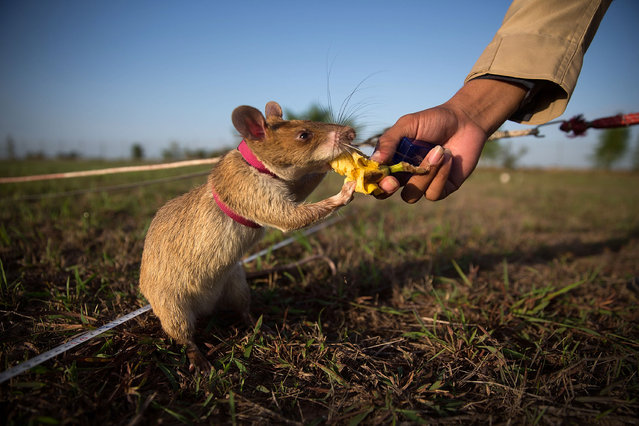
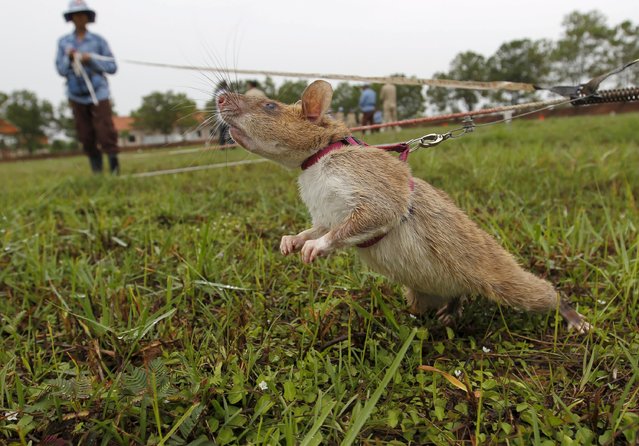
A mine detection rat is given banana as a reward after successfully identifying an inactive mine on July 2, 2015 in Siem Reap, Cambodia. (Photo by Taylor Weidman/Getty Images)

A mine detection rat is given banana as a reward after successfully identifying an inactive mine on July 2, 2015 in Siem Reap, Cambodia. The Cambodian Mine Action Center (CMAC) working with the Belgian NGO APOPO has recently begun testing the feasability of using large mine detection rats from Tanzania to help clear fields of mines and unexploded ordnance in one of the most bombed and mined countries in the world. (Photo by Taylor Weidman/Getty Images)
Details
03 Jul 2015 13:31:00
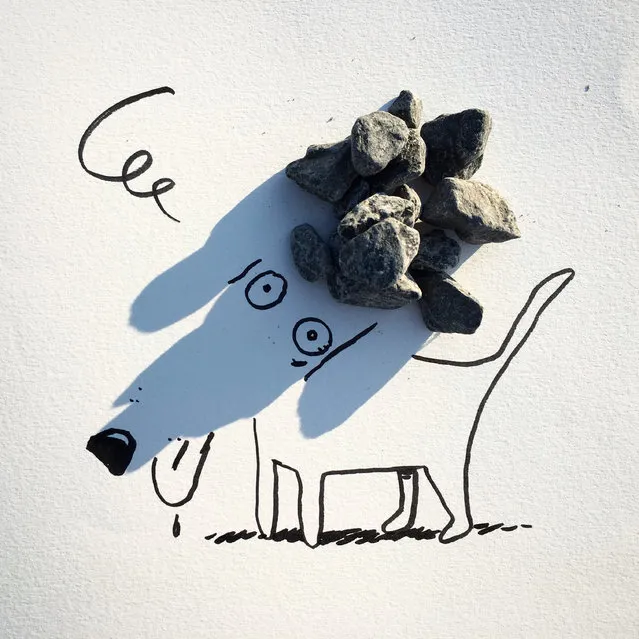
“Stonedog”. (Photo by Vincent Bal/The Guardian)

Earlier this year, Belgian film-maker and artist Vincent Bal stumbled upon an uncanny resemblance to an elephant in the shadow of his tea cup. This gave him the idea for Shadowology, a series of doodles that interact with the shadows of simple, everyday objects: a banknote, some ice cubes and a flower, for example, can turn into a church, a woman and a hippy. “I draw a few lines and I get my image. It’s really the shadows that inspire me”, Bal says. Here: “Stonedog”. (Photo by Vincent Bal/The Guardian)
Details
02 Oct 2016 08:28:00
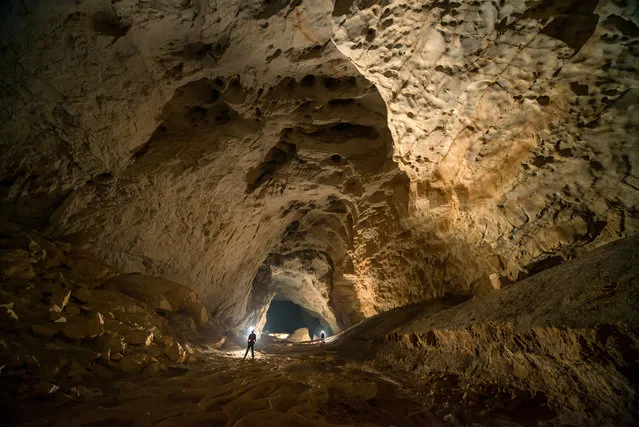
Caving expedition in Fengshan, China, Guangxi province. (Photo by Francois-Xavier De Ruydts/Caters News)

“Adventurers have gone deep underground to discover previously unexplored caves in these pictures. The awe-inspiring snaps show the cavers dwarfed by the huge series natural rock chambers in the Leye – Fengshan Geopark, China. Belgian photographer Francois-Xavier De Ruydts, 33, captured the team of explorers as they trekked through the deep wonderground in January 2014”. – Caters News. Here: Caving expedition in Fengshan, China, Guangxi province. (Photo by Francois-Xavier De Ruydts/Caters News)
Details
29 Oct 2014 12:08:00
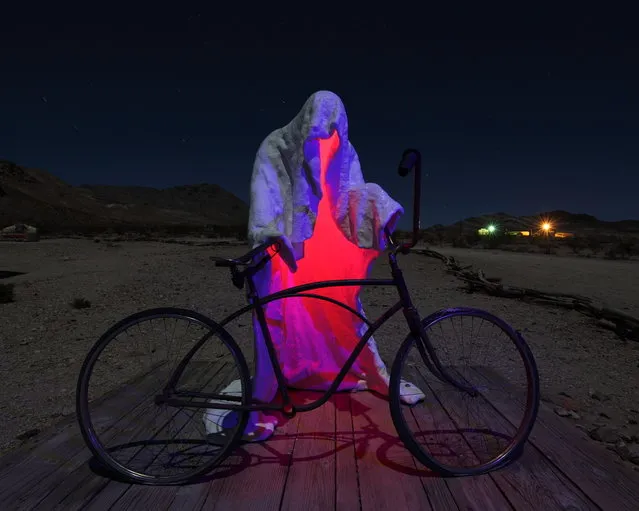
Goldwell Open Air Museum: Last Supper

Just outside of a Nevada ghost town, Rhyolite, is the Goldwell Open Air Museum. The museum was created by a group of Belgian artists and consists of seven outdoor sculptures dramatically using the Mojae Desert as a backdrop. The Last Supper, created by the late artist Charles Szukalski, is a piece that was due to last only a couple of years but withstood time and nature since 1984. Men from the local community were covered in linen and plaster to create the eerie forms, reminiscent of Da Vinci's last supper. It is a truly unique environment and piece of art in the great American desert.
Details
03 Feb 2013 13:13:00
A rat being trained by the Cambodian Mine Action Centre (CMAC) is pictured on an inactive landmine field in Siem Reap province July 9, 2015. Gambian pouched rats were deployed to Cambodia from Tanzania in April by a Belgian non-profit organization, APOPO, to help clear mines. (Photo by Samrang Pring/Reuters)

A rat being trained by the Cambodian Mine Action Centre (CMAC) is pictured on an inactive landmine field in Siem Reap province July 9, 2015. Gambian pouched rats were deployed to Cambodia from Tanzania in April by a Belgian non-profit organization, APOPO, to help clear mines. They've been trained since they were 4 weeks old. Cambodia is still littered with landmines after emerging from decades of civil war, including the 1970s Khmer Rough “Killing Fields” genocide, leaving it with one of the world's highest disability rates. APOPO has used the rodents for mine-clearing projects in several countries, including Angola, Mozambique, Thailand, Laos, and Vietnam. (Photo by Samrang Pring/Reuters)
Details
14 Jul 2015 13:35:00
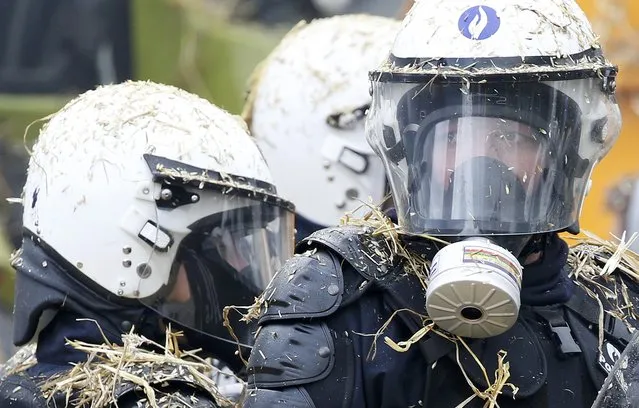
Belgian riot police officers are covered by hay and eggs thrown by demonstrators as farmers and dairy farmers from all over Europe take part in a demonstration outside an European Union farm ministers emergency meeting at the EU Council headquarters in Brussels, Belgium, September 7, 2015. (Photo by Jacky Naegelen/Reuters)

Belgian riot police officers are covered by hay and eggs thrown by demonstrators as farmers and dairy farmers from all over Europe take part in a demonstration outside an European Union farm ministers emergency meeting at the EU Council headquarters in Brussels, Belgium, September 7, 2015. Thousands of farmers gathered in the European capital calling for more help with low prices and high costs. (Photo by Jacky Naegelen/Reuters)
Details
08 Sep 2015 11:17:00
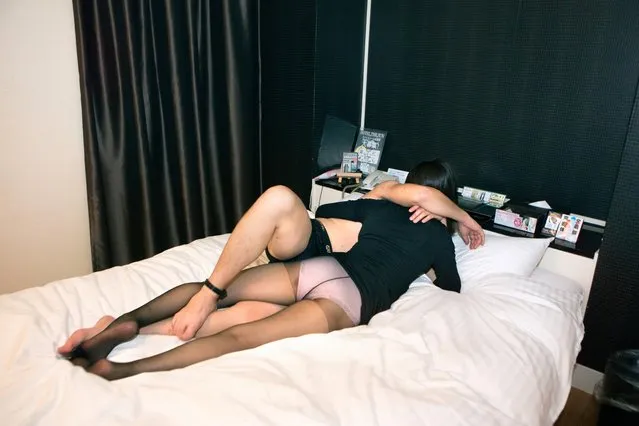
For her series “Japanese Whispers”, Belgian photographer Zaza Bertrand headed inside the intimate world of rabuhos – Japanese love hotels. Love hotels became popular in Japan from the 1960s onwards, due to a lack of privacy in many family homes. There are now around 37,000 of these hotels in Japan, allowing short daytime “rests” or overnight stays. (Photo by Zaza Bertrand/The Guardian)

For her series “Japanese Whispers”, Belgian photographer Zaza Bertrand headed inside the intimate world of rabuhos – Japanese love hotels. Love hotels became popular in Japan from the 1960s onwards, due to a lack of privacy in many family homes. There are now around 37,000 of these hotels in Japan, allowing short daytime “rests” or overnight stays. (Photo by Zaza Bertrand/The Guardian)
Details
02 Dec 2016 11:30:00