Loading...
Done
Wooden Churches - Travelling In The Russian North By Richard Davies Part 2

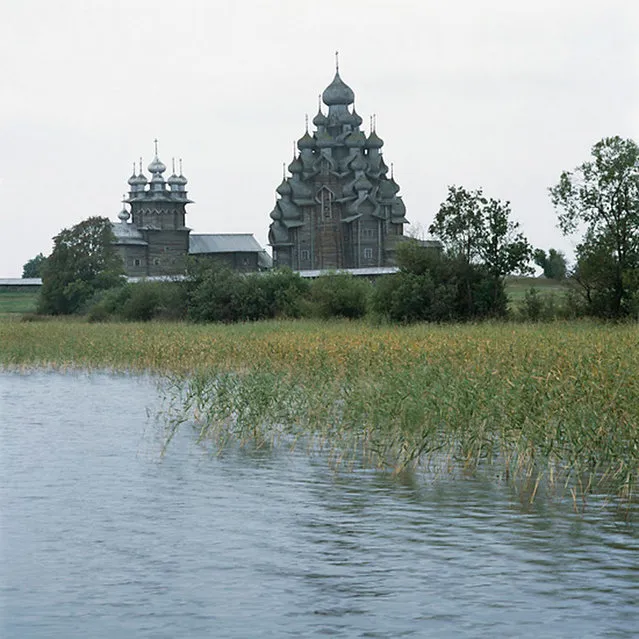
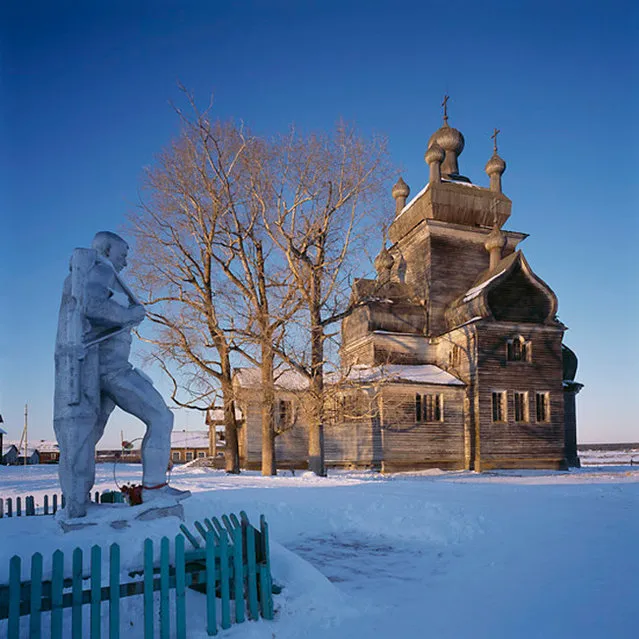
While communism, collectivism, worms, dry rot and casual looting failed to destroy the majestic wooden churches of Russia, it may be ordinary neglect that finally does them in. Dwindled now to several hundred remaining examples, these glories of vernacular architecture lie scattered amid the vastness of the world’s largest country. Just over a decade ago, Richard Davies, a British architectural photographer, struck out on a mission to record the fragile and poetic structures. Austerely beautiful and haunting, “Wooden Churches: Traveling in the Russian North” (White Sea Publishing; $132) is the result. Covering thousands of miles, Mr. Davies described how he and the writer Matilda Moreton tracked down the survivors from among the thousands of onion-domed structures built after Prince Vladimir converted to Christianity in 988.

See also: Wooden Churches Part1
Details
28 Nov 2013 12:13:00
Taiwanese-US artist Chin Chih Yang poses for a photograph with 30,000 aluminum cans after his performance called “Kill Me or Change” in Taipei, Taiwan, 23 April 2016. “Kill Me or Change!” is a performance piece that aims to raise awareness of the benefits of recycling and, encourage people to recycle to conserve resources. (Photo by Ritchie B. Tongo/EPA)

Taiwanese-US artist Chin Chih Yang poses for a photograph with 30,000 aluminum cans after his performance called “Kill Me or Change” in Taipei, Taiwan, 23 April 2016. “Kill Me or Change!” is a performance piece that aims to raise awareness of the benefits of recycling and, encourage people to recycle to conserve resources. (Photo by Ritchie B. Tongo/EPA)
Details
24 Apr 2016 09:53:00
Wooden Churches - Travelling In The Russian North By Richard Davies Part 1

While communism, collectivism, worms, dry rot and casual looting failed to destroy the majestic wooden churches of Russia, it may be ordinary neglect that finally does them in. Dwindled now to several hundred remaining examples, these glories of vernacular architecture lie scattered amid the vastness of the world’s largest country. Just over a decade ago, Richard Davies, a British architectural photographer, struck out on a mission to record the fragile and poetic structures. Austerely beautiful and haunting, “Wooden Churches: Traveling in the Russian North” (White Sea Publishing; $132) is the result. Covering thousands of miles, Mr. Davies described how he and the writer Matilda Moreton tracked down the survivors from among the thousands of onion-domed structures built after Prince Vladimir converted to Christianity in 988.
Details
25 Nov 2013 12:47:00
“Shoot Me to the Stars”. (Photo and comment by Dave Morrow)

“Shoot Me to the Stars”. (Photo and comment by Dave Morrow)

Details
22 Feb 2013 16:23:00
“Don't look at me, I'm not ready!!!!” (Photo and caption by Yves Lecoq)

“Don't look at me, I'm not ready!!!!” (Photo and caption by Yves Lecoq)
Details
11 Apr 2015 09:25:00
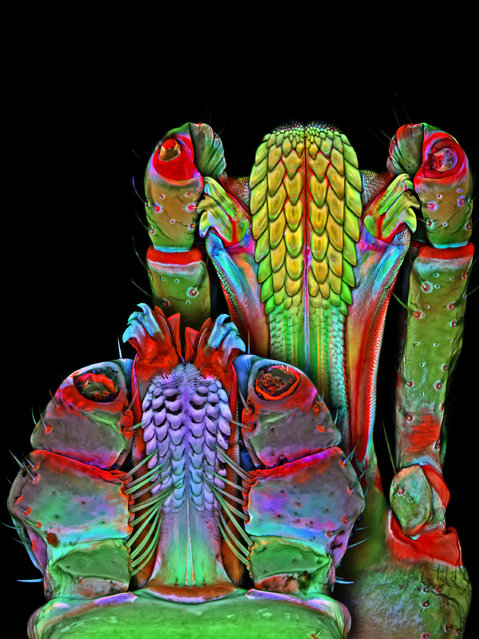
Underside of the Brown dog tick and Lonestar tick mouthparts; Confocal, 100X. Janelia Farm Research Campus, Howard Hughes Medical Institute (HHMI), Ashburn, Virginia, USA. (Photo by Dr. Igor Robert Siwanowicz/Nikon Small World 2014)

Now celebrating its 40th year, Nikon Small World is widely regarded as the leading forum to recognize proficiency and photographic excellence of photography taken under the microscope. To select the winners, competition judges analyzed entries from all over the world covering subjects ranging from chemical compounds to up-close-and-personal looks at biological specimens. The 2014 winners will be revealed on October 30th. In 2014, the competition received over 1,200 entries from more than 79 countries around the world. (Photo by Dr. Igor Robert Siwanowicz/Nikon Small World 2014)
Details
17 Oct 2014 13:10:00
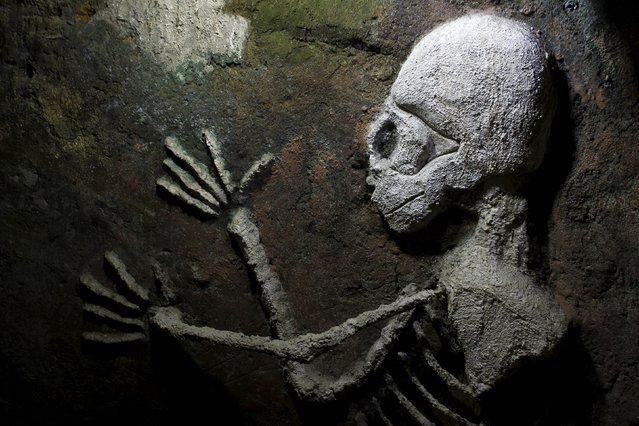
A figure of a skeleton is seen painted in a hallway of the house built underground by Manuel Barrantes in San Isidro de Perez Zeledon, Costa Rica, March 14, 2016. (Photo by Juan Carlos Ulate/Reuters)

A figure of a skeleton is seen painted in a hallway of the house built underground by Manuel Barrantes in San Isidro de Perez Zeledon, Costa Rica, March 14, 2016. Barrantes started digging through red soil and volcanic rock on his farm 12 years ago to build his subterranean house, between 15 and 63 feet (4.57 and 19.2m) underground. The dwelling, which Barrantes says provides a peaceful and comfortable home for him and his family away from noise pollution and the effects of climate change, now covers about 2,000 square feet (185.8 square metres). (Photo by Juan Carlos Ulate/Reuters)
Details
17 Mar 2016 15:34:00
“Catch a drop!”. (Photo and caption by memberx)

“Catch a drop!”. (Photo and caption by memberx)
Details
14 Jun 2013 10:43:00