Loading...
Done
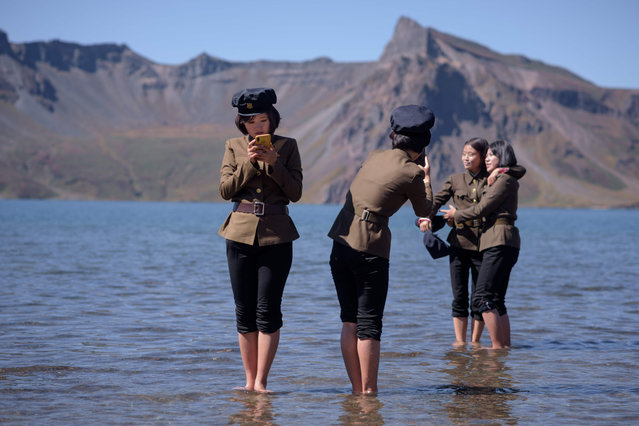
In a photo taken on September 11, 2019, North Korean students pose for photos in Chonji lake, or “Heaven lake”, as they visit the crater of Mount Paektu, near Samjiyon. Mount Paektu has long been considered the spiritual birthplace of the Korean nation and is a place of pilgrimage for tens of thousands of North Koreans every year, who are trained from birth to revere their leaders. Every year 100,000 North Koreans or more are taken on study tours to the camp, the mountain, and nearby revolutionary sites where relics of operations are preserved. Dressing in khaki uniforms said to resemble guerrillas' outfits and carrying red flags, they march to the summit of the volcano. (Photo by Ed Jones/AFP Photo)

In a photo taken on September 11, 2019, North Korean students pose for photos in Chonji lake, or “Heaven lake”, as they visit the crater of Mount Paektu, near Samjiyon. Mount Paektu has long been considered the spiritual birthplace of the Korean nation and is a place of pilgrimage for tens of thousands of North Koreans every year, who are trained from birth to revere their leaders. (Photo by Ed Jones/AFP Photo)
Details
09 Oct 2019 00:03:00
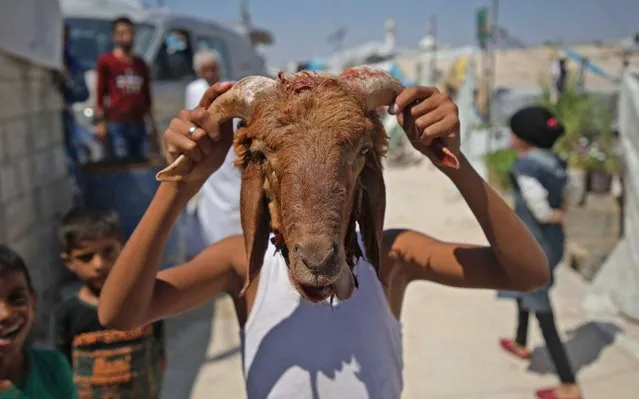
A Syrian boy plays with the head of a sacrificed sheep at a DIP camp for Interally Displaced Persons near the town of Aqrabat in Syria's northern Idlib province on August 12, 2019. Known as the “big” festival, Eid Al-Adha is celebrated each year by Muslims sacrificing various animals according to religious traditions, including cows, camels, goats and sheep. The festival marks the end of the Hajj pilgrimage to Mecca and commemorates Prophet Abraham's readiness to sacrifice his son to show obedience to God. (Photo by Aaref Watad/AFP Photo)

A Syrian boy plays with the head of a sacrificed sheep at a DIP camp for Interally Displaced Persons near the town of Aqrabat in Syria's northern Idlib province on August 12, 2019. Known as the “big” festival, Eid Al-Adha is celebrated each year by Muslims sacrificing various animals according to religious traditions, including cows, camels, goats and sheep. The festival marks the end of the Hajj pilgrimage to Mecca and commemorates Prophet Abraham's readiness to sacrifice his son to show obedience to God. (Photo by Aaref Watad/AFP Photo)
Details
15 Aug 2019 00:05:00
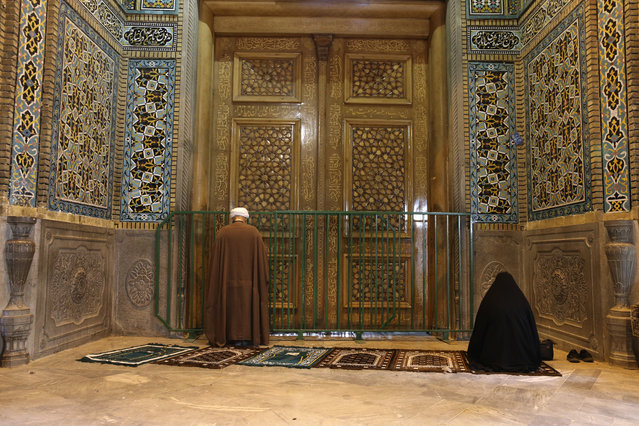
A cleric and a woman pray behind a closed door of Masoume shrine in the city of Qom, some 80 miles (125 kilometers) south of the capital Tehran, Iran, Monday, March 16, 2020. On Monday, Iran closed the Masoume shrine, a major pilgrimage site in the city of Qom, the epicenter of the country's new coronavirus outbreak. Authorities were already restricting access and barring pilgrims from kissing or touching the shrine, but it had remained open. (Photo by AP Photo)

A cleric and a woman pray behind a closed door of Masoume shrine in the city of Qom, some 80 miles (125 kilometers) south of the capital Tehran, Iran, Monday, March 16, 2020. On Monday, Iran closed the Masoume shrine, a major pilgrimage site in the city of Qom, the epicenter of the country's new coronavirus outbreak. Authorities were already restricting access and barring pilgrims from kissing or touching the shrine, but it had remained open. (Photo by AP Photo)
Details
23 Mar 2020 00:01:00
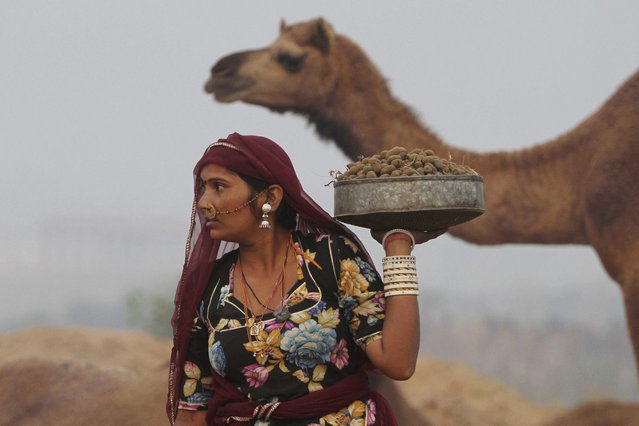
An Indian woman collects camel dung during the annual cattle fair in Pushkar, in the western Indian state of Rajasthan, Sunday, November 10, 2013. Pushkar, located on the banks of Pushkar Lake, is a popular Hindu pilgrimage spot that is also frequented by foreign tourists who come to the town for the annual cattle fair and camel races. (Photo by Ajit Solanki/AP Photo)

An Indian woman collects camel dung during the annual cattle fair in Pushkar, in the western Indian state of Rajasthan, Sunday, November 10, 2013. Pushkar, located on the banks of Pushkar Lake, is a popular Hindu pilgrimage spot that is also frequented by foreign tourists who come to the town for the annual cattle fair and camel races. (Photo by Ajit Solanki/AP Photo)
Details
11 Nov 2013 10:59:00
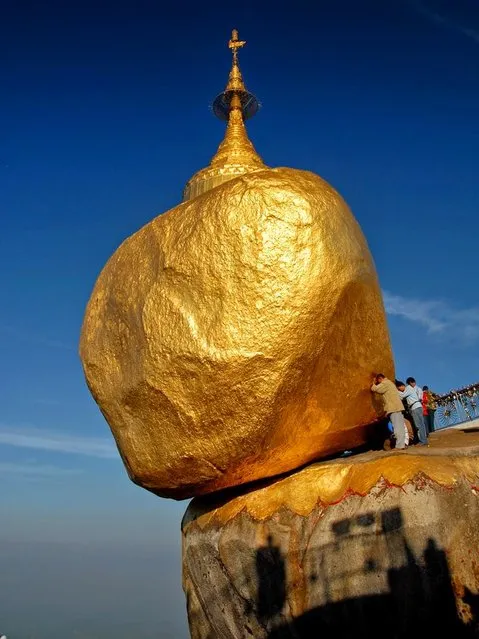
 Kyaiktiyo Pagoda AKA  Golden Rock In Burma

Kyaiktiyo Pagoda, also known as Golden Rock is a well-known Buddhist pilgrimage site in Mon State, Burma. It is a small pagoda (7.3 metres (24 ft)) built on the top of a granite boulder covered with gold leaves pasted on by devotees. According to legend, the Golden Rock itself is precariously perched on a strand of the Buddha's hair. The balancing rock seems to defy gravity, as it perpetually appears to be on the verge of rolling down the hill. The rock and the pagoda are at the top of Mt. Kyaiktiyo. It is the third most important Buddhist pilgrimage site in Burma after the Shwedagon Pagoda and the Mahamuni Pagoda. A glimpse of the "gravity defying" Golden Rock is believed to be enough of an inspiration for any person to turn to Buddhism.
Details
04 Jun 2015 11:42:00
A Christian pilgrim prays during her visit to the baptismal site known as Qasr el-Yahud on the banks of the Jordan River near the West Bank city of Jericho April 9, 2015. (Photo by Amir Cohen/Reuters)

A Christian pilgrim prays during her visit to the baptismal site known as Qasr el-Yahud on the banks of the Jordan River near the West Bank city of Jericho April 9, 2015. A day ahead of Orthodox Good Friday, the Easter period draws many Christian tourists to visit well-known religious sites, including Qasr el-Yahud, where it is believed John the Baptist baptised Jesus. (Photo by Amir Cohen/Reuters)
Details
10 Apr 2015 06:26:00
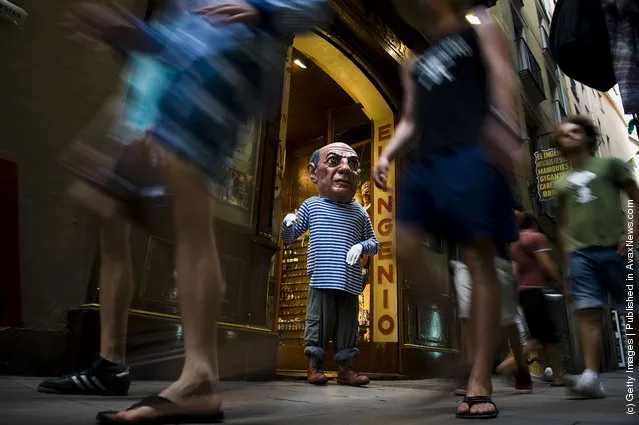
El Ingenio shop

A Pablo Picasso papier mache “huge head” mask, known as “Capgros” in Catalan, is displayed at the entrance of the “El Ingenio” shop on August 23, 2011 in Barcelona, Spain. “El Ingenio” (The Ingenuity) has been making and selling papier mache giant masks and huge heads for Catalan popular festivals since 1838. The “La Merce” festival will be held on September 24 to observe the feast day of Our Lady of Mercy, patron saint of Barcelona. (Photo by David Ramos/Getty Images)
Details
24 Aug 2011 09:14:00
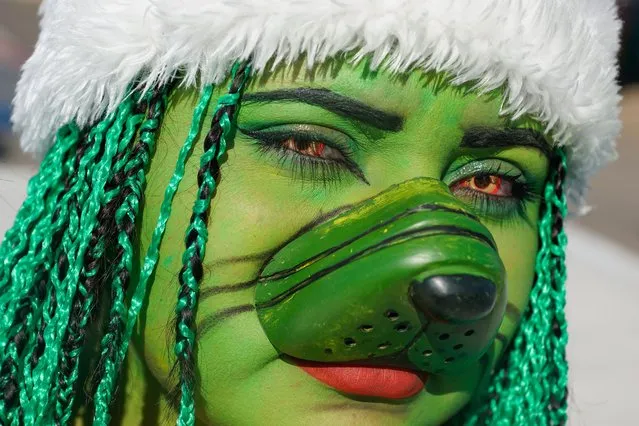
A Salvadoran clown is seen wearing colorful clothes and face make-up during the parade within the framework of the National Salvadoran Clown Day that is celebrated on the first Wednesday of every December by legislative decree in San Salvador, El Salvador on December 07, 2022. After the pandemic crisis, dozens of Salvadoran clowns took to the streets to celebrate their day, and invite families to respect the work of bringing smiles to children and adults in El Salvador. (Photo by Alex Pena/Anadolu Agency via Getty Images)

A Salvadoran clown is seen wearing colorful clothes and face make-up during the parade within the framework of the National Salvadoran Clown Day that is celebrated on the first Wednesday of every December by legislative decree in San Salvador, El Salvador on December 07, 2022. After the pandemic crisis, dozens of Salvadoran clowns took to the streets to celebrate their day, and invite families to respect the work of bringing smiles to children and adults in El Salvador. (Photo by Alex Pena/Anadolu Agency via Getty Images)
Details
16 Feb 2024 08:17:00