Loading...
Done
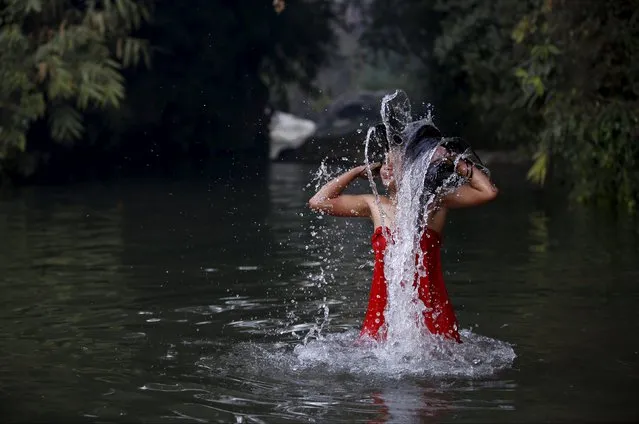
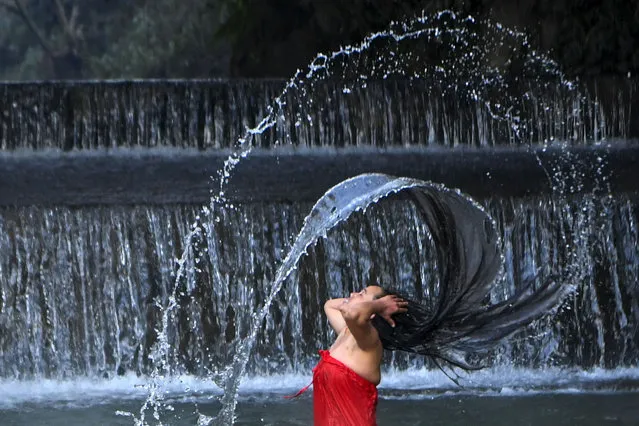
A devotee takes a holy bath in River Saali in Sankhu during the Swasthani Brata Katha festival in Kathmandu, Nepal, January 24, 2016. (Photo by Navesh Chitrakar/Reuters)

A devotee takes a holy bath in River Saali in Sankhu during the Swasthani Brata Katha festival in Kathmandu, Nepal, January 24, 2016. During the month long festival, devotees recite one chapter of a Hindu tale daily from the 31-chapter sacred Swasthani Brata Katha book that is dedicated to God Madhavnarayan and Goddess Swasthani, alongside various other gods and goddess and the miraculous feats performed by them. The devotees also go on pilgrimages to various temples, perform religious rituals, take a holy bath in the rivers and fast for a month, especially among women who believe fasting helps in their family's well-being or in getting them a good husband. (Photo by Navesh Chitrakar/Reuters)
Details
25 Jan 2016 12:05:00
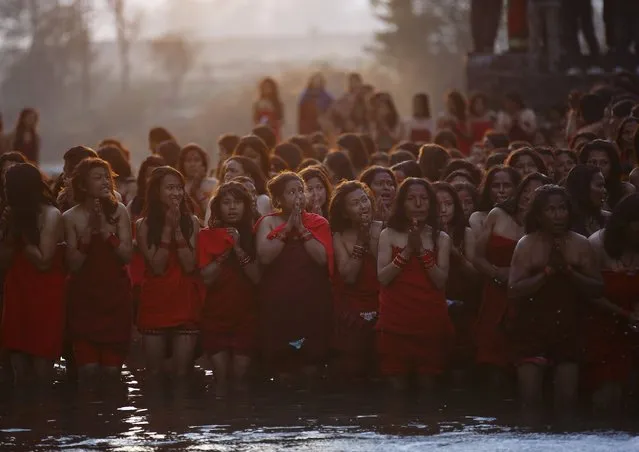
Devotees offer prayers before taking a holy bath during the Swasthani Bratakatha festival in the Triveni River in Panauti near Kathmandu January 24, 2015. (Photo by Navesh Chitrakar/Reuters)

Devotees offer prayers before taking a holy bath during the Swasthani Bratakatha festival in the Triveni River in Panauti near Kathmandu January 24, 2015. During the month long festival, devotees recite one chapter of a Hindu tale daily from the 31-chapter sacred Swasthani Brata Katha book that is dedicated to the God Madhavnarayan and the Goddess Swasthani, alongside various other gods and goddess and the miraculous feats performed by them. The devotees also go on pilgrimages to various temples, perform religious rituals, take a holy bath in the rivers and fast for a month, especially among women who believe fasting helps in their family's well-being or in getting them a good husband. (Photo by Navesh Chitrakar/Reuters)
Details
25 Jan 2015 10:02:00
An idol of Hindu goddess Durga floats in water as devotees immerse the same in the River Kuakhai after the Durga Puja festival in Bhubaneswar, India, Saturday, October 24, 2015. The immersion of idols marks the end of the festival that commemorates the slaying of a demon king by lion-riding, 10-armed goddess Durga, marking the triumph of good over evil. (Photo by Biswaranjan Rout/AP Photo)

An idol of Hindu goddess Durga floats in water as devotees immerse the same in the River Kuakhai after the Durga Puja festival in Bhubaneswar, India, Saturday, October 24, 2015. The immersion of idols marks the end of the festival that commemorates the slaying of a demon king by lion-riding, 10-armed goddess Durga, marking the triumph of good over evil. (Photo by Biswaranjan Rout/AP Photo)
Details
26 Oct 2015 08:04:00
A Nepalese devotee bows in front of a cow during the 'Gai Puja', also known as the Cow Worship Day, as part of the Tihar festival in Kathmandu, Nepal, 11 November 2015. The Tihar festival is the second most important event for Nepalese Hindus. During the celebrations people worship cows, considered the incarnation of Lord Laxmi, the god of wealth. (Photo by Narendra Shrestha/EPA)

A Nepalese devotee bows in front of a cow during the 'Gai Puja', also known as the Cow Worship Day, as part of the Tihar festival in Kathmandu, Nepal, 11 November 2015. The Tihar festival is the second most important event for Nepalese Hindus. During the celebrations people worship cows, considered the incarnation of Lord Laxmi, the god of wealth. (Photo by Narendra Shrestha/EPA)
Details
14 Nov 2015 08:05:00
Kumari Samita Bajracharya sits in front of devotees offers during a special puja at Kumari Ghar in Patan, Nepal, 09 April 2011. It is believed that worshipping Kumari and receiving tika from her reduces illness and avoid problems. Kumari, or Kumari Devi, is a “living goddess”. The word literally means virgin in Nepali. The Living Goddesses are young pre-pubescent girls that are considered to be incarnations of the Hindu Goddess of Power, Kali. The Kumari retires when she reaches puberty. (Photo by Narendra Shrestha/EPA)

Kumari Samita Bajracharya sits in front of devotees offers during a special puja at Kumari Ghar in Patan, Nepal, 09 April 2011. It is believed that worshipping Kumari and receiving tika from her reduces illness and avoid problems. Kumari, or Kumari Devi, is a “living goddess”. The word literally means virgin in Nepali. The Living Goddesses are young pre-pubescent girls that are considered to be incarnations of the Hindu Goddess of Power, Kali. The Kumari retires when she reaches puberty. (Photo by Narendra Shrestha/EPA)
Details
18 Jun 2014 12:31:00
A boy crawls under a cow during a religious ceremony celebrating the Tihar festival, also called Diwali, in Kathmandu, October 23, 2014. Hindus all over Nepal are celebrating the festival during which they worship cows, which are considered a maternal figure, and other animals. Also known as the festival of lights, devotees worship the goddess of wealth Laxmi by illuminating and decorating their homes using garlands, oil lamps, candles and colourful light bulbs. (Photo by Navesh Chitrakar/Reuters)

A boy crawls under a cow during a religious ceremony celebrating the Tihar festival, also called Diwali, in Kathmandu, October 23, 2014. Hindus all over Nepal are celebrating the festival during which they worship cows, which are considered a maternal figure, and other animals. Also known as the festival of lights, devotees worship the goddess of wealth Laxmi by illuminating and decorating their homes using garlands, oil lamps, candles and colourful light bulbs. (Photo by Navesh Chitrakar/Reuters)
Details
25 Oct 2014 13:23:00
Nepal's Kumari, or living goddess, adjusts her ornament as she watches the Rato Machindranath chariot Festival in Lalitpur, Nepal, Friday, April 24, 2015. Nepal's living goddesses are young pre-pubescent girls considered by devotees to be incarnations of a Hindu goddess. Selected as toddlers, living goddesses usually keep their positions until they reach puberty. (Photo by Niranjan Shrestha/AP Photo)

Nepal's Kumari, or living goddess, adjusts her ornament as she watches the Rato Machindranath chariot Festival in Lalitpur, Nepal, Friday, April 24, 2015. Nepal's living goddesses are young pre-pubescent girls considered by devotees to be incarnations of a Hindu goddess. Selected as toddlers, living goddesses usually keep their positions until they reach puberty. (Photo by Niranjan Shrestha/AP Photo)
Details
25 Apr 2015 10:05:00
An Indian Hindu devotee pours milk on a snake as an offering during the annual Nag Panchami festival, dedicated to the worship of snakes outside the Nagvasuki temple, in Allahabad, on July 28, 2017. (Photo by Sanjay Kanojia/AFP Photo)

An Indian Hindu devotee pours milk on a snake as an offering during the annual Nag Panchami festival, dedicated to the worship of snakes outside the Nagvasuki temple, in Allahabad, on July 28, 2017. Officially the snake charmers' profession is banned in India, but many in the country offered prayers and milk blessings to cobras and other deadly serpents on July 28 in an annual tribute. The 800,000 charmers and their young apprentices come to the fore for the Nag Panchami festival which dates back several centuries. (Photo by Sanjay Kanojia/AFP Photo)
Details
31 Jul 2017 09:17:00