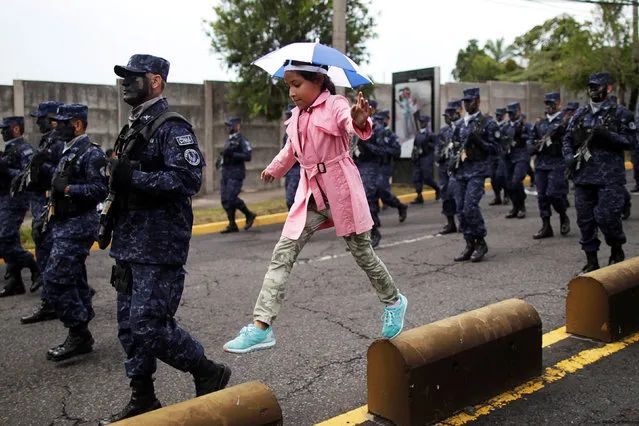
A girl marches alongside Salvadoran soldiers during the parade commemorating Independence Day in San Salvador, El Salvador September 15, 2016. (Photo by Jose Cabezas/Reuters)
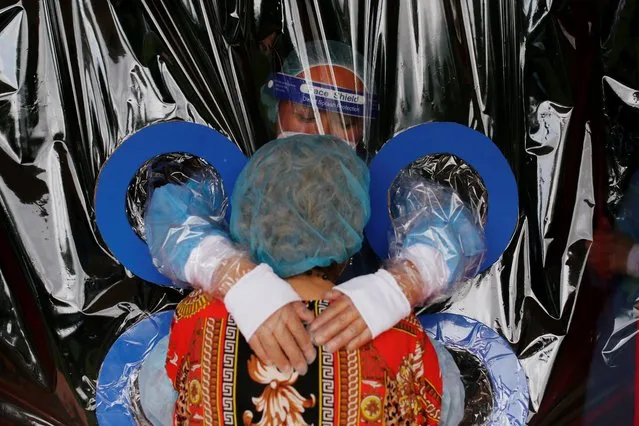
Arcelia Aguilar, a resident of “Hogar Jardin De Los Abuelitos”, receives a hug from her niece Maria Aguilar through “El muro de los Abrazos” (The Wall of Hugs) which is a wall made from plastic sheets to protect against the coronavirus, in San Salvador, El Salvador on September 1, 2020. (Photo by Jose Cabezas/Reuters)
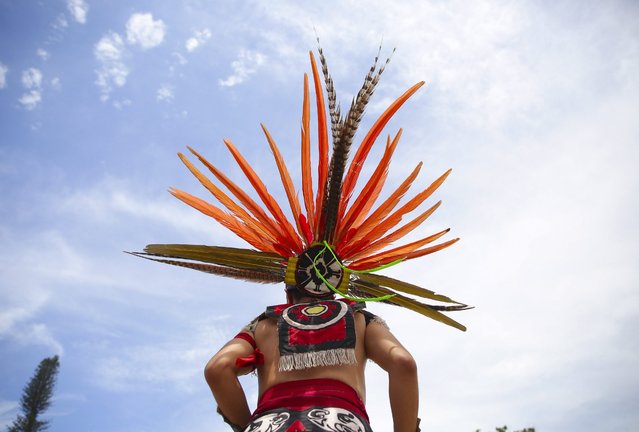
Salvadoran indigenous participate in the International Day of the Indigenous Peoples at Divino Slavador square in San Salvador, El Salvador, 09 August 2016. (Photo by Oscar Rivera/EPA)
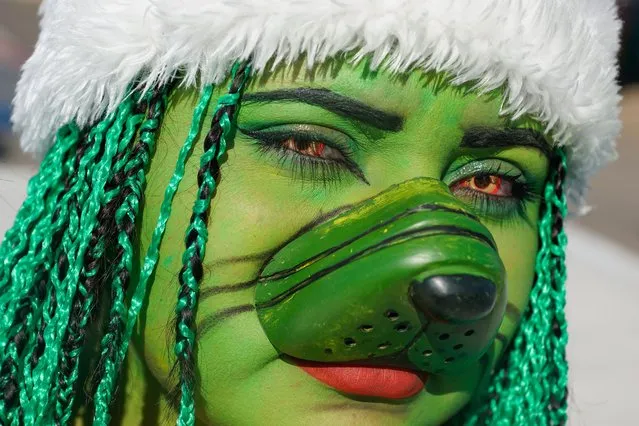
A Salvadoran clown is seen wearing colorful clothes and face make-up during the parade within the framework of the National Salvadoran Clown Day that is celebrated on the first Wednesday of every December by legislative decree in San Salvador, El Salvador on December 07, 2022. After the pandemic crisis, dozens of Salvadoran clowns took to the streets to celebrate their day, and invite families to respect the work of bringing smiles to children and adults in El Salvador. (Photo by Alex Pena/Anadolu Agency via Getty Images)
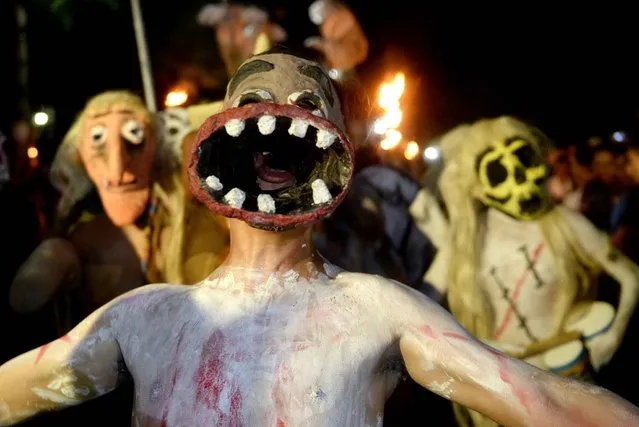
Young revelers take part in a parade called "La Calabiuza" on November 1, 2015, on the eve of the Day of the Dead in Tonacatepeque, 20 kms (13 miles) north of San Salvador. During the celebration, the residents of Tonacatepeque, originally an indigenous community, recall the characters from the mythology of Cuscatlan – pre-Columbian west and central regions of El Salvador – and their dead relatives. (Photo by Marvin Recinos/AFP Photo)
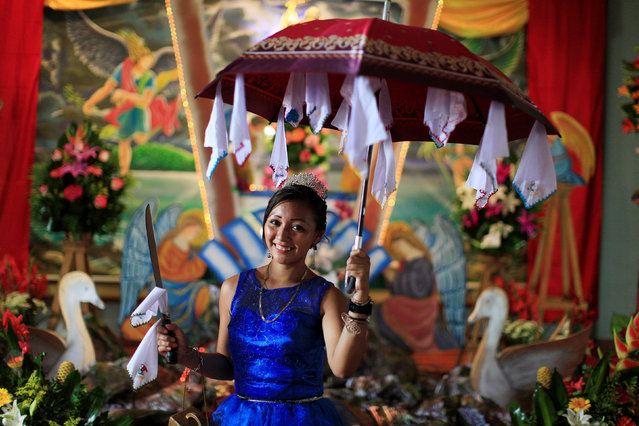
A participant in the traditional dance of Los Historiantes poses for a photo during festivities in honour of St. Michael the Archangel in San Miguel Tepezontes, El Salvador September 28, 2016. (Photo by Jose Cabezas/Reuters)