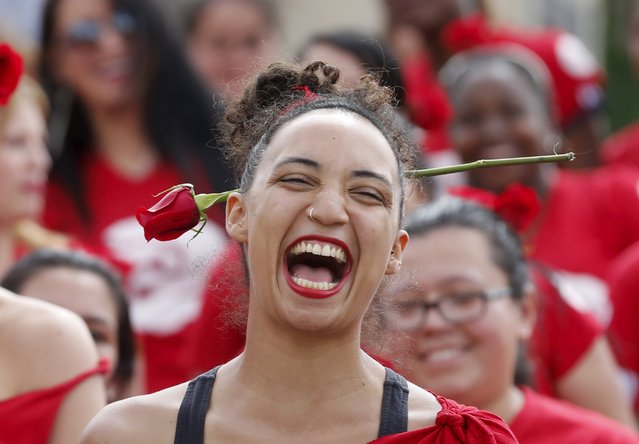
A woman performs during a march to commemorate International Day for the Elimination of Violence Against Women, in Bogota, November 25, 2015. (Photo by John Vizcaino/Reuters)
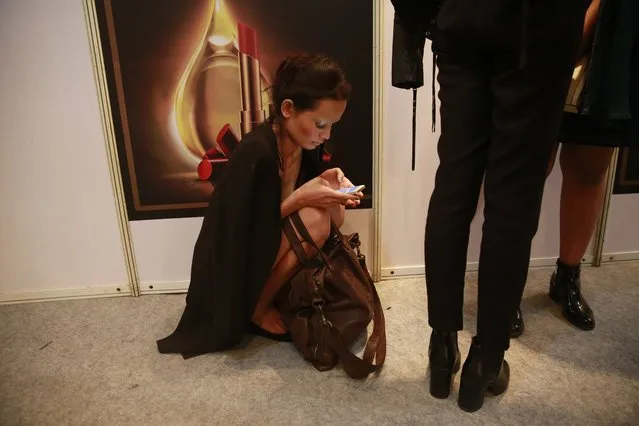
In this February 1, 2017 photo, Anjali Lama, a transgender model from Nepal, looks at her mobile phone backstage during Lakme Fashion week in Mumbai, India. Growing up as the fifth son in a poor farming family in rural Nepal the dream to be a fashion model came late in life.(Photo by Rafiq Maqbool/AP Photo)
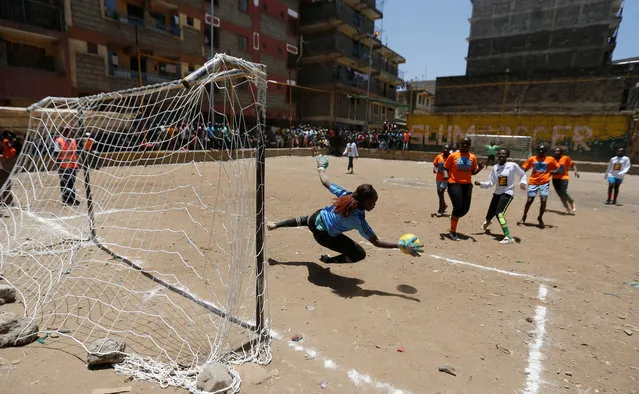
A female goalkeeper saves the ball at the Mathare Environmental Conservation Youth Center during a soccer match to celebrate the International Women's day in Nairobi, Kenya, March 8, 2017. (Photo by Thomas Mukoya/Reuters)
Photographer Pol Kurucz’s vivid collection of photos explores issues faced by black Brazilian women, from political misrepresentation to unrealistic beauty standards. Kolor Collective is a Rio de Janeiro-based creative group that challenges the struggle faced by black women in Brazil through theatrical and provocative art. It was founded in 2015 by Franco-Hungarian photographer Pol Kurucz, who often touches on his own experiences of discrimination to call out sensitive social problems. (Photo by Kolor Art Collective/The Guardian)
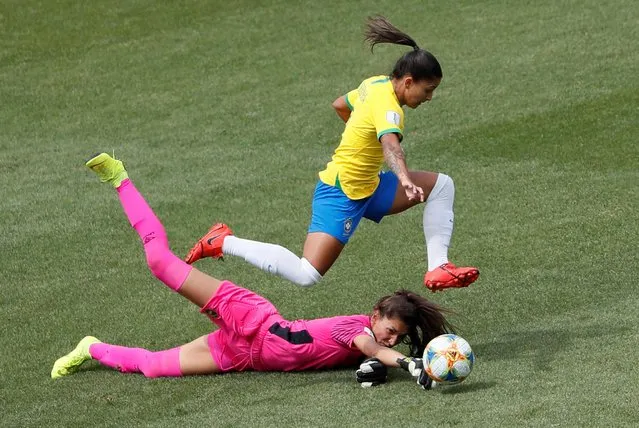
Brazil's forward Debinha (up) vies with Jamaica's goalkeeper Sydney Schneider during the France 2019 Women's World Cup Group C football match between Brazil and Jamaica on June 9, 2019, at the Alpes Stadium in Grenoble, central-eastern France. (Photo by Emmanuel Foudrot/Reuters)
This year’s World Nomad Games, a celebration of nomadic heritage, took place in the Issyk-Kul province of Kyrgyzstan. Eleanor Moseman photographed female competitors who had travelled from all over central Asia and eastern Europe, and explored the difficulties and challenges they face as competitors. (Photo by Eleanor Moseman/The Guardian)
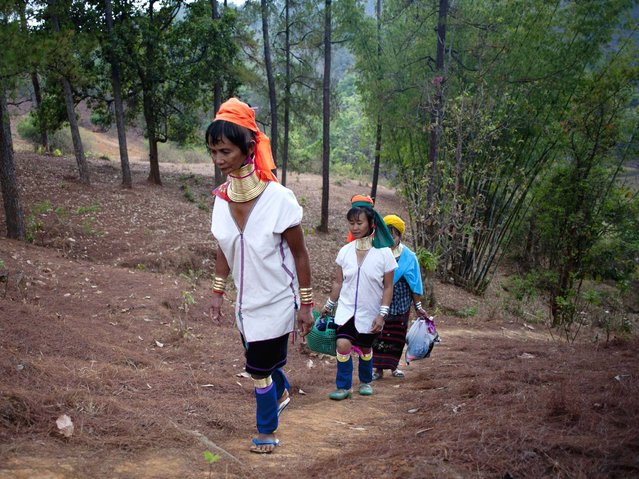
This photo taken on April 16, 2014 shows ethnic Kayan women wearing traditional clothes and bronze rings around tbeir neck in Panpet village, Demoso township in Kayah state, eastern Myanmar. Some ethnic Kayan women, also known as Padaung, begin wearing the bronze rings on their neck and legs from a young age. Usually they start wearing six to ten rings when they are five to ten-years-old and then they put on one more ring a year for years after then. (Photo by Ye Aung Thu/AFP Photo)