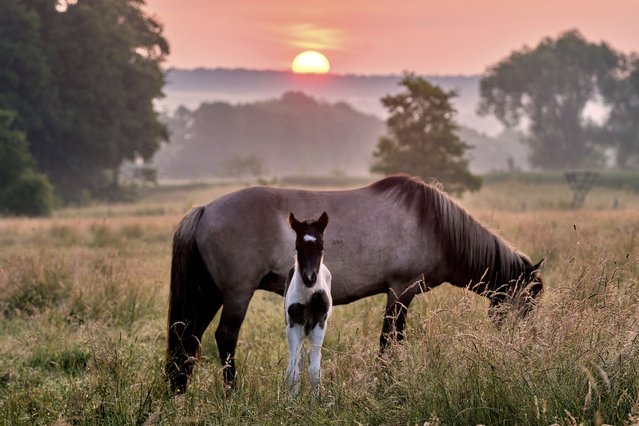
An Icelandic mare and her foal stand on a meadow at a stud farm in Wehrheim near Frankfurt, Germany, Tuesday, June 17, 2025. (Photo by Michael Probst/AP Photo)
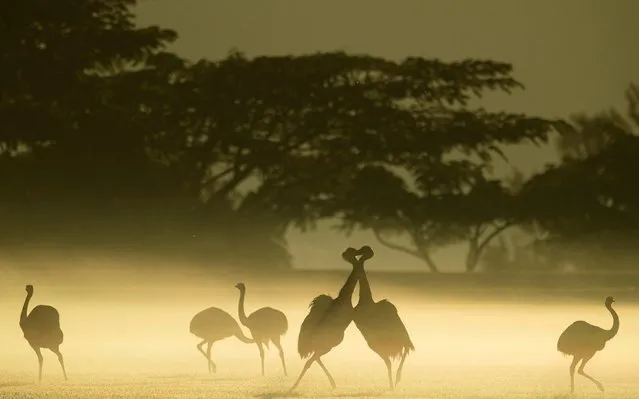
View of a group of ostriches, in the gardens of the Palacio do Alvorada, in Brasilia, Brazil, 02 June 2020. The ostrich is the largest and heaviest bird in the world. When the chicks hatch they are between 25 and 30 cm tall, weighing about 900 grams. (Photo by Joedson Alves/EPA/EFE/Rex Features/Shutterstock)
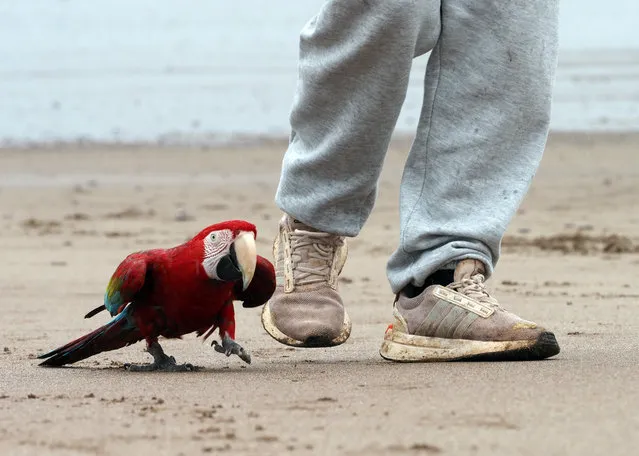
The Godson family had faced eviction over neighbours' complaints about the birds squawking and swearing. Now, after the family were targeted in a drive-by smoke-bomb attack over the birds they have upped and moved 200 miles from Hemel Hempstead, Herts, to Minehead, Somerset. And their pets join in their new idyllic coastal life – by walking along the beach with them on May 9, 2023. (Photo by Neil Hope/The Sun)
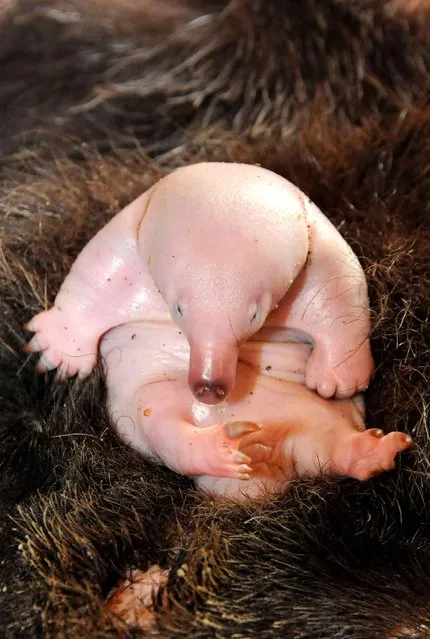
It's a 30-day-old Echidna baby, known as a “puggle” – one of only 24 ever bred in captivity. The proud parents are Tippy and Pickle of Australia Zoo. The tiny baby, whose s*x has not yet been identified, hatched from a soft egg and will continue to develop and nurse inside Tippy's warm pouch. (Photo by Australia Zoo/Rex/Sipa Press)
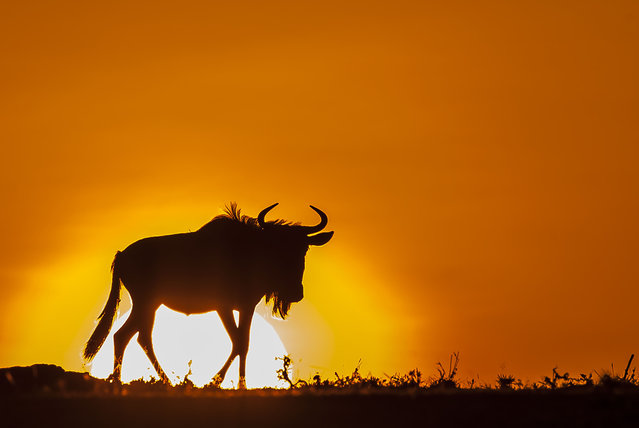
These images show off some of the world's most majestic creatures silhouetted against the beautiful rising and setting sun. The vibrant pictures feature a variety of animals in the wild and were taken by a host of photographers at locations around the world. The striking images all have one thing in common: the photographers' awe-inspiring ability to perfectly capture the silhouettes of earth's beautiful creatures. Here: a blue wildebeest moves through grassland at dawn with the sun in the background in Mara Naboisho Conservancy, Kenya, Africa. (Photo by Renato Granieri/Caters News/Ardea)
Acrobat Indira Avila leaves the ring as performer Glenn Falco warms up backstage ahead of a dress rehearsal at the newly renovated Blackpool Tower Circus, in Blackpool, Britain, March 28, 2022. (Photo by Phil Noble/Reuters)
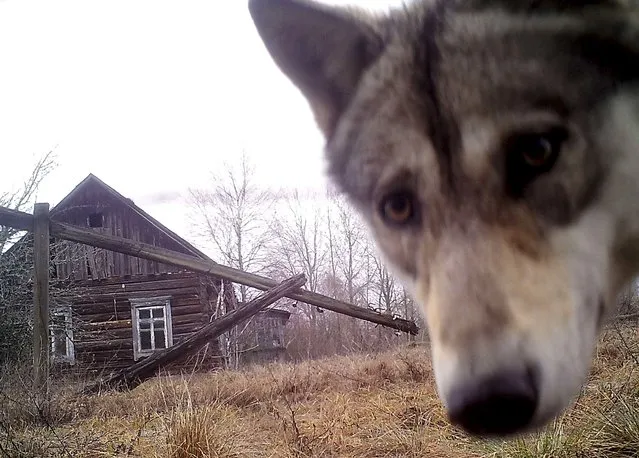
A wolf looks into the camera at the 30 km (19 miles) exclusion zone around the Chernobyl nuclear reactor in the abandoned village of Orevichi, Belarus, March 2, 2016. What happens to the environment when humans disappear? Thirty years after the Chernobyl nuclear disaster, booming populations of wolf, elk and other wildlife in the vast contaminated zone in Belarus and Ukraine provide a clue. (Photo by Vasily Fedosenko/Reuters)