Loading...
Done
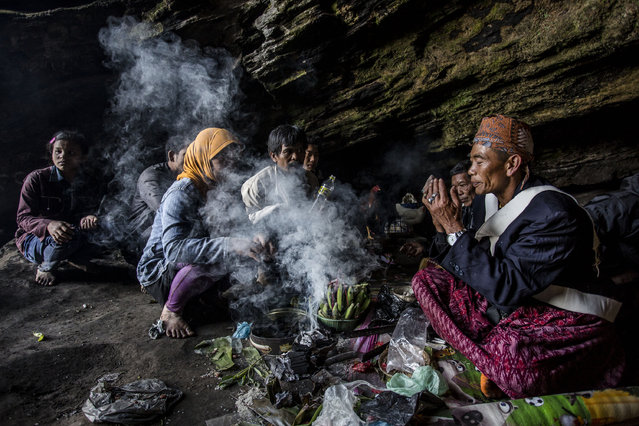
A Tenggerese shaman praying for worshippers at Widodaren cave during the Tenggerese Hindu Yadnya Kasada festival on July 31, 2015 in Probolinggo, East Java, Indonesia. The festival is the main festival of the Tenggerese people and lasts about a month. On the fourteenth day, the Tenggerese make the journey to Mount Bromo to make offerings of rice, fruits, vegetables, flowers and livestock to the mountain gods by throwing them into the volcano's caldera. (Photo by Ulet Ifansasti/Getty Images)

A Tenggerese shaman praying for worshippers at Widodaren cave during the Tenggerese Hindu Yadnya Kasada festival on July 31, 2015 in Probolinggo, East Java, Indonesia. The festival is the main festival of the Tenggerese people and lasts about a month. On the fourteenth day, the Tenggerese make the journey to Mount Bromo to make offerings of rice, fruits, vegetables, flowers and livestock to the mountain gods by throwing them into the volcano's caldera. The origin of the festival lies in the 15th century when a princess named Roro Anteng started the principality of Tengger with her husband Joko Seger, and the childless couple asked the mountain Gods for help in bearing children. The legend says the Gods granted them 24 children but on the provision that the 25th must be tossed into the volcano in sacrifice. The 25th child, Kesuma, was finally sacrificed in this way after initial refusal, and the tradition of throwing sacrifices into the caldera to appease the mountain Gods continues today. (Photo by Ulet Ifansasti/Getty Images)
Details
01 Aug 2015 12:07:00
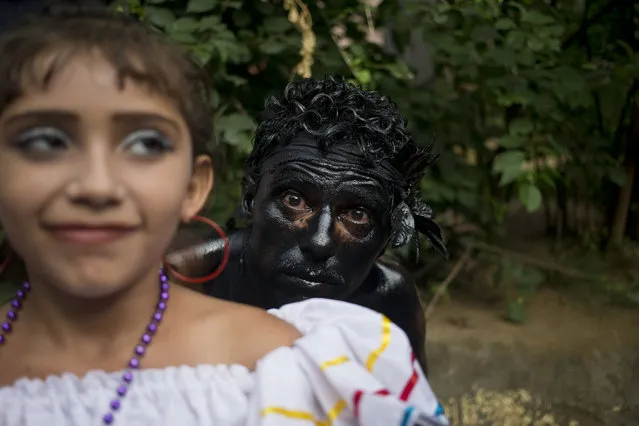
A man covered in motor oil, poses for a picture next to a girl dress a traditional clothes during a festivities in honor of Santo Domingo de Guzman in Managua, Nicaragua, Saturday, August 1, 2015. (Photo by Esteban Felix/AP Photo)

A man covered in motor oil, poses for a picture next to a girl dress a traditional clothes during a festivities in honor of Santo Domingo de Guzman in Managua, Nicaragua, Saturday, August 1, 2015. Some of the faithful coat their bodies in a black motor oil, red paint and wear traditional clothes as a promise for a prayer or miracle they believe was performed or answered by Managua's patron saint, Santo Domingo de Guzman. (Photo by Esteban Felix/AP Photo)
Details
02 Aug 2015 12:41:00
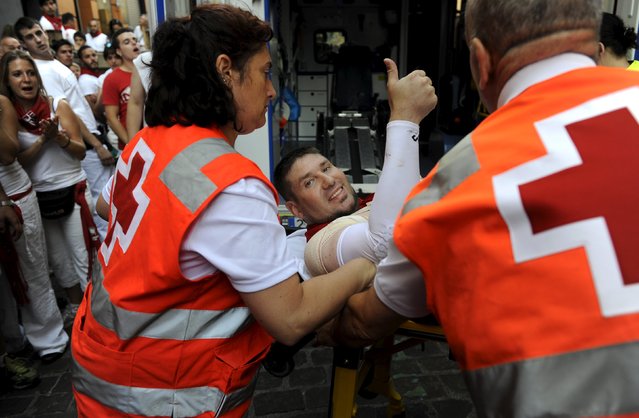
An unidentified runner gestures while being attended by medical services following the first running of the bulls of the San Fermin festival in Pamplona, northern Spain, July 7, 2015. (Photo by Eloy Alonso/Reuters)

An unidentified runner gestures while being attended by medical services following the first running of the bulls of the San Fermin festival in Pamplona, northern Spain, July 7, 2015. Two runners were gored in the run that lasted 2 minutes and 23 seconds, according to local media. (Photo by Eloy Alonso/Reuters)
Details
08 Jul 2015 11:41:00
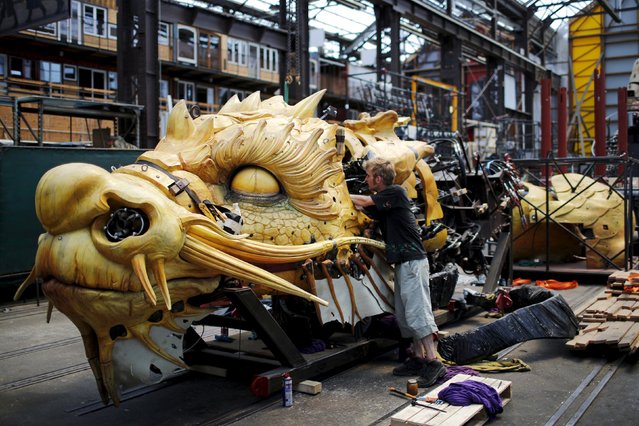
A man works on “Long Ma”, a creation by La Machine production company, during a media visit to “A Journey to Nantes” (Le Voyage a Nantes) art festival in Nantes, France, June 30, 2015. The art festival will run from July 3 to August 30. (Photo by Stephane Mahe/Reuters)

A man works on “Long Ma”, a creation by La Machine production company, during a media visit to “A Journey to Nantes” (Le Voyage a Nantes) art festival in Nantes, France, June 30, 2015. The art festival will run from July 3 to August 30. (Photo by Stephane Mahe/Reuters)
Details
02 Jul 2015 13:37:00
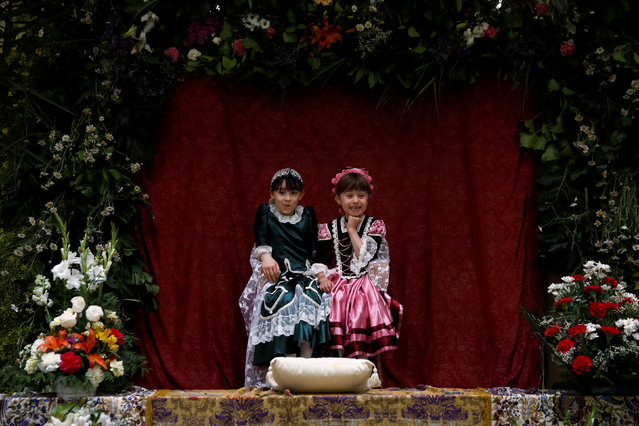
“Maya” girl Ines de la Paloma, 9, (L), sits with her friend Nuria Sanchez Caballero, 6, at an altar during “Las Mayas” festivity in Madrid, Spain, May 8, 2016. “Las Mayas” festival is held annually at the beginning of May to celebrate the awakening of nature in Spring. Young girls are chosen to become “Mayas” and sit at altars decorated with flowers so that people can admire them. The “Mayas” are dressed in traditional costumes, often displaying shawls and a wreath of flowers on their heads. (Photo by Susana Vera/Reuters)

“Maya” girl Ines de la Paloma, 9, (L), sits with her friend Nuria Sanchez Caballero, 6, at an altar during “Las Mayas” festivity in Madrid, Spain, May 8, 2016. “Las Mayas” festival is held annually at the beginning of May to celebrate the awakening of nature in Spring. Young girls are chosen to become “Mayas” and sit at altars decorated with flowers so that people can admire them. (Photo by Susana Vera/Reuters)
Details
11 May 2016 11:36:00
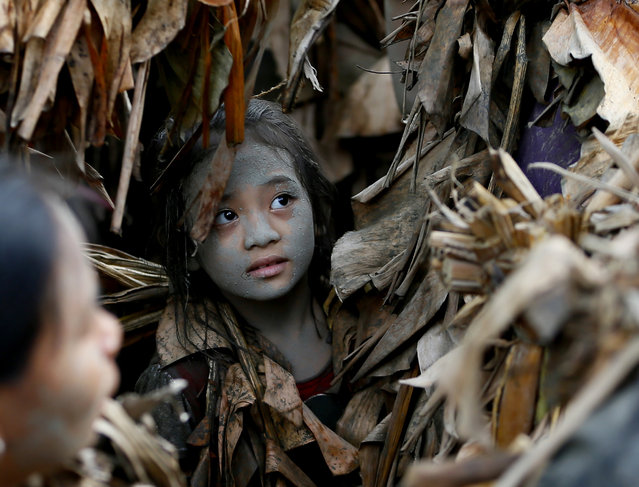
A village girl, donning capes mostly of dried banana leaves and covered in mud, attends a mass in a bizarre annual ritual to venerate their patron saint, John the Baptist, Friday, June 24, 2016 at Bibiclat, Aliaga township, Nueva Ecija province in northern Philippines. (Photo by Bullit Marquez/AP Photo)

A village girl, donning capes mostly of dried banana leaves and covered in mud, attends a mass in a bizarre annual ritual to venerate their patron saint, John the Baptist, Friday, June 24, 2016 at Bibiclat, Aliaga township, Nueva Ecija province in northern Philippines. (Photo by Bullit Marquez/AP Photo)
Details
24 Jun 2016 13:44:00
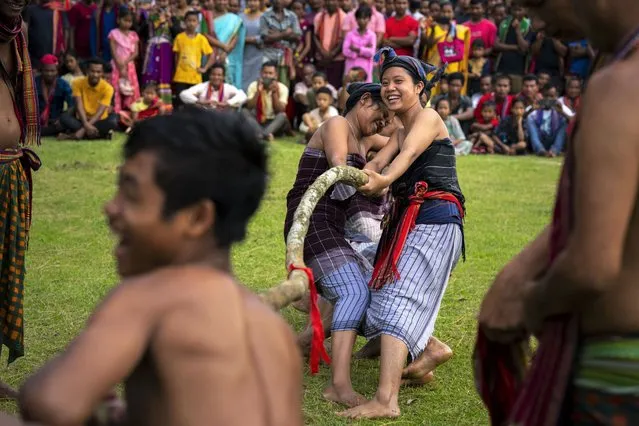
Indian Rabha tribal women in traditional attire take part in a tug of war competition with men during Baikho festival at Gamerimura village along the Assam Meghalaya border, west of Gauhati, India, Saturday, June 4, 2022. (Photo by Anupam Nath/AP Photo)

Indian Rabha tribal women in traditional attire take part in a tug of war competition with men during Baikho festival at Gamerimura village along the Assam Meghalaya border, west of Gauhati, India, Saturday, June 4, 2022. (Photo by Anupam Nath/AP Photo)

Details
09 Jun 2022 04:57:00
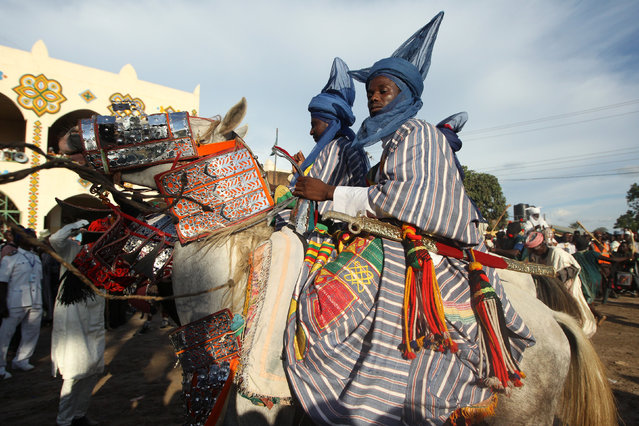
Horsemen take part in the Durbar festival parade in Zaria, Nigeria September 14, 2016. (Photo by Afolabi Sotunde/Reuters)

Horsemen take part in the Durbar festival parade in Zaria, Nigeria September 14, 2016. It is celebrated at the culmination of Muslim festivals Eid al-Fitr and Eid al-Adha. It begins with prayers, followed by a parade of the Emir and his entourage on horses, accompanied by music players, and ending at the Emir's palace. (Photo by Afolabi Sotunde/Reuters)
Details
22 Sep 2016 09:14:00