Loading...
Done
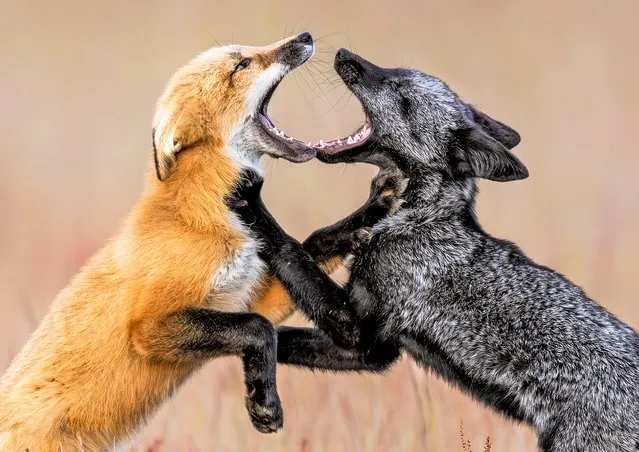
The rabbit population of San Juan Island, brought in to feed lighthouse keepers, got so big that in the 1930s foxes were introduced to kill them. Although they are red foxes, their coats can be orange, silver, black or multi-coloured. Picture date: September 2023. (Photo by Jun Zuo/Solent News)

The rabbit population of San Juan Island, brought in to feed lighthouse keepers, got so big that in the 1930s foxes were introduced to kill them. Although they are red foxes, their coats can be orange, silver, black or multi-coloured. Picture date: September 2023. (Photo by Jun Zuo/Solent News)
Details
08 Oct 2023 04:03:00
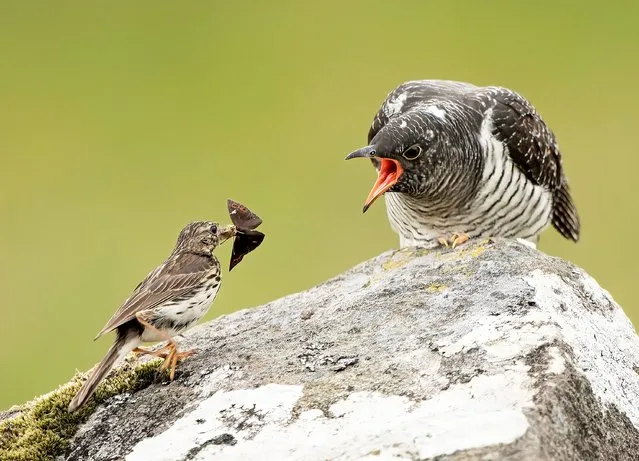
A small meadow pipit (left) is run off her feet as she tries to keep up with the demanding feeding schedule of an imposter - a larger cuckoo (right) on the Isle of Mull, Scotland in August 2022. (Photo by Graeme Cuerden/Solent News & Photo Agency)

A small meadow pipit (left) is run off her feet as she tries to keep up with the demanding feeding schedule of an imposter - a larger cuckoo (right) on the Isle of Mull, Scotland in August 2022. (Photo by Graeme Cuerden/Solent News & Photo Agency)
Details
28 Aug 2022 04:31:00
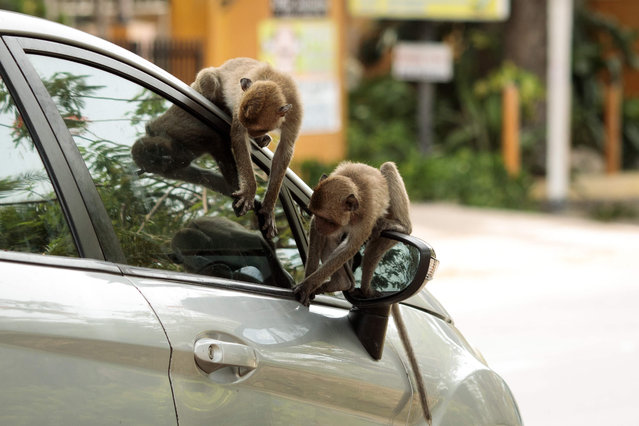
Macaque monkeys sit on a car in Hua Hin on May 29, 2020, as low tourist numbers due to the ongoing COVID-19 novel coronavirus situation have resulted in a decrease in the number of people feeding them. The monkeys in the town are going hungry as a consequence of the drop in tourism as a result of the COVID-19 coronavirus pandemic. (Photo by Jack Taylor/AFP Photo)

Macaque monkeys sit on a car in Hua Hin on May 29, 2020, as low tourist numbers due to the ongoing COVID-19 novel coronavirus situation have resulted in a decrease in the number of people feeding them. The monkeys in the town are going hungry as a consequence of the drop in tourism as a result of the COVID-19 coronavirus pandemic. (Photo by Jack Taylor/AFP Photo)
Details
22 Jun 2020 00:05:00
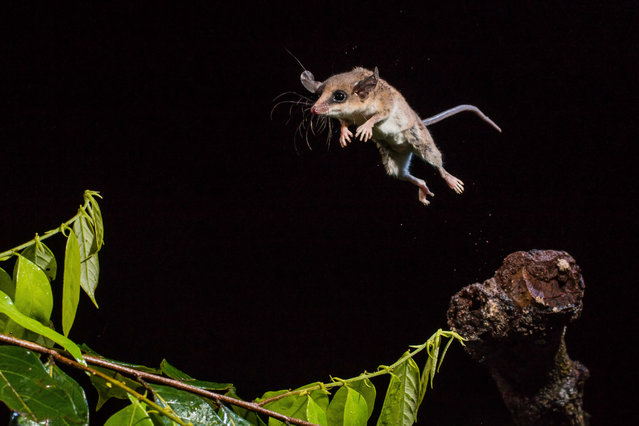
Tropical acrobatics by Adrià López Baucells in Manaus, Brazil. An unidentified South American marsupial, although the characteristic black markings on its face indicate it may be a mouse opossum. These small creatures are nocturnal and feed on bugs, fruit and bird eggs. (Photo by Adrià López Baucells/2019 Royal Society of Biology Photography Competition)

Tropical acrobatics by Adrià López Baucells in Manaus, Brazil. An unidentified South American marsupial, although the characteristic black markings on its face indicate it may be a mouse opossum. These small creatures are nocturnal and feed on bugs, fruit and bird eggs. (Photo by Adrià López Baucells/2019 Royal Society of Biology Photography Competition)
Details
10 Oct 2019 00:03:00
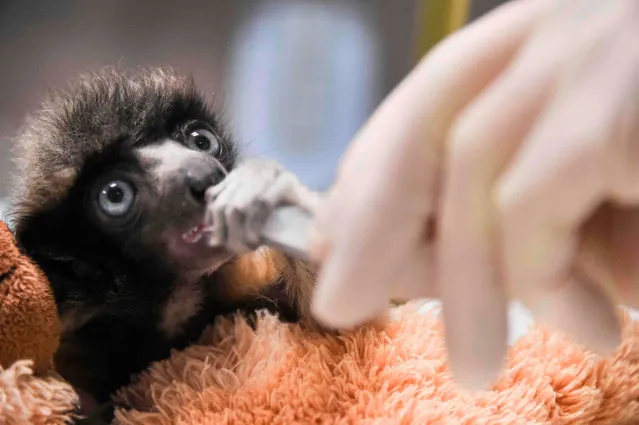
A veterinarian from the zoo of Besancon feeds “Soa”, a female crowned sifaka, in Besancon, eastern France, on February 18, 2019. The crowned sifaka is a critically endangered species from Madagascar. There were only 6 females over 20 individuals living in 7 zoos worldwide end of 2018. (Photo by Sébastien Bozon/AFP Photo)

A veterinarian from the zoo of Besancon feeds “Soa”, a female crowned sifaka, in Besancon, eastern France, on February 18, 2019. The crowned sifaka is a critically endangered species from Madagascar. There were only 6 females over 20 individuals living in 7 zoos worldwide end of 2018. (Photo by Sébastien Bozon/AFP Photo)
Details
24 Feb 2019 00:03:00
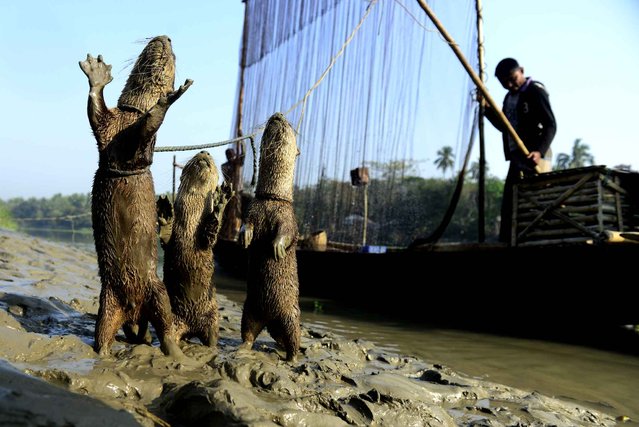
Bangladeshi fisherman feed their otters as they catch fish in Narail some 208 kms from Dhaka on March 11, 2014. The fishermen are using a rare technique that relies on coordination between man and trained otters, a centuries-old fishing partnership that has already long died out in other parts of Asia. (Photo by Munir Uz Zaman/AFP Photo)

Bangladeshi fisherman feed their otters as they catch fish in Narail some 208 kms from Dhaka on March 11, 2014. The fishermen are using a rare technique that relies on coordination between man and trained otters, a centuries-old fishing partnership that has already long died out in other parts of Asia. (Photo by Munir Uz Zaman/AFP Photo)
Details
22 Mar 2014 14:22:00
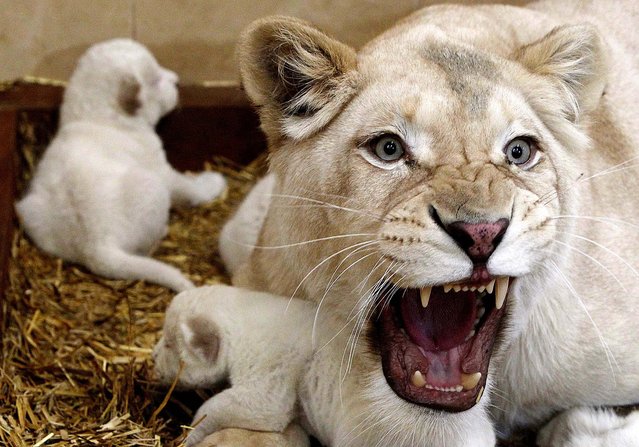
White lioness Azira lies in the cage with her three white cubs, on February 4, 2014. Zoo owner Andrzej Pabich says white lions often have defects that prevent giving birth, or the mother rejects her cubs, but Azira has been patiently feeding and caring for her little ones. (Photo by Czarek Sokolowski/Associated Press)

White lioness Azira lies in the cage with her three white cubs, on February 4, 2014. Zoo owner Andrzej Pabich says white lions often have defects that prevent giving birth, or the mother rejects her cubs, but Azira has been patiently feeding and caring for her little ones. (Photo by Czarek Sokolowski/Associated Press)
Details
08 Feb 2014 15:52:00
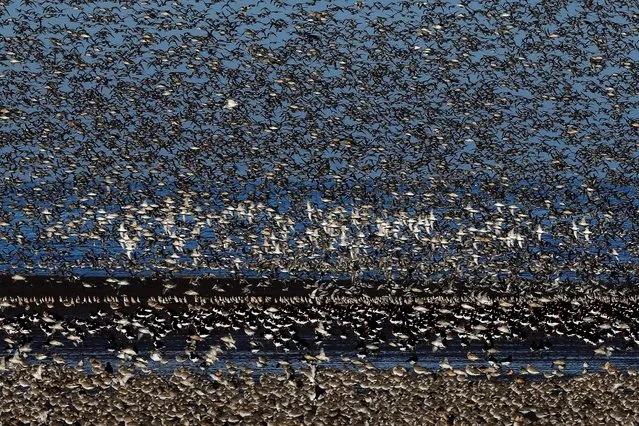
Waders flock together seeking new feeding grounds during the incoming tide. (Photo by Dan Kitwood/Getty Images via The Palm Beach Post)

“The RSPB’s Snettisham Nature Reserve lies on the edge of The Wash, one of the most important bird estuaries in the United Kingdom. The Wash, on England’s east coast, supports over 300,000 birds, and Snettisham sometimes holds more than a third of them”. – The Palm Beach Post. Photo: Waders flock together seeking new feeding grounds during the incoming tide. (Photo by Dan Kitwood/Getty Images via The Palm Beach Post)
Details
11 Sep 2013 11:18:00