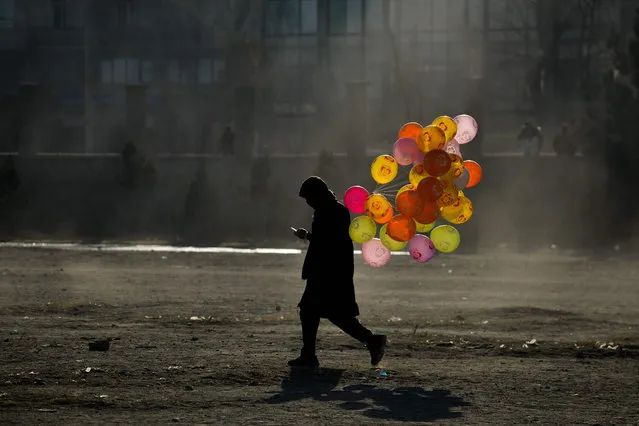
An Afghan hawker selling balloons walks along a path in a ground in Chaman-e-Hozori area in Kabul on December 10, 2021. (Photo by Ahmad Sahel Arman/AFP Photo)
American media personality Courtney Stodden attends the Mercy For Animals 20th Anniversary Gala at The Shrine Auditorium on September 14, 2019 in Los Angeles, California. (Photo by Alberto E. Rodriguez/Getty Images)
US actress Zendaya arrives for the 45th annual E! People's Choice Awards at Barker Hangar in Santa Monica, California, on November 10, 2019. (Photo by Jean-Baptiste Lacroix/AFP Photo)
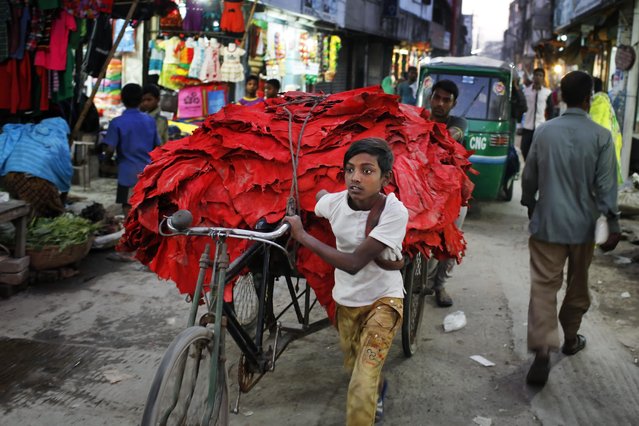
In this Thursday, February 9, 2017 photo, a Bangladeshi boy pulls a rickshaw loaded with strips of leather at the highly polluted Hazaribagh tannery area in Dhaka, Bangladesh. Hazardous, heavily polluting tanneries with workers as young as 14 supplied leather to companies that make shoes and handbags for Western brands, a nonprofit group that investigates supply chains says. (Photo by A.M. Ahad/AP Photo)
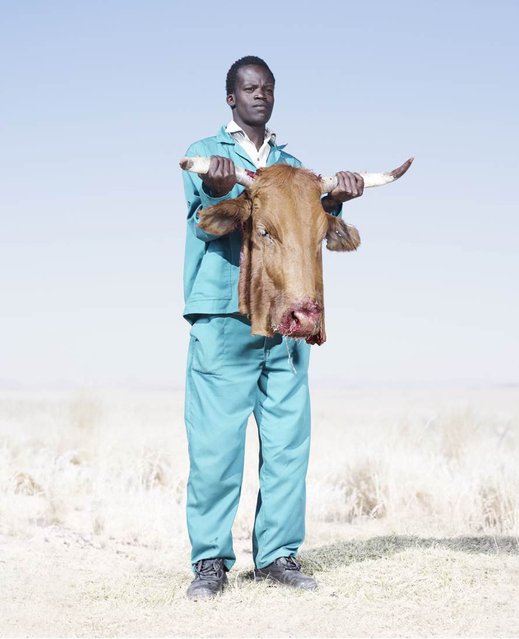
A Herero man holds the head of a freshly butchered cow, killed to supply meat for a funeral, 2012. (Photo by Jim Naughten, courtesy of Klompching Gallery, New York)
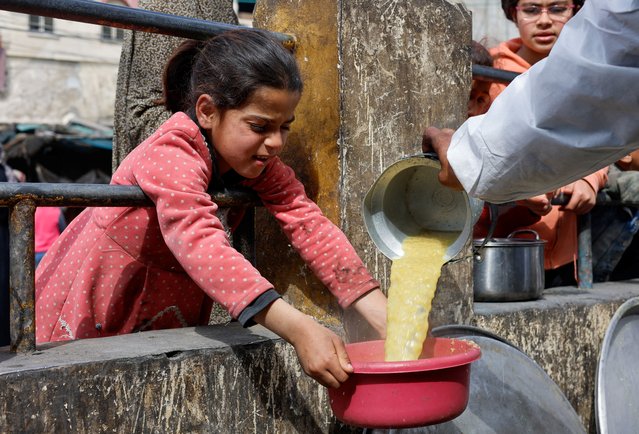
A Palestinian child receives food cooked by a charity kitchen amid shortages of food supplies in Rafah, in the southern Gaza Strip on February 20, 2024. (Photo by Mohammed Salem/Reuters)
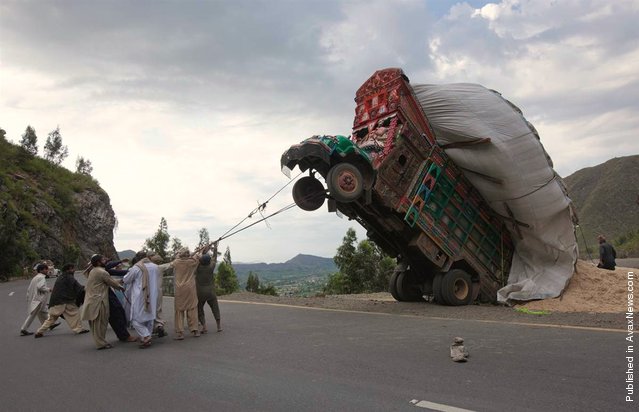
Men use ropes to try and right a supply truck overloaded with wheat straw along a road in Dargai, in the Malakand district, about 100 miles northwest of Pakistan's capital Islamabad, on April 13, 2012. (Photo by Mian Khursheed/Reuters)
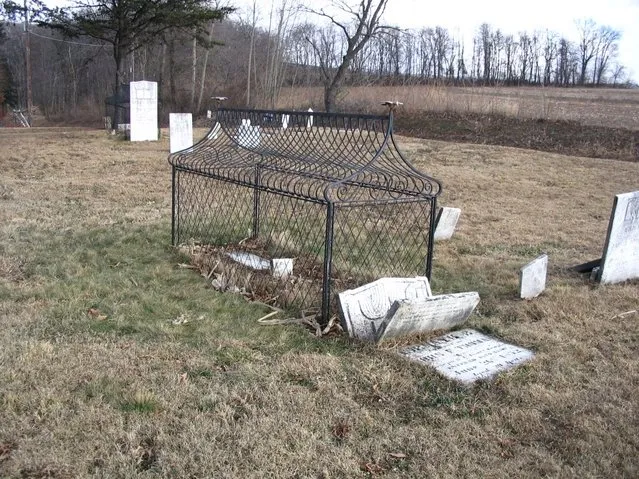
Mortsafes were contraptions designed to protect graves from disturbance. Resurrectionists had supplied the schools of anatomy in Scotland since the early 18th century. This was due to the necessity for medical students to learn anatomy by attending dissections of human subjects, which was frustrated by the very limited allowance of dead bodies – for example the corpses of executed criminals – granted by the government, which controlled the supply.